


![Sprung Konnecta Fleckz Coloured Fitness Self-Locking Tiles- 20mm (6 colours) GYM FLOORING GymFloors Light Grey 20mm]()
![Konnecta Fleckz Self-Locking Fitness Tiles (6 colours)]()
![Konnecta Fleckz Self-Locking Fitness Tiles (6 colours)]()
![Konnecta Fleckz Self-Locking Fitness Tiles (6 colours)]()
![Konnecta Fleckz Self-Locking Fitness Tiles (6 colours)]()
![Konnecta Fleckz Self-Locking Fitness Tiles (6 colours)]()
![Konnecta Fleckz Self-Locking Fitness Tiles (6 colours)]()
![Konnecta Fleckz Self-Locking Fitness Tiles (6 colours)]()
![Konnecta Fleckz Self-Locking Fitness Tiles (6 colours)]()
![Konnecta Fleckz Self-Locking Fitness Tiles (6 colours)]()
![Konnecta Fleckz Self-Locking Fitness Tiles (6 colours)]()
![Sprung Konnecta Fleckz Coloured Fitness Self-Locking Tiles- 20mm (6 colours) GYM FLOORING GymFloors Blue 20mm]()
![Sprung Konnecta Fleckz Coloured Fitness Self-Locking Tiles- 20mm (6 colours) GYM FLOORING GymFloors]()
![Sprung Konnecta Fleckz Coloured Fitness Self-Locking Tiles- 20mm (6 colours) GYM FLOORING GymFloors]()
![Sprung Konnecta Fleckz Coloured Fitness Self-Locking Tiles- 20mm (6 colours) GYM FLOORING GymFloors Red 20mm]()
![Sprung Konnecta Fleckz Coloured Fitness Self-Locking Tiles- 20mm (6 colours) GYM FLOORING GymFloors]() Uitverkoop
UitverkoopKonnecta Fleckz Self-Locking Fitness Tiles (6 colours)
Van £56.60£70.75Eenheid prijs /Niet beschikbaar-
Uitverkoop
20mm Konnecta Snowflake Self-Locking Gym Flooring Mat
£56.99£65.74Eenheid prijs /Niet beschikbaar -
![20mm Konnecta Matterhorn Gym Flooring Mats]()
![20mm Konnecta Matterhorn Gym Flooring Mats]()
![20mm Konnecta Matterhorn Gym Flooring Mats]() Uitverkoop
Uitverkoop20mm Konnecta Matterhorn Gym Flooring Mats
Van £59.78£74.72Eenheid prijs /Niet beschikbaar -
![20mm PRO Interlocking Gym Tiles – Connection Inserts Included]()
![20mm PRO Interlocking Gym Tiles – Connection Inserts Included]() Uitverkoop
Uitverkoop20mm PRO Interlocking Gym Tiles – Connection Inserts Included
Van £14.75£18.44Eenheid prijs /Niet beschikbaar -
![Black Puzzle Interlocking Floor Mats Jigsaw Mats - 10mm GYM Sprung Gym Flooring Default Title]() Uitverkoop
Uitverkoop -
![Black Puzzle Interlocking Gym Floor Mats Jigsaw Mats - 15mm GYM Sprung Gym Flooring Default Title]() Uitverkoop
Uitverkoop15mm Black Interlocking Gym Floor Jigsaw Mats
£46.20£57.75Eenheid prijs /Niet beschikbaar -
![30mm Sprung PRO Interlocking Gym Tiles - Connection Inserts Included GYM FLOORING GymFloors Standard]() Uitverkoop
Uitverkoop30mm PRO Interlocking Gym Tiles – Connection Inserts Included
£73.00£88.75Eenheid prijs /Niet beschikbaar -
![Sprung Konnecta Velvet Black Premium Gym Flooring Mats - 20mm GYM FLOORING GymFloors 20 mm - 1000 mm x 1000 mm]()
![20mm Konnecta Velvet Black Gym Flooring Mats]()
![20mm Konnecta Velvet Black Gym Flooring Mats]() Uitverkoop
Uitverkoop20mm Konnecta Velvet Black Gym Flooring Mats
Van £56.80£71.00Eenheid prijs /Niet beschikbaar -
Uitverkoop
-
![20mm Konnecta Wood Effect Gym Flooring Mats]()
![20mm Konnecta Wood Effect Gym Flooring Mats]()
![20mm Konnecta Wood Effect Gym Flooring Mats]() Uitverkoop
Uitverkoop -
![Interlocking Turf Puzzle Tiles]()
![Interlocking Turf Puzzle Tiles]() Uitverkoop
Uitverkoop 
![20mm Onyx EPDM Rubber Gym Tiles]()
![20mm Onyx EPDM Rubber Gym Tiles]() Uitverkoop
Uitverkoop-
Uitverkoop
-
Uitverkoop


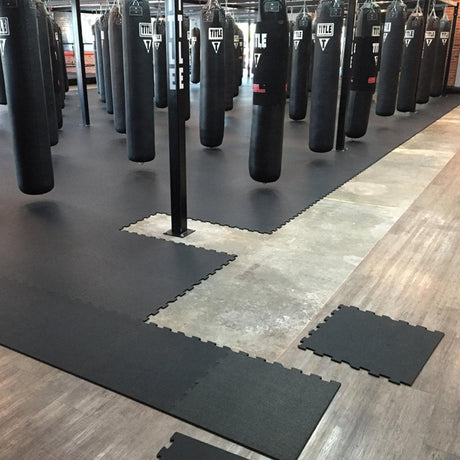
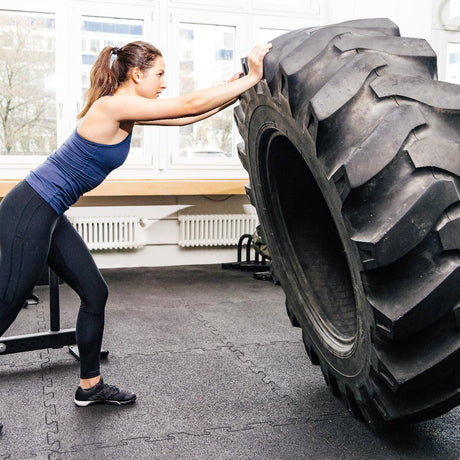
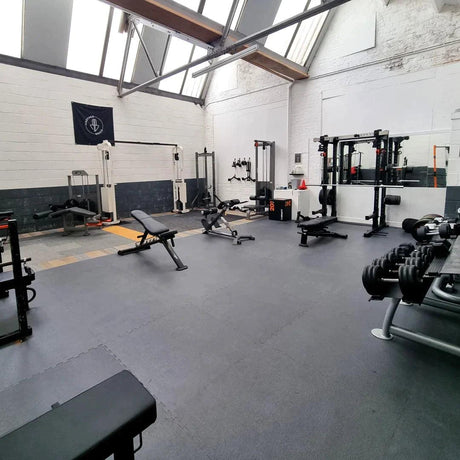
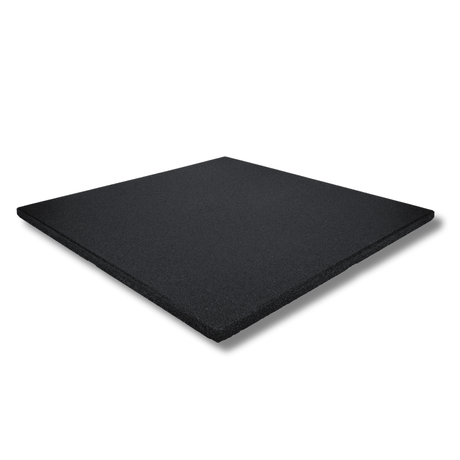


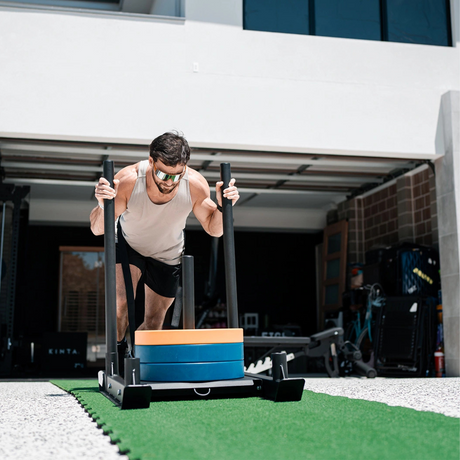
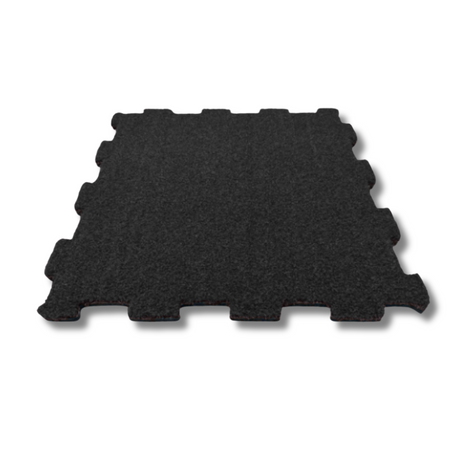
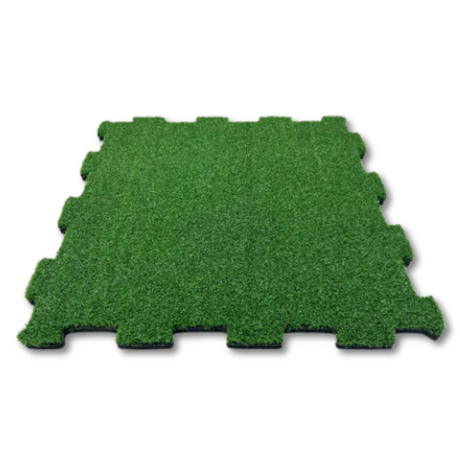


Interlocking rubber flooring offers a practical way to create a stable, protective training surface without committing to a permanently bonded installation. The tiles connect securely to one another, helping the floor remain aligned while making installation, future alterations and individual tile replacement much simpler.
Our collection includes traditional jigsaw-style mats alongside premium hidden-connector systems. These options are suitable for home gyms, garage conversions, PT studios, commercial facilities, functional training zones and other spaces where straightforward fitting is just as important as durability.
Unlike lightweight temporary exercise mats, interlocking rubber floor tiles are dense enough to support gym equipment while helping to protect the surface underneath. They provide grip, cushioning and impact resistance without creating an unstable or excessively soft platform beneath racks, benches and machines.
Interlocking Rubber Flooring Tiles for Quick and Easy Installation
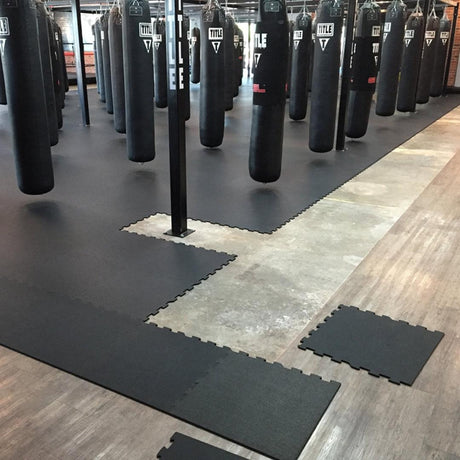
One of the main reasons to choose interlocking flooring is the ease of fitting. Individual tiles connect mechanically, reducing movement between sections and helping to create a unified floor without adhesive in many smaller or enclosed spaces.
This makes interlocking tiles particularly useful when:
- You are completing the installation yourself.
- The room is rented or may change purpose later.
- Equipment or flooring could be moved in the future.
- You want to replace individual tiles rather than the entire floor.
- The installation contains awkward corners, columns or fixed equipment.
The subfloor should still be clean, dry, firm and reasonably level before fitting begins. Rubber tiles can usually be installed over concrete, timber or a stable existing surface, although loose flooring, deep irregularities and unresolved damp should be corrected first.
For a wall-to-wall installation, tiles can be trimmed around the perimeter using a sharp utility knife and straight edge. A brick-bond layout can help distribute the joins and give the finished surface a more professional appearance.
Konnecta Rubber Matting with Hidden Connectors
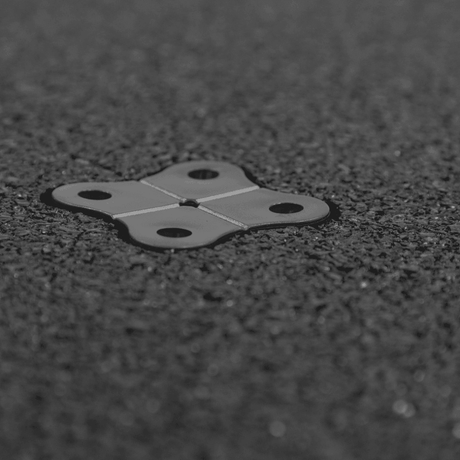
Konnecta flooring uses small connection inserts beneath the tiles rather than visible jigsaw edges. Once installed, the floor has the neat appearance of a straight-edge tile system while benefiting from the stability and fitting convenience of an interlocking design.
This format works particularly well in premium home gyms, boutique studios, hotel fitness rooms, office gyms and commercial spaces where appearance matters alongside performance. Smooth-top, flecked, stone-inspired and wood-effect finishes allow the floor to coordinate with the wider interior rather than looking purely industrial.
The concealed inserts help neighbouring tiles remain aligned during exercise and when gym equipment is being repositioned. Because the connectors sit underneath the flooring, the top surface remains clean and uninterrupted.
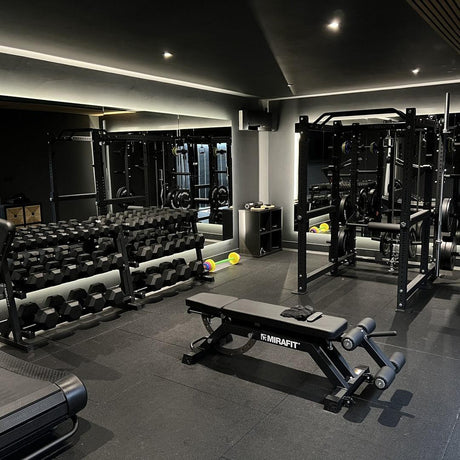
Most 20mm Konnecta options are suitable for mixed training areas containing dumbbells, kettlebells, benches, racks, resistance equipment and cardio machines. The dense rubber surface provides a stable footing while helping to reduce the harshness, echo and vibration associated with training directly over concrete.
For customers comparing modular options with conventional rubber gym tiles, Konnecta is especially useful where easier lifting, rearrangement or DIY fitting is a priority.
Puzzle Interlocking Rubber Mats
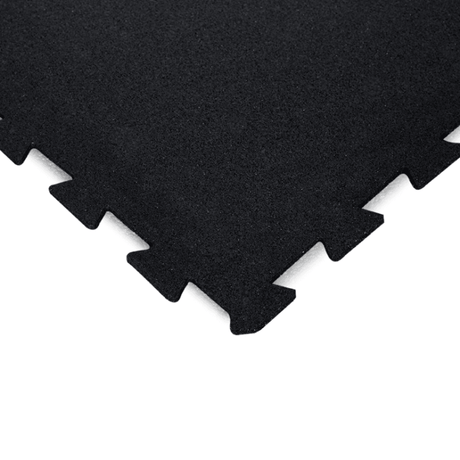
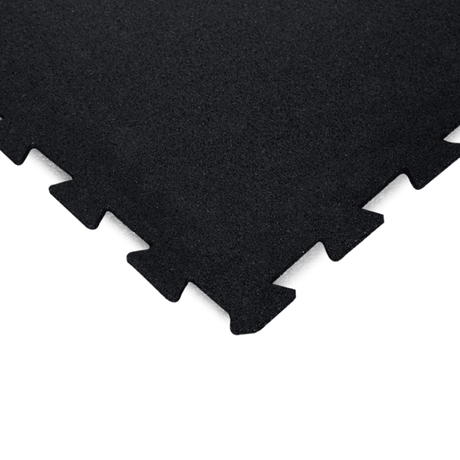
Puzzle mats use shaped jigsaw edges that slot directly into one another. The connection is visible, but it makes the installation process extremely straightforward and requires no separate connector pieces.
Thinner puzzle mats can be a cost-effective choice for general exercise, cardio equipment, bodyweight training, stretching and lighter free weights. They are also easier to handle than very thick tiles, making them suitable for compact rooms or temporary workout areas.
A 10mm puzzle tile is best reserved for lower-impact exercise and equipment zones where the main objective is grip, comfort and basic floor protection. A 15mm option adds more cushioning and is better suited to regular home workouts, moderate dumbbell use and mixed fitness activities.
For sustained heavy lifting or frequent weight drops, a thicker interlocking tile is the more appropriate choice. The fitting system keeps tiles together, but it is the density and thickness of the rubber—not simply the shape of the connection—that determines how much impact protection the floor provides.
Choosing the Right Interlocking Tile Thickness
The correct thickness depends on the equipment, weight loads and type of exercise planned for the space.
- 10mm interlocking puzzle mats are suitable for cardio machines, light resistance training, stretching, mobility and lower-impact home exercise.
- 15mm interlocking mats offer increased cushioning for general fitness, moderate free weights and multi-purpose workout rooms.
- 20mm interlocking rubber tiles are the most versatile option for home gyms, garage gyms, PT studios and mixed strength areas. They can support benches, racks, kettlebells, dumbbells and regular equipment use while providing a useful level of impact and sound reduction.
- 25mm decorative hexagonal tiles combine a distinctive finish with the strength required for equipment and general free-weight areas.
- 30mm interlocking tiles are better suited to higher-impact training, heavier equipment, CrossFit-style sessions, plyometric work and more demanding strength zones.
Where barbells will be dropped repeatedly from height, consider whether a dedicated heavy-duty lifting surface or thicker heavy-duty gym flooring is needed. No flooring thickness can make dropped weights silent, particularly in upstairs rooms or attached properties, but increasing the rubber depth can significantly improve floor protection and reduce sharp impact noise.
Interlocking Flooring for Home and Garage Gyms
Interlocking tiles are particularly well suited to home gym flooring because they can be installed without bringing specialist contractors into the property. They can also be lifted if the gym is relocated to another room or moved to a new home.
In a spare room or indoor home gym, 15mm or 20mm flooring will normally suit general strength work and exercise equipment. Upstairs installations require additional care because structural sound can travel through the floor. Rubber helps reduce vibration and surface noise, but heavy barbell drops may still be heard elsewhere in the building.
Garages typically need a more robust specification. Cold concrete, grit, equipment loads and occasional condensation make 20mm or 30mm tiles a practical starting point for most garage gym flooring projects. Rubber is moisture-resistant and easy to wipe clean, although active damp or water ingress should be resolved before the tiles are laid.
Stable Support for Gym Equipment and Free Weights
Dense interlocking rubber flooring creates a firm base beneath squat racks, weight benches, storage systems, cable machines, treadmills and exercise bikes. It helps spread equipment loads while preventing hard metal feet from marking the original floor.
Rubber’s naturally grippy surface also supports secure footing during lunges, circuits, kettlebell exercises and strength training. The slight resilience is more comfortable than bare concrete but remains stable enough for controlled lifting.
Where very heavy equipment will remain in one position, select the flooring according to the total equipment load rather than the weight of an individual plate or dumbbell. Larger machines may also benefit from protective load-spreading pads beneath narrow feet.
Low-Maintenance Modular Gym Flooring
Interlocking rubber tiles are easy to maintain because dirt does not readily penetrate the dense surface. Regularly vacuum or sweep away dust, chalk and loose grit, then damp mop using a diluted neutral-pH cleaner.
Avoid bleach, strong solvents, acidic cleaners and excessive water. Sweat and spills should be wiped up promptly, particularly in shared or high-traffic facilities.
The modular construction provides a further maintenance advantage. If one tile becomes locally damaged, it can normally be disconnected and replaced without removing the surrounding floor. This makes interlocking systems a practical long-term choice for commercial gyms and frequently used training rooms.
Whether you need an economical jigsaw mat or a premium concealed-connector finish, interlocking rubber flooring provides a secure, adaptable and DIY-friendly foundation for a professional training space.
You may be interested in: