
 Sale
Sale20mm PRO Rubber Gym Flooring Tiles – Smooth Top Surface - UK's Top Rated
£34.95£42.44Unit price /Unavailable
![20mm PRO Interlocking Gym Tiles – Connection Inserts Included]()
![20mm PRO Interlocking Gym Tiles – Connection Inserts Included]() Sale
Sale20mm PRO Interlocking Gym Tiles – Connection Inserts Included
From £14.75£18.44Unit price /Unavailable-
Sale
15mm Sprung PRO Gym Flooring - Sprung Rubber Heavy Duty
£32.99£39.98Unit price /Unavailable -
![30mm Sprung PRO Gym Floor Tile - Rubber Heavy Duty Gym Flooring GYM FLOORING GymFloors 30mm Heavy Duty Tile]()
![30mm Sprung PRO Gym Floor Tile - Rubber Heavy Duty Gym Flooring GYM FLOORING GymFloors 30mm Ramp]() Sale
Sale30mm Sprung PRO Gym Floor Tile - Rubber Heavy Duty Gym Flooring
From £32.99£41.24Unit price /Unavailable 
![Rubber Flooring Edge Ramps - 15mm, 20mm, 30mm & 43mm]() Sale
SaleRubber Flooring Edge Ramps - 15mm, 20mm, 30mm & 43mm
From £14.75£18.44Unit price /Unavailable-
Sale
-
Sale
-
Sale
20mm Konnecta Snowflake Self-Locking Gym Flooring Mat
£56.99£65.74Unit price /Unavailable -
Sale
-
Sale
-
![Sprung Konnecta Velvet Black Premium Gym Flooring Mats - 20mm GYM FLOORING GymFloors 20 mm - 1000 mm x 1000 mm]()
![20mm Konnecta Velvet Black Gym Flooring Mats]()
![20mm Konnecta Velvet Black Gym Flooring Mats]() Sale
Sale -
Sale
-
![Sprung Konnecta Fleckz Coloured Fitness Self-Locking Tiles- 20mm (6 colours) GYM FLOORING GymFloors Light Grey 20mm]()
![Konnecta Fleckz Self-Locking Fitness Tiles (6 colours)]()
![Konnecta Fleckz Self-Locking Fitness Tiles (6 colours)]()
![Konnecta Fleckz Self-Locking Fitness Tiles (6 colours)]()
![Konnecta Fleckz Self-Locking Fitness Tiles (6 colours)]()
![Konnecta Fleckz Self-Locking Fitness Tiles (6 colours)]()
![Konnecta Fleckz Self-Locking Fitness Tiles (6 colours)]()
![Konnecta Fleckz Self-Locking Fitness Tiles (6 colours)]()
![Konnecta Fleckz Self-Locking Fitness Tiles (6 colours)]()
![Konnecta Fleckz Self-Locking Fitness Tiles (6 colours)]()
![Konnecta Fleckz Self-Locking Fitness Tiles (6 colours)]()
![Sprung Konnecta Fleckz Coloured Fitness Self-Locking Tiles- 20mm (6 colours) GYM FLOORING GymFloors Blue 20mm]()
![Sprung Konnecta Fleckz Coloured Fitness Self-Locking Tiles- 20mm (6 colours) GYM FLOORING GymFloors]()
![Sprung Konnecta Fleckz Coloured Fitness Self-Locking Tiles- 20mm (6 colours) GYM FLOORING GymFloors]()
![Sprung Konnecta Fleckz Coloured Fitness Self-Locking Tiles- 20mm (6 colours) GYM FLOORING GymFloors Red 20mm]()
![Sprung Konnecta Fleckz Coloured Fitness Self-Locking Tiles- 20mm (6 colours) GYM FLOORING GymFloors]() Sale
Sale -
Sale
-
![Sprung Fleckz Gym Rubber Matting Roll - Various Colours | Thicknesses - 1.25m Width]()
![Sprung Fleckz Gym Rubber Matting Roll - Various Colours | Thicknesses - 1.25m Width]()
![Sprung Fleckz Gym Rubber Matting Roll - Various Colours | Thicknesses - 1.25m Width GYM FLOORING Sprung Gym Flooring 6mm Yellow]()
![Sprung Fleckz Gym Rubber Matting Roll - Various Colours | Thicknesses - 1.25m Width GYM FLOORING Sprung Gym Flooring 6mm Green]()
![Sprung Fleckz Gym Rubber Matting Roll - Various Colours | Thicknesses - 1.25m Width GYM FLOORING Sprung Gym Flooring 6mm Blue]()
![Sprung Fleckz Gym Rubber Matting Roll - Various Colours | Thicknesses - 1.25m Width GYM FLOORING Sprung Gym Flooring 6mm Blue]()
![Sprung Fleckz Gym Rubber Matting Roll - Various Colours | Thicknesses - 1.25m Width]()
![Sprung Fleckz Gym Rubber Matting Roll - Various Colours | Thicknesses - 1.25m Width GYM FLOORING Sprung Gym Flooring 8mm Blue]()
![Sprung Fleckz Gym Rubber Matting Roll - Various Colours | Thicknesses - 1.25m Width GYM FLOORING Sprung Gym Flooring 6mm Blue]()
![Sprung Fleckz Gym Rubber Matting Roll - Various Colours | Thicknesses - 1.25m Width]()
![Sprung Fleckz Gym Rubber Matting Roll - Various Colours | Thicknesses - 1.25m Width GYM FLOORING Sprung Gym Flooring 8mm Blue]()
![Sprung Fleckz Gym Rubber Matting Roll - Various Colours | Thicknesses - 1.25m Width GYM FLOORING Sprung Gym Flooring 6mm Blue]() Sale
SaleSprung Fleckz Gym Rubber Matting Roll - Various Colours | Thicknesses - 1.25m Width
From £628.54£740.67Unit price /Unavailable -
![30mm Sprung gym mats in three colours, 50cm x 50cm]()
![Safety Rubber Tiles - 500mm x 500mm]()
![Heavy-duty rubber tiles for horse washing areas and paddocks]()
![Safety Rubber Tiles - 500mm x 500mm]()
![Safety Rubber Tiles - 500mm x 500mm]()
![Safety Rubber Tiles - 500mm x 500mm]() Sale
Sale












Garage Gym Flooring
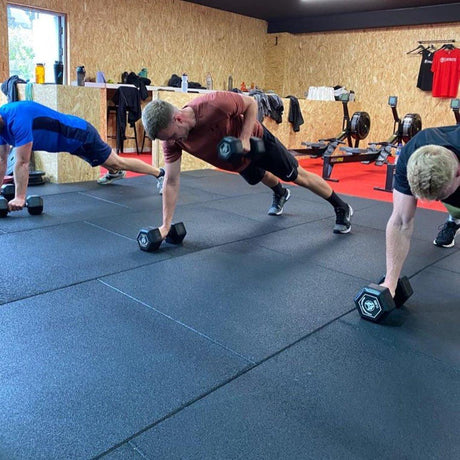
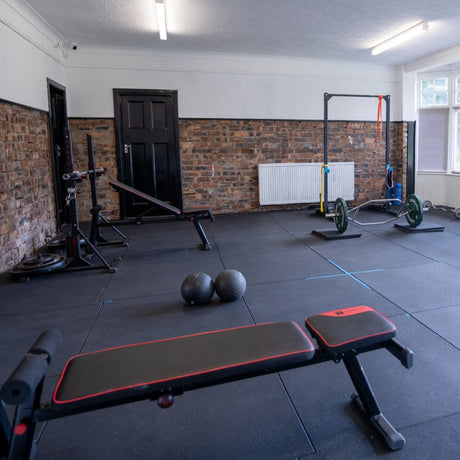
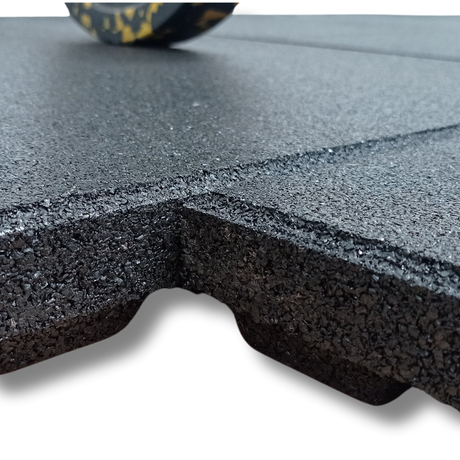
The garage is Britain's favourite gym location and its least forgiving: cold concrete, damp air, uneven slabs and the occasional car. Sprung Gym Flooring's garage range is built around those four problems — dense rubber tiles that insulate against the cold, shrug off moisture, bridge minor unevenness and take vehicle weight where the space is shared.
What flooring does a garage gym actually need?
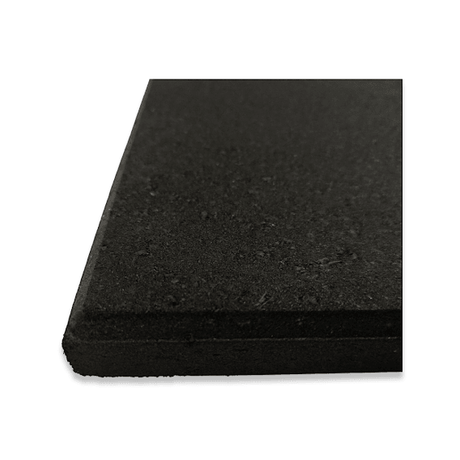
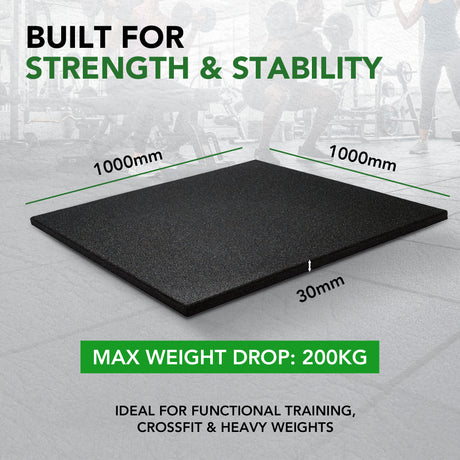
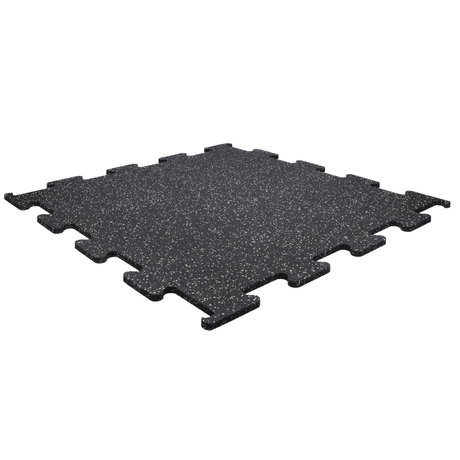
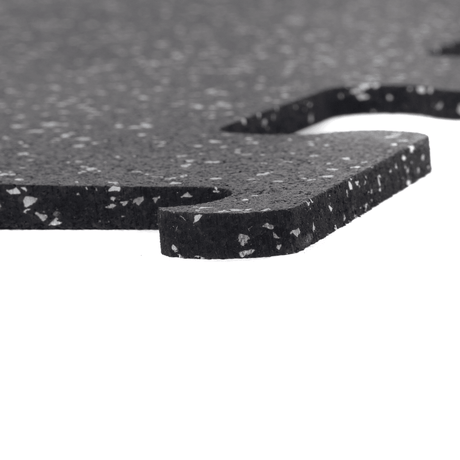
Start with Sprung's 20mm rubber tiles across the training area — they lift the workout off the cold slab, deaden the clang of plates against concrete, and stop dropped dumbbells cratering the floor. Add 30mm in a deadlift or Olympic zone if loaded bars come down from height. If the garage still parks a car part-time, run garage floor mats on the vehicle side — they're specified for oil and tyre loads — and gym tiles on the training side.
Choosing between thicknesses, or weighing up what a garage gym floor should cost? Read our guide to the best gym flooring for a garage gym in 2026 — thickness by use, UK price bands, and the five mistakes to avoid.
Cold, damp and condensation — the honest bit
Rubber tiles insulate underfoot, which transforms winter sessions, but they don't cure a damp garage — they share it. If the slab sweats in winter, lay a damp-proof membrane under the tiles and leave a small expansion gap at the walls so air moves. Interlocking tiles beat glued rolls in garages for exactly this reason: they lift for a dry-out if the worst happens.
Do you need to level the floor first?
Usually not. Sprung's 20mm tiles bridge the small ridges and old paint lines most garage slabs carry. Genuine steps or crumbling sections need patching first — flooring follows the surface it sits on, and no tile fixes a broken slab.
Fitting it
Interlocking tiles, no glue, a sharp knife for the edges: a single garage takes an afternoon, a double takes a day. Because nothing is fixed down, the floor comes with you if you move house — a genuinely common reason customers choose tiles over glued rubber.
FAQs
What is the best flooring for a garage gym? 20mm dense rubber tiles for the training area, 30mm where bars drop, and vehicle-rated garage floor mats anywhere a car still parks. That combination covers cold, noise, impact and oil.
Can you put gym flooring straight onto concrete? Yes — concrete is the ideal base. If the slab shows damp, add a membrane underneath; otherwise tiles go straight down.
Will a car damage gym flooring? Standard gym tiles will scuff and dent under tyres over time. Where the space is shared, use the vehicle-rated mats on the parking side — that's what they're for.
How do you stop a garage gym being cold? Rubber flooring is the biggest single fix — it isolates you from the slab, which is where the cold comes from. Sprung customers routinely train through winter on 20mm tiles in unheated garages.