

![Foam Play Mats - 5 Colours - 13mm Sprung Gym Flooring Red]()
![Foam Play Mats - 5 Colours - 13mm Sprung Gym Flooring Blue]()
![Foam Play Mats - 5 Colours - 13mm Sprung Gym Flooring Yellow]()
![Foam Play Mats - 5 Colours - 13mm Sprung Gym Flooring Green]()
![Foam Play Mats - 5 Colours - 13mm Sprung Gym Flooring Orange]() Sale
Sale-
![Premium Play Matting - 20mm (Reversible) Sprung Gym Flooring Red & Blue]() Sale
Sale -
![Outdoor Playground Safety Mats]()
![30mm Sprung gym mats in three colours, 50cm x 50cm]()
![Outdoor Playground Safety Mats]()
![Heavy-duty rubber tiles for horse washing areas and paddocks]()
![Outdoor Playground Safety Mats]()
![Outdoor Playground Safety Mats]() Sale
Sale -
![VR Mats Flooring System - Virtual Reality Room Mats - 2 Thicknesses Sprung Gym Flooring 15mm]()
![VR Mats Flooring System - Virtual Reality Room Mats - 2 Thicknesses Sprung Gym Flooring 30mm]() Sold outSale
Sold outSale -
Sold outSale
400 x 100cm Inflatable Gymnastics Air Track – Blue - Free Shipping
£179.00£223.75Unit price /Unavailable -
![Air track Inflatable Gymnastics Mat with Pump - 300x100cmx10cm - 3 colours FREE SHIPPING Gymnastics Sprung Gym Flooring Blue]()
![Air track Inflatable Gymnastics Mat with Pump - 300x100cmx10cm - 3 colours FREE SHIPPING Gymnastics Sprung Gym Flooring Green]()
![Air track Inflatable Gymnastics Mat with Pump - 300x100cmx10cm - 3 colours FREE SHIPPING Gymnastics Sprung Gym Flooring Pink]() Sale
Sale300 x 100 x 10cm Inflatable Gymnastics Air Track – 3 Colours - Free Shipping
From £169.00£211.25Unit price /Unavailable -
Sale
-
![Muay Thai Mats - 2 Thickness Options - 2 Colours Foam Mats Sprung Gym Flooring 20mm Red/Blue]()
![40mm reversible EVA tatami foam mats]()
![Muay Thai Mats - 2 Thickness Options - 2 Colours Foam Mats Sprung Gym Flooring 40mm Red/Blue]()
![40mm reversible EVA tatami foam mats]() Sale
Sale -
![Muay Thai Mats - 2 Thickness Options - 2 Colours Foam Mats Sprung Gym Flooring 20mm Red/Blue]()
![40mm reversible EVA tatami foam mats]()
![Muay Thai Mats - 2 Thickness Options - 2 Colours Foam Mats Sprung Gym Flooring 40mm Red/Blue]()
![40mm reversible EVA tatami foam mats]() Sale
Sale








Soft Play Matting - Foam Play Matting Options for Kids & Babies
Create a safer, softer and more comfortable play space with our range of play mats for children, babies, toddlers, nurseries, playrooms, sensory rooms and outdoor play areas.
Our play matting range includes lightweight indoor foam play mats, reversible EVA tiles, sensory room flooring, air tracks and heavy duty rubber playground mats for outdoor use. Whether you are creating a colourful play corner at home, a nursery activity zone, a school play area or a garden space for active children, the right matting helps cushion slips, reduce hard-floor impact and make the area easier to clean.
For indoor spaces, foam is usually the best choice because it is soft, warm underfoot and simple to fit. For outdoor play areas, we recommend rubber playground mats because they are more durable, weather resistant and better suited to climbing frames, garden equipment and changing UK weather.
Soft Play Matting - Foam Play Matting Options for Kids & Babies
Soft play matting is ideal for indoor areas where children are sitting, crawling, rolling, playing, stretching, tumbling or learning to move with confidence. It gives hard floors a more forgiving surface and helps create a defined play zone in bedrooms, nurseries, classrooms, childminding spaces and family rooms.
Our indoor foam options include colourful 13mm Foam Play Mats, thicker 20mm Reversible Play Mats and specialist Sensory Room Flooring for calm, comfortable and engaging environments.
Foam play mats are a practical choice for indoor children’s spaces because they are:
- Soft and comfortable underfoot
- Lightweight and easy to move
- Simple to fit with interlocking edges
- Available in bright, child-friendly colours
- Easy to clean after everyday play
- Suitable for temporary or more permanent layouts
- Useful for playrooms, nurseries, sensory rooms and home activity areas
For more general indoor soft flooring options, you can also browse our Foam Mats collection.
Which Play Mat Is Best for Your Space?
The best play mat depends on where it is being used and how much impact protection the area needs.
For babies, toddlers and low-level indoor play, foam play mats are usually the most suitable option. They provide a softer surface for crawling, sitting, rolling and general play without making the floor feel hard or cold.
For children’s playrooms, nurseries and indoor activity spaces, thicker EVA foam tiles are a good choice when you want extra comfort, better cushioning and a more durable surface for regular use.
For sensory rooms, calm spaces and special educational settings, foam-based sensory flooring helps create a softer, quieter and more comfortable environment.
For gardens, playgrounds and outdoor play equipment, rubber playground mats are the better option. Foam is not recommended for permanent outdoor use because rain, frost, moisture and temperature changes can shorten its lifespan.
If you are building a dedicated indoor children’s area, see our Playroom Flooring options.
Foam Play Mats for Babies, Toddlers and Indoor Playrooms
Foam play mats are a popular choice for babies and toddlers because they turn hard indoor floors into softer, warmer and more comfortable surfaces. They are especially useful over timber, laminate, tiles, concrete or other firm subfloors where young children need extra cushioning during everyday play.
The puzzle-style edges make the mats easy to connect, expand or lift when required. This means you can create a small play corner, cover a larger room or build a temporary play area that can be packed away when not in use.
Foam play mats are well suited to:
- Baby crawling areas
- Toddler play zones
- Bedrooms and family rooms
- Nursery floors
- Childminding spaces
- Soft play corners
- Indoor learning spaces
- Sensory rooms
- Light movement and stretching areas
The 20mm Reversible Play Mats are particularly useful where you want a thicker feel underfoot or a flexible layout that can be reversed depending on the colour scheme or activity.
Key Features of Rubber Playground Mats for Children
For outdoor use, rubber playground mats provide a more robust and weather-resistant option than foam. They are designed for areas where children are running, climbing, jumping and playing around garden equipment or playground structures.
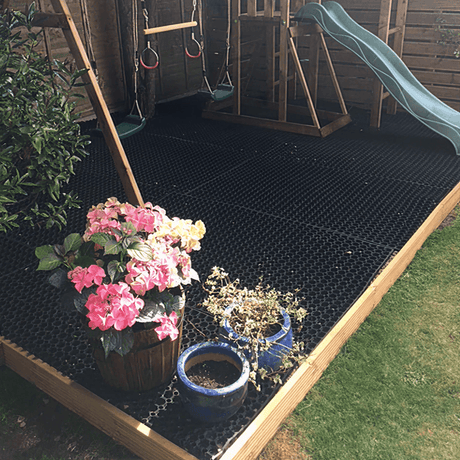
Our Outdoor Playground Safety Mats are suitable for children’s outdoor spaces where impact absorption, grip, drainage and durability are important. They help reduce the harsh feel of hard outdoor surfaces while providing a practical finish that can cope with regular use.
Outdoor rubber playground mats are ideal for:
- Garden play areas
- School playground zones
- Nursery outdoor spaces
- Climbing frame areas
- Playhouses and activity corners
- Community play areas
- Outdoor learning zones
- Areas beneath or around children’s play equipment
The key advantage is that rubber is better suited to outdoor conditions. It can deal with wet weather, dirt, temperature changes and heavier activity more effectively than foam play matting.
Outdoor Play Mat Thickness Options
Thickness matters when choosing children’s play matting.
For light indoor play, 13mm foam mats are a good option where the main goal is comfort, colour and basic floor protection.
For more active indoor play, 20mm foam mats provide extra cushioning and a more substantial feel underfoot. They are better suited to nurseries, playrooms and spaces where children are moving around more regularly.
For outdoor play areas, thicker rubber playground mats are recommended. Outdoor rubber mats are available in heavier duty thicknesses designed for more demanding use, including spaces around climbing frames, slides and outdoor play equipment.
As a simple guide:
- Choose foam play mats for indoor comfort, crawling, sitting and light play
- Choose thicker EVA foam mats for nurseries, playrooms and more active indoor use
- Choose rubber playground mats for outdoor use, garden play equipment and weather resistance
- Choose air tracks for gymnastics-style movement, tumbling and controlled practice
For gymnastics and tumbling, our Gymnastics Air Tracks are better suited than standard play mats because they are designed for bounce, movement and skill practice.
Play Mats for Nurseries, Sensory Rooms and Schools
Nurseries, schools and early years settings need flooring that is practical as well as comfortable. Children’s play areas often have to support mixed activities throughout the day, from quiet reading and sensory work to active play, movement, messy activities and group learning.
Foam and rubber play matting can help create clear zones within a room or outdoor area. Indoors, foam tiles can define a safer play corner or softer activity zone. Outdoors, rubber playground mats can help improve comfort and grip around play equipment.
For sensory spaces, softer flooring can make the room feel calmer, quieter and more inviting. It also helps reduce the hard, cold feel of the subfloor, which is especially useful where children are sitting, lying down or moving between activities.
For school and early years projects, you may also want to view our Gym Flooring for Schools range for broader education and activity flooring options.
Low Maintenance Play Mat Flooring
Children’s flooring needs to be easy to live with. Play mats are often exposed to spills, dirt, shoes, toys, snacks, paints, craft materials and daily wear, so low maintenance is important.
Foam play mats are easy to wipe clean and can usually be lifted or moved when required. This makes them a practical option for homes, nurseries and playrooms where flexibility matters.
Rubber playground mats are also low maintenance and suitable for outdoor environments. They are designed to cope with changing weather, regular foot traffic and everyday play without needing complicated upkeep.
Depending on the product, play mat flooring can offer:
- Easy cleaning
- Comfortable cushioning
- Anti-slip surface texture
- Strong everyday durability
- Simple replacement if an area becomes damaged
- Flexible layouts
- Indoor or outdoor suitability depending on material
Suitable for All Weathers
Foam mats are best kept indoors. While EVA foam is comfortable and resilient, it is not the best material for long-term outdoor use because rain, frost, UV exposure and moisture can affect performance over time.
For gardens, playgrounds and outdoor play areas, rubber is the better choice. Outdoor rubber playground mats are designed to handle wet conditions and regular use, while built-in drainage helps water move away more effectively.
Rubber playground mats are suitable for UK outdoor conditions because they can deal with:
- Rain
- Frost
- Muddy shoes
- Garden debris
- Outdoor play equipment
- Temperature changes
- Regular foot traffic
- Active children’s play
For patios, gardens or outdoor leisure spaces beyond children’s play areas, you may also want to view our Outdoor Patio and Garden Flooring collection.
Our Rubber & Foam Mats for Children Offer Easy Installation
Most play mats are designed to be simple to install without specialist tools. Foam tiles usually use puzzle-style interlocking edges, so they can be connected quickly and adjusted to suit the size of the room or play area.
For indoor use, foam mats can often be loose laid for temporary play zones or fitted more securely for a longer-term layout. The right approach depends on the room, the subfloor and how much movement the mats will need to handle.
Outdoor rubber playground mats may use connectors, adhesive or compression depending on the product and installation area. For larger outdoor spaces, play equipment zones or commercial settings, it is important to check the fitting method before ordering.
Before installation, make sure the subfloor is:
- Clean
- Dry where required
- Stable
- Level enough for the chosen mat
- Free from sharp objects or loose debris
For installation accessories and fitting support, visit our Flooring Accessories section.
Find out more by reading:-
How to Create a Safe & Engaging Play Space
Check out our other mats suitable for outdoor use:-