

 Uitverkoop
-
Uitverkoop
-
![50cm x 50cm Gym Flooring Mats – 3 Colours]()
![50cm x 50cm Gym Flooring Mats – 3 Colours]()
![Heavy-duty rubber tiles for horse washing areas and paddocks]()
![50cm x 50cm Gym Flooring Mats – 3 Colours]()
![50cm x 50cm Gym Flooring Mats – 3 Colours]() Uitverkoop
Uitverkoop -
Uitverkoop
-
![Sprung Konnecta Velvet Black Premium Gym Flooring Mats - 20mm GYM FLOORING GymFloors 20 mm - 1000 mm x 1000 mm]()
![20mm Konnecta Velvet Black Gym Flooring Mats]()
![20mm Konnecta Velvet Black Gym Flooring Mats]() Uitverkoop
Uitverkoop20mm Konnecta Velvet Black Gym Flooring Mats
Van £56.80£71.00Eenheid prijs /Niet beschikbaar -
Uitverkoop
20mm Konnecta Snowflake Self-Locking Gym Flooring Mat
£56.99£65.74Eenheid prijs /Niet beschikbaar -
![Sprung Konnecta Fleckz Coloured Fitness Self-Locking Tiles- 20mm (6 colours) GYM FLOORING GymFloors Light Grey 20mm]()
![Konnecta Fleckz Self-Locking Fitness Tiles (6 colours)]()
![Konnecta Fleckz Self-Locking Fitness Tiles (6 colours)]()
![Konnecta Fleckz Self-Locking Fitness Tiles (6 colours)]()
![Konnecta Fleckz Self-Locking Fitness Tiles (6 colours)]()
![Konnecta Fleckz Self-Locking Fitness Tiles (6 colours)]()
![Konnecta Fleckz Self-Locking Fitness Tiles (6 colours)]()
![Konnecta Fleckz Self-Locking Fitness Tiles (6 colours)]()
![Konnecta Fleckz Self-Locking Fitness Tiles (6 colours)]()
![Konnecta Fleckz Self-Locking Fitness Tiles (6 colours)]()
![Konnecta Fleckz Self-Locking Fitness Tiles (6 colours)]()
![Sprung Konnecta Fleckz Coloured Fitness Self-Locking Tiles- 20mm (6 colours) GYM FLOORING GymFloors Blue 20mm]()
![Sprung Konnecta Fleckz Coloured Fitness Self-Locking Tiles- 20mm (6 colours) GYM FLOORING GymFloors]()
![Sprung Konnecta Fleckz Coloured Fitness Self-Locking Tiles- 20mm (6 colours) GYM FLOORING GymFloors]()
![Sprung Konnecta Fleckz Coloured Fitness Self-Locking Tiles- 20mm (6 colours) GYM FLOORING GymFloors Red 20mm]()
![Sprung Konnecta Fleckz Coloured Fitness Self-Locking Tiles- 20mm (6 colours) GYM FLOORING GymFloors]() Uitverkoop
UitverkoopKonnecta Fleckz Self-Locking Fitness Tiles (6 colours)
Van £56.60£70.75Eenheid prijs /Niet beschikbaar -
![Sprung Konnecta Navagio Premium Gym Flooring Mats - 20mm (NEW PRODUCT) GYM FLOORING GymFloors 20 mm - 1000 mm x 1000 mm]()
![20mm Konnecta Navagio Flooring Mats]()
![20mm Konnecta Navagio Flooring Mats]() Uitverkoop
Uitverkoop -
![20mm Konnecta Matterhorn Gym Flooring Mats]()
![20mm Konnecta Matterhorn Gym Flooring Mats]()
![20mm Konnecta Matterhorn Gym Flooring Mats]() Uitverkoop
Uitverkoop20mm Konnecta Matterhorn Gym Flooring Mats
Van £59.78£74.72Eenheid prijs /Niet beschikbaar -
![20mm Konnecta Wood Effect Gym Flooring Mats]()
![20mm Konnecta Wood Effect Gym Flooring Mats]()
![20mm Konnecta Wood Effect Gym Flooring Mats]()
![20mm Konnecta Wood Effect Gym Flooring Mats]()
![20mm Konnecta Wood Effect Gym Flooring Mats]()
![20mm Konnecta Wood Effect Gym Flooring Mats]() Uitverkoop
Uitverkoop -
![20mm Konnecta Marble Effect Flooring Mats]()
![20mm Konnecta Marble Effect Flooring Mats]()
![20mm Konnecta Marble Effect Flooring Mats]() Uitverkoop
Uitverkoop20mm Konnecta Marble Effect Flooring Mats
Van £61.48£76.85Eenheid prijs /Niet beschikbaar -
![20mm Onyx EPDM Rubber Gym Tiles]()
![20mm Onyx EPDM Rubber Gym Tiles]() Uitverkoop
Uitverkoop -
Uitverkoop
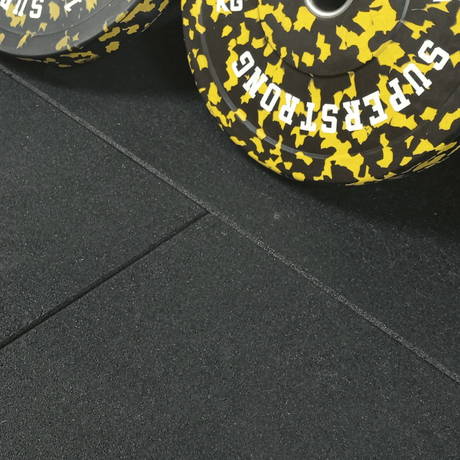

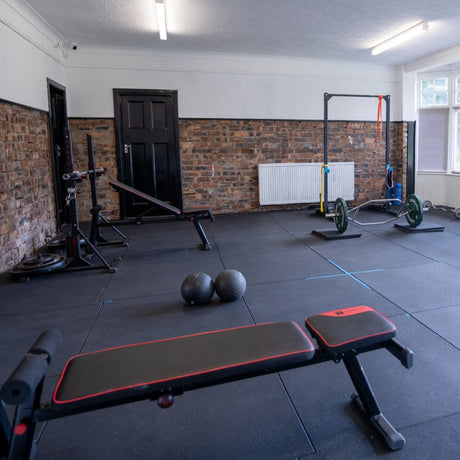








A well-designed free weights area needs more than a basic exercise mat. Dumbbells, barbells, kettlebells, weight benches and loaded racks place concentrated pressure on the floor, while repeated deadlifts and accidental weight drops can damage an unprotected subfloor.
Our free weights flooring is selected specifically for strength training environments. Dense rubber tiles help absorb impact, improve grip and protect concrete, timber and other existing surfaces. The collection includes practical black rubber finishes, thicker anti-shock tiles and decorative interlocking options for home gyms, PT studios and commercial weight rooms.
Gym Flooring for Weights
Free weights flooring creates a stable, resilient surface beneath strength equipment and lifting stations. Unlike thin fitness mats, purpose-made rubber flooring is designed to remain in place under load and withstand repeated contact with metal weight plates, dumbbells and gym equipment.
A suitable floor can help:
- Protect the subfloor from dents, cracks and surface damage
- Reduce vibration from deadlifts and dropped weights
- Limit wear on dumbbells, plates and other equipment
- Improve grip around racks and lifting stations
- Create a more comfortable surface for kneeling and floor exercises
- Define a dedicated strength zone within a larger gym
Our rubber gym tiles are particularly suited to free weights areas because individual tiles are manageable to install and can be replaced separately if one section becomes damaged. They can also be combined with weight benches, racks and lifting platforms to create a complete strength training setup.
What Is Free Weights Flooring?
Free weights flooring is normally made from dense, impact-resistant rubber. It is thicker and more protective than flooring intended mainly for cardio, stretching or light bodyweight exercise.
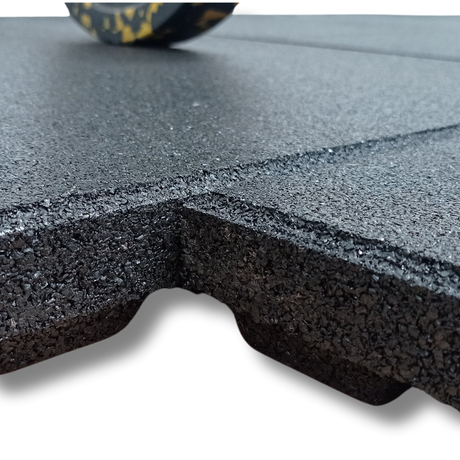
The rubber compresses slightly when a weight meets the surface, helping to disperse the force rather than passing the full impact directly into the structure below. This makes it suitable for dumbbell zones, power racks, cable machines, functional strength areas and deadlift stations.
Rubber is also naturally practical in a busy gym. It offers good underfoot traction, supports heavy equipment and can be cleaned without specialist treatments. For spaces used for several types of training, interlocking rubber gym tiles provide a secure installation while allowing the layout to be altered later.
What Thickness of Free Weight Flooring Should I Opt For?
The right thickness depends on the weights being used, how they are handled and the construction of the room.
15mm to 20mm flooring
A 15mm or 20mm rubber tile can be suitable for general dumbbell training, fixed resistance machines, benches and controlled strength exercises where weights are returned carefully to the floor.
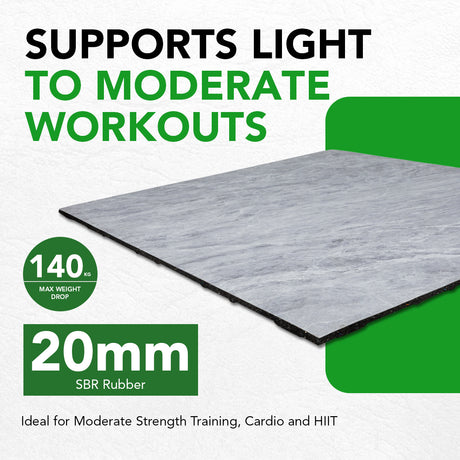
Our 20mm PRO tiles offer a versatile option for many home gyms and lighter commercial strength zones. As a general guide, 20mm flooring can support weight drops of approximately 140kg when used correctly, although the type of plate, height of the drop and subfloor condition must also be considered.
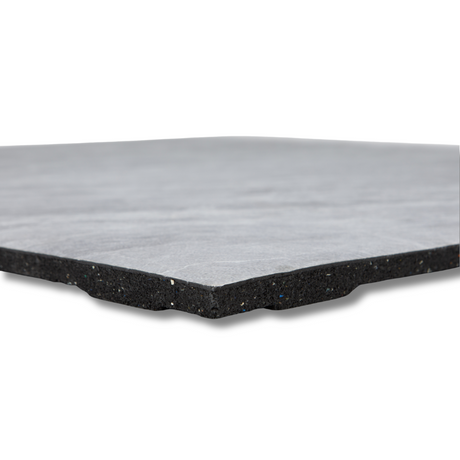
The decorative Konnecta Gym Tile collection is another 20mm option for strength spaces where appearance is important. Hidden connectors secure the tiles beneath the surface, creating a smooth finish without visible puzzle joints.
30mm flooring
A 30mm tile provides an increased layer of protection for more demanding free weights areas. It is a sensible choice for heavier dumbbells, regular barbell work, busy PT studios and home gyms where strength training is the main activity.
This thickness can also help when the gym is installed directly over concrete, as it places more material between the weights and the hard surface below. It remains firm enough for stable lifting while offering more impact absorption than a standard multipurpose gym floor.
43mm to 63mm anti-shock flooring
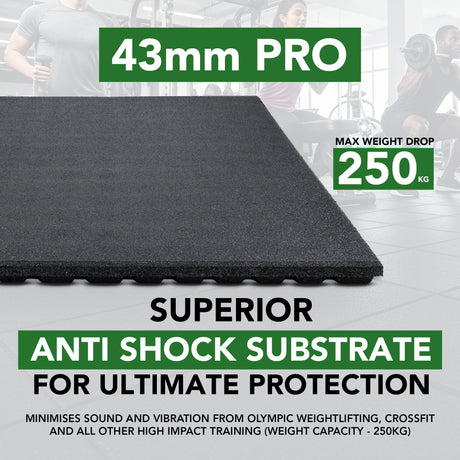
For heavy deadlifts, strongman training, Olympic-style lifting or areas where weights may be dropped repeatedly, thicker heavy-duty gym flooring is normally the more appropriate solution.
PRO Anti-Shock tiles are available in thicknesses including 43mm, 53mm and 63mm. Their studded base is designed to compress under impact, helping to reduce the force transferred into the subfloor.
As a general product guide:
- 43mm tiles are suited to drops of approximately 250kg
- 53mm tiles are suited to drops of approximately 300kg
- 63mm tiles are suited to drops of approximately 350kg
These figures should be treated as selection guidance rather than permission to drop any weight from any height. Training style, equipment type, installation quality and the condition of the underlying floor all affect performance.

Flooring for Deadlifts and Weight Drops
Deadlifting creates a different flooring requirement from controlled dumbbell training. Even when a bar is not deliberately dropped, a heavily loaded barbell creates a concentrated impact as the plates return to the floor.
Thin rolls and lightweight mats may protect against scratches, but they provide limited defence against repeated heavy drops. A thicker rubber tile, anti-shock surface or dedicated lifting platform is generally more suitable.
Separate lifting pads can be placed beneath each end of a barbell, but they restrict where the bar can be positioned. Covering the full lifting zone with appropriate thick rubber floor mats gives the user greater freedom of movement and provides protection if a dumbbell or plate lands outside the expected drop area.
Can Free Weights Flooring Reduce Noise and Vibration?
Rubber flooring can reduce impact noise and vibration, but it cannot make heavy weight training completely silent. The effectiveness of the floor depends on its thickness, density, underside design and the structure of the building.
A thicker tile usually isolates impact more effectively than a thin surface. This is especially important in upstairs gyms, apartments, converted offices and commercial facilities with occupied rooms nearby.
For particularly sound-sensitive spaces, the Decibel acoustic gym flooring range is designed to provide additional impact and vibration control. An acoustic rubber underlay may also be introduced as part of a layered flooring system.
Structural noise can travel through walls, beams and ceilings, so professional advice may be needed where substantial weights will be dropped above another occupied area.
Home and Garage Free Weights Areas
A home free weights area may only occupy part of a spare room, garage or outbuilding, but the flooring should still match the heaviest activity planned for the space.
In indoor rooms, appearance, odour, floor height and sound transfer may be the main considerations. Decorative 20mm tiles work well beneath benches and controlled dumbbell setups, while thicker acoustic options are more suitable when there are rooms below.
For a garage gym flooring installation, the surface must cope with a cold concrete base, dust, changing temperatures and potential moisture. The concrete should be level, clean and dry before installation. Any existing damp problem should be addressed rather than sealed beneath the tiles.
Heavy racks and benches can usually sit directly on dense rubber flooring. Where equipment is bolted to the floor, installation requirements should be considered before the tiles are laid.
Commercial Free Weights Flooring
Commercial free weights zones experience heavier traffic, larger loads and more frequent equipment movement than most home gyms. Flooring must withstand repeated use throughout the day while remaining straightforward to inspect and clean.
Different thicknesses can be used to zone the facility. A 15mm or 20mm surface may be sufficient around resistance machines and controlled dumbbell areas, while deadlift stations and heavy lifting zones can use 43mm or thicker anti-shock tiles.
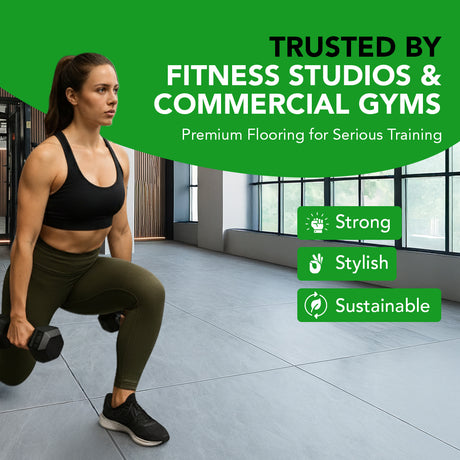
Colour and finish can also guide members through the space. Flecked or decorative tiles can separate walkways, functional areas and strength zones without relying entirely on barriers or signs. Our broader commercial gym flooring range can be used to coordinate free weights areas with cardio suites, studios and circulation spaces.
Are Free Weight Mats Easy to Maintain?
Rubber free weights flooring requires relatively simple maintenance. Loose dirt and chalk should be vacuumed or swept regularly before the surface is cleaned using a damp mop and a mild, pH-neutral detergent.
Standing water and aggressive chemical cleaners should be avoided. Spills should be removed promptly, particularly around benches and equipment feet where moisture may become trapped.
Tiles should also be checked periodically for movement, raised edges or localised damage. Maintaining a clean, level surface helps preserve traction and keeps the free weights area looking professional.
The most suitable free weights flooring is ultimately determined by the heaviest lift, not the lightest exercise. Choosing adequate protection at the outset can prevent subfloor damage, reduce disruption and create a lifting zone that remains dependable as your training or facility develops.
Try our garage gym flooring conversion planner
Find out more by reading:-
Free Weights Flooring: Everything you need to know
Best Flooring Options for Crossfit
How thick should a floor be for Best Home Gym Setup?
Looking to make a Gym Statement?
Elevate your workout space with our Konnecta Gym Tile collection, the perfect blend of functionality and style. These interlocking mats provide superior cushioning and support for all workouts, reducing the risk of injury while enhancing your gym's aesthetic appeal.
Available in various colours and unique designs, Konnecta Tiles not only protect your floors but also add a touch of sophistication to your fitness area. Invest in high-quality designer mats to create a safe, comfortable, and visually stunning workout environment.
You may be interested in:

15mm vs 20mm vs 30mm+ Gym Flooring: What Thickness Do You Need?