


![BOEN Actiflex Dance Studio Flooring Sports Flooring Boen Ash]()
![BOEN Actiflex Dance Studio Flooring Sports Flooring Boen Beech]()
![BOEN Actiflex Dance Studio Flooring]()
![BOEN Actiflex Dance Studio Flooring Sports Flooring Boen European oak]() Uitverkoop
Uitverkoop-
![BOEN - Boflex Olympia Sprung Sports floor Sports Flooring Boen Ash]()
![BOEN - Boflex Olympia Sprung Sports floor Sports Flooring Boen Beech]()
![BOEN - Boflex Olympia Sprung Sports floor Sports Flooring Boen Canadian Maple]()
![BOEN - Boflex Olympia Sprung Sports floor Sports Flooring Boen]() Uitverkoop
Uitverkoop -
![Squash Court Flooring - Boen Arenaflex Flexbat Stadium Sports Flooring Boen Ash]()
![Squash Court Flooring - Boen Arenaflex Flexbat Stadium Sports Flooring Boen Beech]()
![Squash Court Flooring - Boen Arenaflex Flexbat Stadium Sports Flooring Boen Canadian Maple]()
![Squash Court Flooring - Boen Arenaflex Flexbat Stadium Sports Flooring Boen European oak]() Uitverkoop
Uitverkoop  Uitverkoop
BOEN Elevation Batten System for Arenaflex & Olympia
Van £18.39£22.99Eenheid prijs /Niet beschikbaar-
![BOEN - Boflex Stadium Sprung Sports Flooring Sports Flooring Boen Ash]()
![BOEN - Boflex Stadium Sprung Sports Flooring Sports Flooring Boen Beech]()
![BOEN - Boflex Stadium Sprung Sports Flooring Sports Flooring Boen Canadian Maple]()
![BOEN - Boflex Stadium Sprung Sports Flooring Sports Flooring Boen]() Uitverkoop
Uitverkoop -
![Wood Gym Flooring Sports Flooring Boen Ash]()
![Wood Gym Flooring Sports Flooring Boen Beech]()
![Wood Gym Flooring Sports Flooring Boen Canadian Maple]()
![Wood Gym Flooring Sports Flooring Boen European oak]() Uitverkoop
UitverkoopBOEN Actiflex Stadium Engineered Sports Flooring
Van £117.53£178.11Eenheid prijs /Niet beschikbaar -
![Modular Sports Court Flooring | Multiuse Sports Modular Tiles Sprung Gym Flooring Blue]()
![Tennis Court System (Doubles) | Includes Court Markings Sprung Gym Flooring Light Green]()
![Padel Ball Court System | Includes Court Markings Sprung Gym Flooring Grey]()
![Padel Ball Court System | Includes Court Markings Sprung Gym Flooring Dark Grey]() Uitverkoop
Uitverkoop -
![Multisport Modular Tile System | Wheelchair Sports Sports Flooring Sprung Gym Flooring Blue]()
![Multisport Modular Tile System | Wheelchair Sports Sports Flooring Sprung Gym Flooring Green]()
![Full Size Korfball Court with Markings Sprung Gym Flooring]()
![Modular Multi Sport Playground Tiles Sports Flooring GymFloors]() Uitverkoop
Uitverkoop -
![Basketball Court Flooring - Mini Court | Includes Court Markings | Perfect Garden Court Solution Sprung Gym Flooring Court Design 1]()
![Basketball Court Flooring - Mini Court | Includes Court Markings | Perfect Garden Court Solution Sprung Gym Flooring Court Design 2]() Uitverkoop
UitverkoopMini Basketball Court Flooring with Court Markings | Includes Court Markings
Van £2,504.97£3,131.21Eenheid prijs /Niet beschikbaar -
![Vinyl Gym Flooring Vinyl Sports Flooring Sprung Grey]()
![Vinyl Gym Flooring Vinyl Sports Flooring Sprung Grey Oak Effect]()
![Vinyl Gym Flooring Vinyl Sports Flooring Sprung Oak Effect]()
![Vinyl Gym Flooring Vinyl Sports Flooring Sprung Black]()
![Vinyl Gym Flooring Vinyl Sports Flooring Sprung Teal]()
![Vinyl Gym Flooring Vinyl Sports Flooring Sprung Blue]() Uitverkoop
Uitverkoop -
Uitverkoop
3.8mm Sports Vinyl Flooring for Table Tennis
£1,615.44£2,019.30Eenheid prijs /Niet beschikbaar -
![Multisport Modular Tile System | Wheelchair Sports Sports Flooring Sprung Gym Flooring Blue]()
![Multisport Modular Tile System | Wheelchair Sports Sports Flooring Sprung Gym Flooring Green]()
![Padel Ball Court System | Includes Court Markings Sprung Gym Flooring Grey]()
![Padel Ball Court System | Includes Court Markings Sprung Gym Flooring Dark Grey]() Uitverkoop
Uitverkoop -
![Multisport Modular Tile System | Wheelchair Sports Sports Flooring Sprung Gym Flooring Blue]()
![Multisport Modular Tile System | Wheelchair Sports Sports Flooring Sprung Gym Flooring Green]()
![Pickleball Court System | Includes Court Markings Sprung Gym Flooring Grey]()
![Pickleball Court System | Includes Court Markings Sprung Gym Flooring Dark Grey]() Uitverkoop
Uitverkoop 
![Multisport Modular Tile System | Wheelchair Sports Sports Flooring Sprung Gym Flooring Green]()
![Multisport Modular Tile System | Wheelchair Sports Sports Flooring Sprung Gym Flooring Blue]()
![Tennis Court System (Doubles) | Includes Court Markings Sprung Gym Flooring Mid Grey]()
![Pickleball Court System | Includes Court Markings Sprung Gym Flooring Dark Grey]() Uitverkoop
Uitverkoop-
![Multisport Modular Tile System | Wheelchair Sports Sports Flooring Sprung Gym Flooring Green]()
![Multisport Modular Tile System | Wheelchair Sports Sports Flooring Sprung Gym Flooring Blue]()
![Padel Ball Court System | Includes Court Markings Sprung Gym Flooring Grey]()
![Pickleball Court System | Includes Court Markings Sprung Gym Flooring]() Uitverkoop
Uitverkoop -
![Pickleball Court System | Includes Court Markings Sprung Gym Flooring Blue]()
![Pickleball Court System | Includes Court Markings Sprung Gym Flooring Green]()
![Pickleball Court System | Includes Court Markings Sprung Gym Flooring Grey]()
![Pickleball Court System | Includes Court Markings Sprung Gym Flooring Dark Grey]() Uitverkoop
Uitverkoop


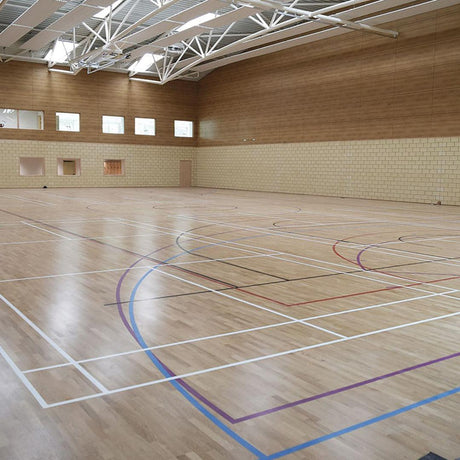
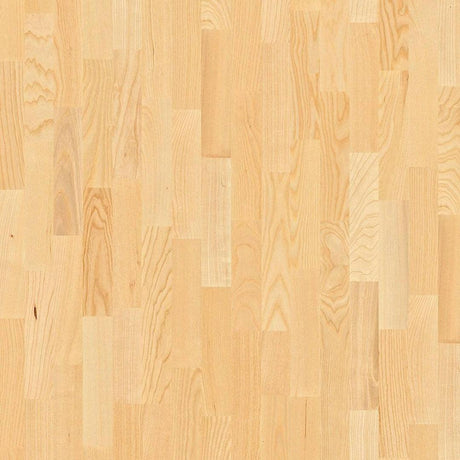
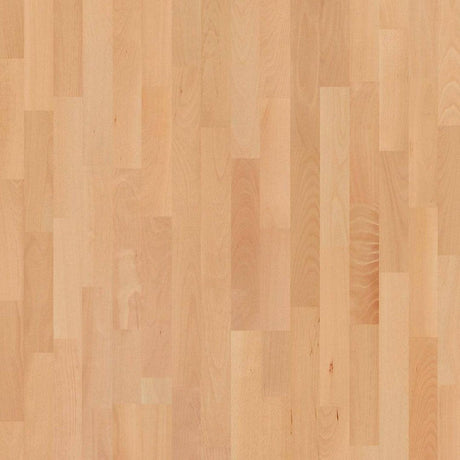
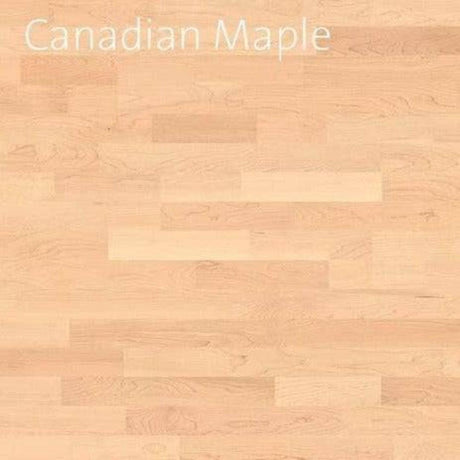


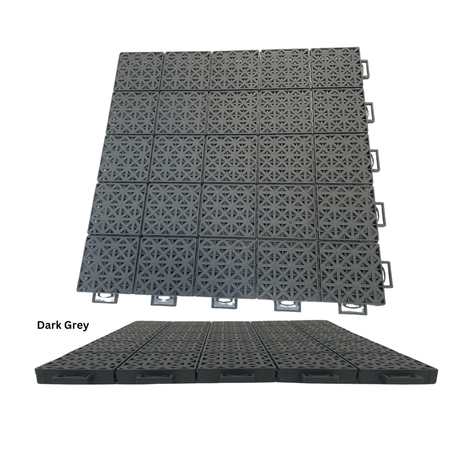
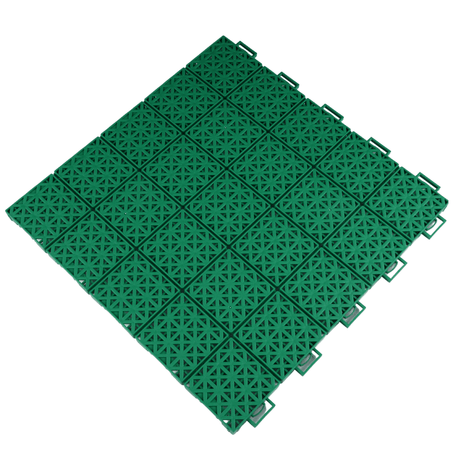







The right sports flooring does more than complete the appearance of a facility. It influences player comfort, traction, ball response, shock absorption, noise levels and the amount of maintenance required throughout the floor’s lifespan.
Our sports flooring range includes sprung timber systems, sports vinyl and interlocking modular court tiles for indoor and outdoor use. These surfaces can support everything from basketball, badminton and futsal to dance, fitness classes, wheelchair sports and community events.
Because each activity places different demands on the floor, the best choice depends on where it will be installed, how the space will be used and whether it needs to accommodate one sport or several.
How to Choose the Right Sports Flooring
Begin by considering the primary purpose of the facility. A competition basketball court has different performance requirements from a dance studio, school activity hall or outdoor community court.
Important points to assess include:
- Whether the floor will be installed indoors or outdoors
- The level of shock absorption required
- Ball bounce and ball speed
- Grip, sliding characteristics and directional movement
- Expected footfall and frequency of use
- Permanent or temporary court markings
- Cleaning and maintenance requirements
- Retractable seating, equipment or other heavy loads
- Whether the space will host non-sporting events
A dedicated court may be designed around one activity, while multi-sport court flooring must provide balanced performance across several sports. Schools, leisure centres and community venues should also account for assemblies, examinations, events and other activities that may take place outside normal training sessions.
Access Full Specification Library
Indoor Sports Hall Flooring
Professional indoor sports hall flooring should provide a stable and consistent playing surface while helping to reduce the strain created by repeated running, jumping and landing.
Wood and vinyl are the two main options for indoor halls. Both can be used for a broad range of sports, but their construction, appearance and maintenance needs differ.
The subfloor is just as important as the visible surface. It must be level, structurally sound and suitable for the selected flooring system. Moisture levels, underfloor heating, floor height transitions and the condition of an existing surface should all be checked before installation begins.
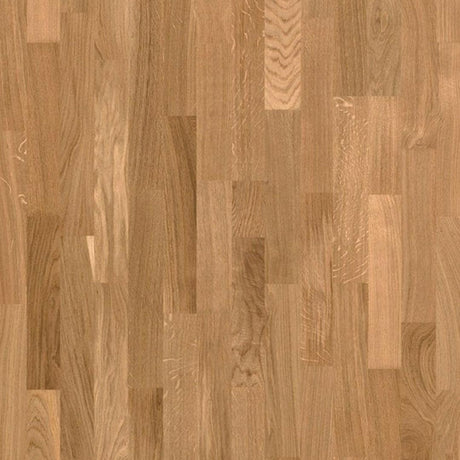
Hardwood Sports Flooring
Traditional wood sports flooring remains a popular choice for sports arenas, schools, dance studios and high-quality multipurpose halls.
Engineered timber surfaces offer excellent ball response, controlled movement and a professional appearance. They are particularly well suited to basketball, volleyball, netball, badminton, squash, futsal and dance.
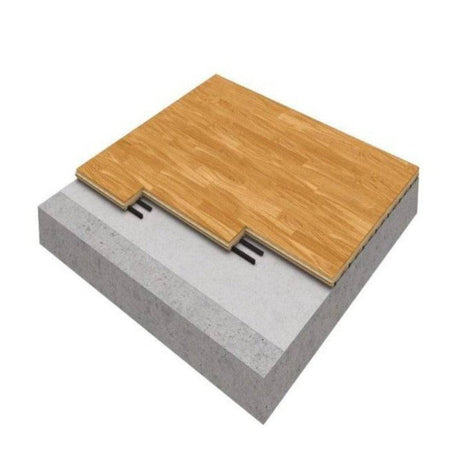
Wood sports flooring is normally installed as part of an area-elastic system. When a player lands, the floor responds across a wider area rather than compressing only beneath the point of impact. This can deliver a comfortable and responsive feel during fast movement and repeated jumping.
Different undercarriage systems are available to suit the building and expected loads. Facilities using retractable seating, portable stages or heavy equipment may require a system with increased load-bearing capacity and carefully positioned access points.
Vinyl Sports Flooring
Vinyl sports flooring provides a practical alternative to timber for schools, studios, training facilities and multipurpose sports halls.
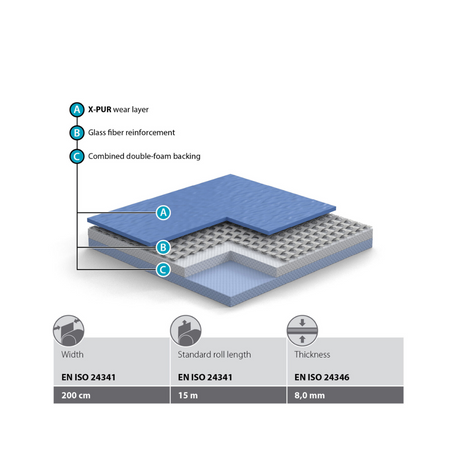
Its resilient construction can combine shock absorption, slip resistance and consistent ball behaviour with a surface that is straightforward to clean. Vinyl is available in different thicknesses, colours and finishes, allowing court zones and surrounding areas to be coordinated with a facility’s design.
It is commonly used for basketball, volleyball, badminton, netball, indoor football, table tennis, fitness classes and dance. Specialist vinyl can also be selected for spaces where controlled foot movement is particularly important.
Compared with wood, vinyl generally offers more freedom with colour and visual zoning. Timber provides a traditional sports-hall finish and may allow periodic sanding or refinishing, while severe damage to a vinyl surface can be more difficult to repair discreetly.
The decision should therefore reflect the facility’s budget, visual preferences, maintenance programme and range of activities rather than relying on appearance alone.
Point-Elastic and Area-Elastic Sports Floors
A point-elastic floor compresses mainly at the point where an athlete lands. This can provide immediate cushioning and is often associated with resilient vinyl systems.
An area-elastic floor distributes movement across a broader section of the surface. Sprung wood systems commonly use this type of construction to deliver energy return, shock absorption and consistent sports performance.
Neither design is automatically right for every project. The most suitable option depends on the sport, user group, desired playing characteristics and relevant performance standards.

Modular Sports Courts
Outdoor courts must cope with rain, temperature changes, ultraviolet exposure and standing water while continuing to provide dependable grip and drainage.
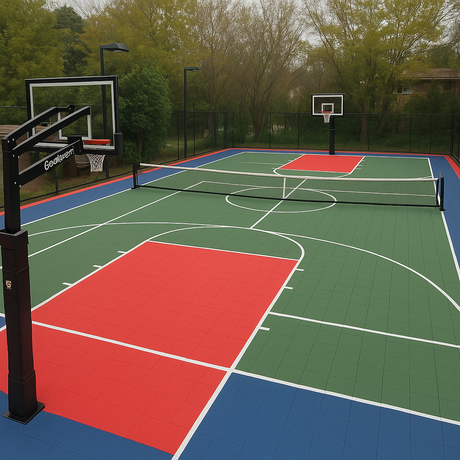
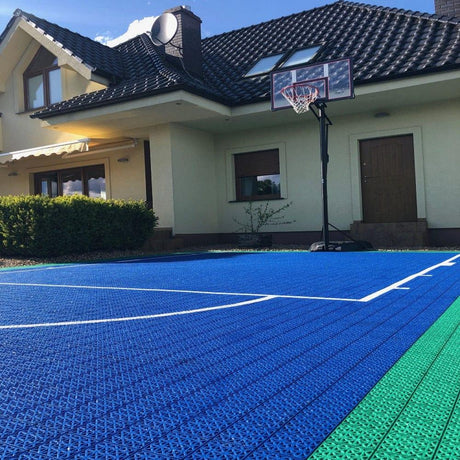
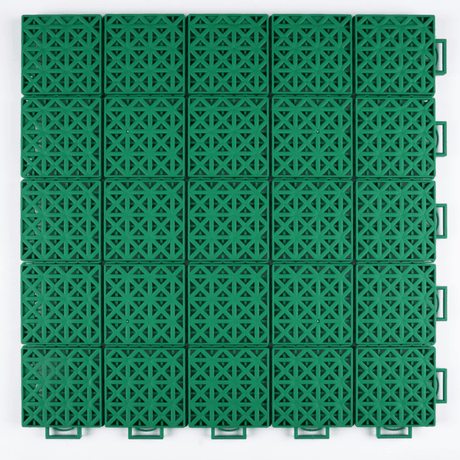
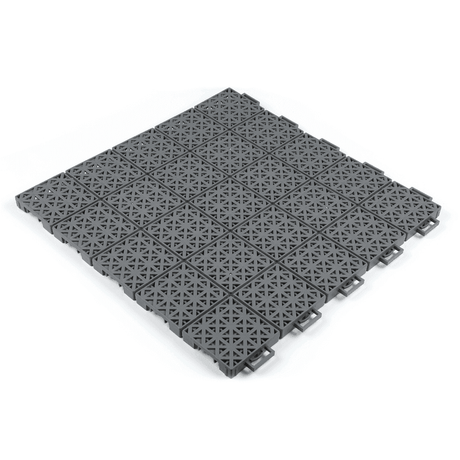
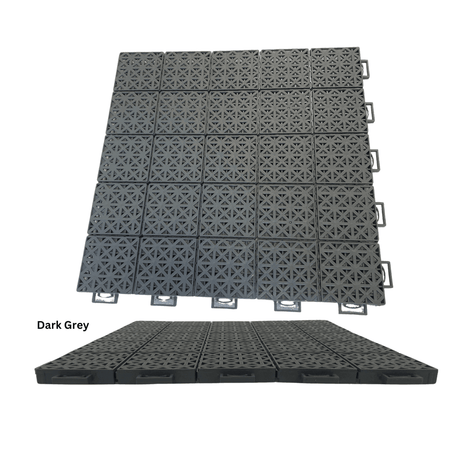
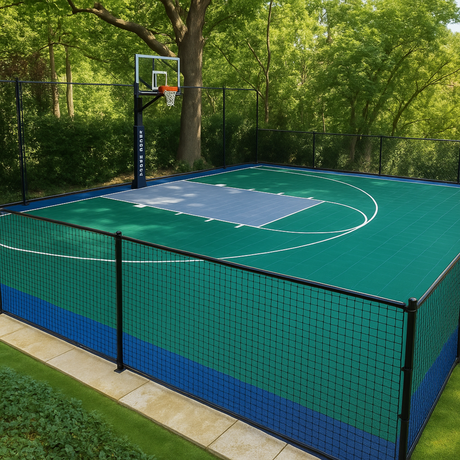
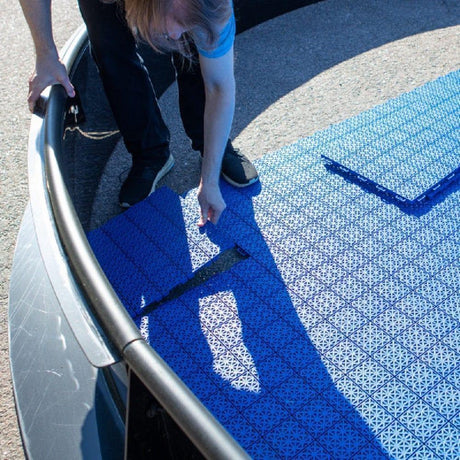
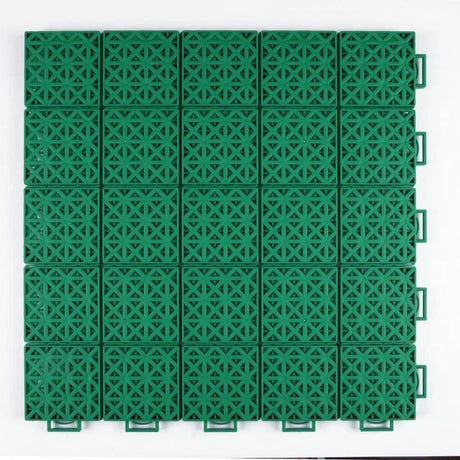
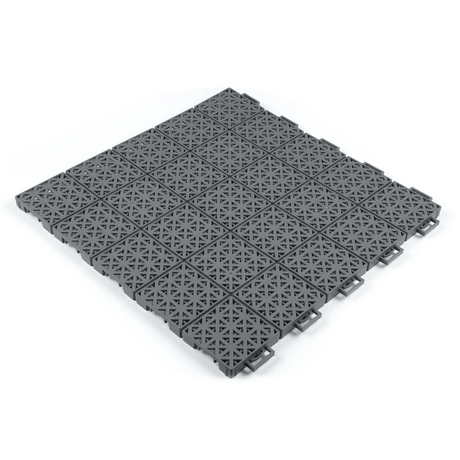
Interlocking modular sports tiles create a durable playing surface that can be installed over a suitable solid base. Their open-grid construction allows water to drain through the court rather than remaining on the playing area.
Modular systems are suitable for basketball, tennis, futsal, pickleball, padel, netball, wheelchair sports and multipurpose games areas. Individual tiles can also be replaced if a section becomes damaged, making them practical for busy schools, clubs and community facilities.
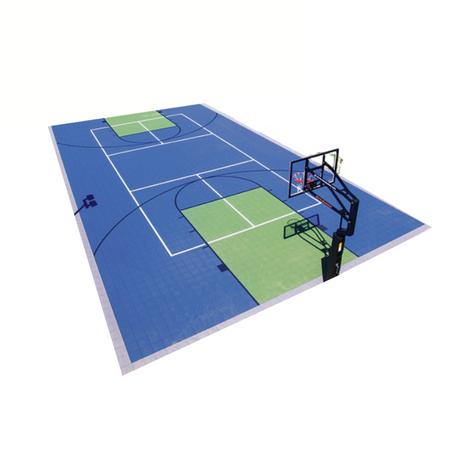
Pre-lined layouts reduce the work involved in setting out a court and help produce clear, accurate markings. Bespoke colour combinations can distinguish playing zones, run-off areas and different sports within one facility.
For basketball-focused projects, specialist basketball court flooring can be selected for full courts, compact training areas and 3x3 layouts. Facilities combining football-style play with other court sports may instead require a dedicated futsal flooring surface with suitable traction and ball response.
Sports Flooring for Dance and Fitness
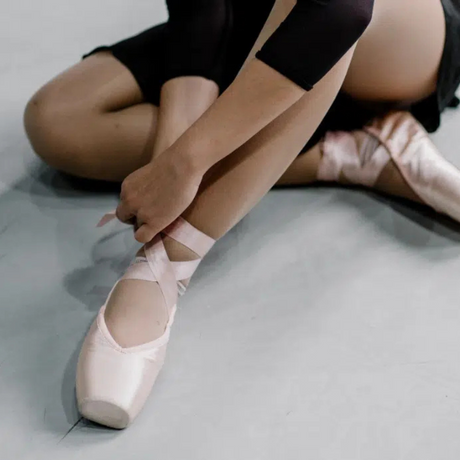
Studios require a floor that supports controlled movement without feeling excessively hard or unstable. The correct degree of cushioning can help reduce fatigue while allowing dancers to turn, travel and land confidently.
Purpose-designed dance studio flooring may use sprung wood, sports vinyl or a combination of resilient layers. The best system depends on the dance styles being taught, whether the room also hosts fitness classes and the type of footwear normally worn.
Free-weight or strength areas should be separated from wood and vinyl sports surfaces or protected with appropriate rubber matting. Repeatedly dropping weights onto an unprotected sports floor can damage both the visible finish and the supporting system beneath it.
Court Markings and Facility Layout
Court markings should be planned before the floor is ordered. Consider which sport takes priority, how secondary lines will be distinguished and whether the layout complies with the dimensions required for training or competition.
Using too many similar line colours can make a multipurpose court difficult to follow. A clear hierarchy of contrasting markings improves usability for players, coaches and officials.
Door thresholds, equipment stores, wall clearances, spectator areas and accessible routes should also be incorporated into the design. For wheelchair sports, transitions must remain smooth and the surface should support predictable rolling and turning.
Sports Floor Cleaning and Maintenance
Regular maintenance protects traction, appearance and playing consistency. Dust and grit should be removed frequently because fine debris can reduce grip and gradually mark the surface.
Timber and vinyl floors should be cleaned with compatible products and minimal excess water. Outdoor modular courts may require periodic brushing or low-pressure washing to remove leaves, dirt and organic matter from the drainage openings.
Entrance matting helps prevent moisture and debris from reaching an indoor court. Protective coverings should be used when a sports hall hosts tables, chairs, staging or public events, while heavy items should never be dragged directly across the surface.
By matching the floor to the activity, building and maintenance resources from the outset, you can create a safer and more versatile sports environment with reliable performance for players, pupils, members and community users.
