The 10-second answer
Choose rubber gym flooring for weights, strength training, gym equipment and impact protection. Choose sports hall flooring for court sports, dance, multi-use halls and spaces where ball response, movement and appearance matter.
Sports hall flooring comes in various forms, mainly sprung wood sports flooring and vinyl sports flooring. These also have different undercarriage systems where some may use foam and clips, a batten system or other sublayer beneath the flooring.
Quick comparison
| Feature | Rubber gym flooring | Sports hall flooring |
|---|---|---|
| Best for | Free weights, gym equipment, HIIT, strength | Basketball, dance, court sports, multi-use halls |
| Main function | Impact protection | Sports performance |
| Surface feel | Grippy and stable | Smoother, designed for movement |
| Heavy weights | Yes, if thickness is correct | Usually needs protection |
| Appearance | Functional gym finish | Cleaner sports/leisure finish |
| Installation | DIY or professional depending on product | Usually specialist installation |
| Best buyer | Gym owner, PT, home gym user | School, leisure centre, sports facility |
When gym flooring is the right choice

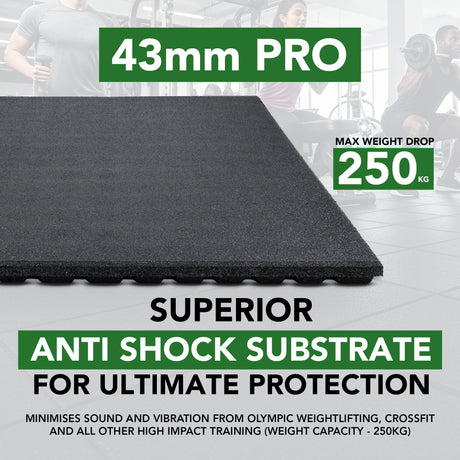
Gym flooring is the right surface when the main risk is impact. That usually means dumbbells, barbells, kettlebells, racks, machines, sleds or repeated high-intensity training.
Rubber is designed to protect the subfloor, reduce noise and give users a stable training surface. It is also the better choice when equipment will stay in place for long periods.
This is the easy rule for customers: if the room is mainly for lifting, choose gym flooring.
When sports hall flooring is the right choice

Sports hall flooring is different because the floor has to support movement rather than weight drops.
For court sports, dance and multi-use activity, the surface needs to help with comfort, grip, turning, ball response, appearance and long-term maintenance. These floor types usually require specialist installation and sometimes finishing such as court marking.
This is the easy rule: if people are running, pivoting, dancing or playing court sports, choose sports flooring.
When a site needs both
Many leisure centres, schools and community facilities need both types of floor. The mistake is trying to make one surface do everything.
A better layout is:
| Zone | Best surface |
|---|---|
| Free weights | Rubber gym flooring |
| Cardio equipment | Rubber roll or suitable gym flooring |
| Functional fitness | Rubber gym flooring or gym synthetic turf/tracks |
| Dance studio | Vinyl or wood sports/dance floor |
| Basketball/badminton hall | Sports hall flooring |
| Multi-use community hall | Vinyl or wood sports flooring |
| Weights in a sports hall | Use protective matting or a dedicated weights zone |
Common questions
Can you use sports hall flooring in a gym?
Yes for studios, classes and light fitness, but not for dropped weights unless the floor is protected with mats.
Can you use rubber gym flooring in a sports hall?
Usually not for court sports. Rubber is too grippy and is not designed for ball response or fast pivoting.
What is best for a school gym?
It depends on the use. A school fitness suite needs rubber gym flooring. A school sports hall needs sports flooring.
What is best for a leisure centre?
Most leisure centres need zoned flooring: rubber in the gym and strength areas, sports flooring in halls and studios.