


![Sprung Fleckz Gym Rubber Matting Roll - Various Colours | Thicknesses - 1.25m Width]()
![Sprung Fleckz Gym Rubber Matting Roll - Various Colours | Thicknesses - 1.25m Width]()
![Sprung Fleckz Gym Rubber Matting Roll - Various Colours | Thicknesses - 1.25m Width GYM FLOORING Sprung Gym Flooring 6mm Yellow]()
![Sprung Fleckz Gym Rubber Matting Roll - Various Colours | Thicknesses - 1.25m Width GYM FLOORING Sprung Gym Flooring 6mm Green]()
![Sprung Fleckz Gym Rubber Matting Roll - Various Colours | Thicknesses - 1.25m Width GYM FLOORING Sprung Gym Flooring 6mm Blue]()
![Sprung Fleckz Gym Rubber Matting Roll - Various Colours | Thicknesses - 1.25m Width GYM FLOORING Sprung Gym Flooring 6mm Blue]()
![Sprung Fleckz Gym Rubber Matting Roll - Various Colours | Thicknesses - 1.25m Width]()
![Sprung Fleckz Gym Rubber Matting Roll - Various Colours | Thicknesses - 1.25m Width GYM FLOORING Sprung Gym Flooring 8mm Blue]()
![Sprung Fleckz Gym Rubber Matting Roll - Various Colours | Thicknesses - 1.25m Width GYM FLOORING Sprung Gym Flooring 6mm Blue]()
![Sprung Fleckz Gym Rubber Matting Roll - Various Colours | Thicknesses - 1.25m Width]()
![Sprung Fleckz Gym Rubber Matting Roll - Various Colours | Thicknesses - 1.25m Width GYM FLOORING Sprung Gym Flooring 8mm Blue]()
![Sprung Fleckz Gym Rubber Matting Roll - Various Colours | Thicknesses - 1.25m Width GYM FLOORING Sprung Gym Flooring 6mm Blue]() Uitverkoop
UitverkoopSprung Fleckz Gym Rubber Matting Roll - Various Colours | Thicknesses - 1.25m Width
Van £628.54£740.67Eenheid prijs /Niet beschikbaar-
![Sprung CORE Sprint Track with Markings - 2 Sizes | 3 Colours sprint track GymFloors Red 1m x 10m]()
![Sprung CORE Sprint Track with Markings - 2 Sizes | 3 Colours sprint track GymFloors Red 1m x 10m]()
![Sprung CORE Sprint Track with Markings - 2 Sizes | 3 Colours sprint track GymFloors Red 1m x 10m]()
![Sprung CORE Sprint Track with Markings - 2 Sizes | 3 Colours sprint track GymFloors Red 1m x 10m]()
![Sprung CORE Sprint Track with Markings - 2 Sizes | 3 Colours sprint track GymFloors Green 1m x 10m]()
![Sprung CORE Sprint Track with Markings - 2 Sizes | 3 Colours sprint track GymFloors Green 1m x 10m]()
![Sprung CORE Sprint Track with Markings - 2 Sizes | 3 Colours sprint track GymFloors Green 1m x 10m]()
![Sprung CORE Sprint Track with Markings - 2 Sizes | 3 Colours sprint track GymFloors Green 1m x 10m]()
![Sprung CORE Sprint Track with Markings - 2 Sizes | 3 Colours sprint track GymFloors Black 1m x 10m]()
![Sprung CORE Sprint Track with Markings - 2 Sizes | 3 Colours sprint track GymFloors Black 1m x 10m]()
![Sprung CORE Sprint Track with Markings - 2 Sizes | 3 Colours sprint track GymFloors Black 1m x 10m]()
![Sprung CORE Sprint Track with Markings - 2 Sizes | 3 Colours sprint track GymFloors Black 1m x 10m]() Uitverkoop
UitverkoopCORE Sprint Track with Markings – 2 Sizes | 3 Colours
Van £1,431.00£1,788.75Eenheid prijs /Niet beschikbaar -
![Indoor Gym Turf - 2m Wide Sprint Track GymFloors]()
![Indoor Gym Turf - 2m Wide Sprint Track GymFloors]()
![Indoor Gym Turf Roll – 2m Wide]()
![Indoor Gym Turf - 2m Wide Sprint Track GymFloors]()
![Indoor Gym Turf Roll – 2m Wide]()
![Indoor Gym Turf - 2m Wide Sprint Track GymFloors]()
![Indoor Gym Turf - 2m Wide Sprint Track GymFloors]()
![Indoor Gym Turf Roll – 2m Wide]()
![Indoor Gym Turf - 2m Wide Sprint Track GymFloors]()
![Indoor Gym Turf Roll – 2m Wide]()
![Indoor Gym Turf - 2m Wide Sprint Track GymFloors]()
![Indoor Gym Turf - 2m Wide Sprint Track GymFloors]()
![Indoor Gym Turf Roll – 2m Wide]()
![Indoor Gym Turf - 2m Wide Sprint Track GymFloors]()
![Indoor Gym Turf Roll – 2m Wide]()
![Indoor Gym Turf - 2m Wide Sprint Track GymFloors]()
![Indoor Gym Turf - 2m Wide Sprint Track GymFloors]() Uitverkoop
Uitverkoop -
![Indoor Sled Track – 2m Wide]()
![Indoor Sled Track - 2m Wide Sprint Track GymFloors]()
![Indoor Sled Track - 2m Wide Sprint Track GymFloors]()
![Indoor Sled Track - 2m Wide Sprint Track GymFloors]()
![Indoor Sled Track – 2m Wide]()
![Indoor Sled Track – 2m Wide]()
![Indoor Sled Track – 2m Wide]()
![Indoor Sled Track - 2m Wide Sprint Track GymFloors]()
![Indoor Sled Track - 2m Wide Sprint Track GymFloors]()
![Indoor Sled Track – 2m Wide]()
![Indoor Sled Track – 2m Wide]()
![Indoor Sled Track – 2m Wide]()
![Indoor Sled Track - 2m Wide Sprint Track GymFloors]()
![Indoor Sled Track - 2m Wide Sprint Track GymFloors]()
![Indoor Sled Track – 2m Wide]()
![Indoor Sled Track – 2m Wide]()
![Indoor Sled Track – 2m Wide]()
![Indoor Sled Track - 2m Wide Sprint Track GymFloors]() Uitverkoop
Uitverkoop -
![Indoor Sprint Track – 2m Wide]()
![Indoor Sprint Track – 2m Wide]()
![Sprung Plain Colour Uni Indoor Sprint Track - 2m Wide Sprint Track GymFloors]()
![Indoor Sprint Track – 2m Wide]()
![Sprung Plain Colour Uni Indoor Sprint Track - 2m Wide Sprint Track GymFloors]()
![Indoor Sprint Track – 2m Wide]()
![Indoor Sprint Track – 2m Wide]()
![Sprung Plain Colour Uni Indoor Sprint Track - 2m Wide Sprint Track GymFloors]()
![Indoor Sprint Track – 2m Wide]()
![Sprung Plain Colour Uni Indoor Sprint Track - 2m Wide Sprint Track GymFloors]()
![Indoor Sprint Track – 2m Wide]()
![Indoor Sprint Track – 2m Wide]()
![Sprung Plain Colour Uni Indoor Sprint Track - 2m Wide Sprint Track GymFloors]()
![Indoor Sprint Track – 2m Wide]()
![Sprung Plain Colour Uni Indoor Sprint Track - 2m Wide Sprint Track GymFloors]()
![Indoor Sprint Track – 2m Wide]()
![Indoor Sprint Track – 2m Wide]() Uitverkoop
Uitverkoop -
![Sprung Essential Sprint Track with Markings (2m Wide) sprint track SuperStrong Fitness 10 Green]()
![Sprung Essential Sprint Track with Markings (2m Wide) sprint track SuperStrong Fitness 10 Black]()
![Sprung Essential Sprint Track with Markings (2m Wide) sprint track SuperStrong Fitness 10 Anthracite Grey]()
![Sprung Essential Sprint Track with Markings (2m Wide) sprint track SuperStrong Fitness 10 Brick Red]()
![Sprung Essential Sprint Track with Markings (2m Wide) sprint track SuperStrong Fitness]()
![Sprung Essential Sprint Track with Markings (2m Wide) sprint track SuperStrong Fitness 10 Green]()
![Sprung Essential Sprint Track with Markings (2m Wide) sprint track SuperStrong Fitness 10 Black]()
![Sprung Essential Sprint Track with Markings (2m Wide) sprint track SuperStrong Fitness 10 Anthracite Grey]()
![Sprung Essential Sprint Track with Markings (2m Wide) sprint track SuperStrong Fitness]() Uitverkoop
UitverkoopEssential Sprint Track with Markings – 2m Wide
Van £2,116.82£2,646.02Eenheid prijs /Niet beschikbaar -
-
![Sprint Track with Full Markings – 1.33m Wide]()
![Sprung Premium Sprint Track with Full Markings (1.33m Wide) sprint track GymFloors 10.4 Grey]()
![Sprung Premium Sprint Track with Full Markings (1.33m Wide) sprint track GymFloors 10.4 Red]()
![Sprung Premium Sprint Track with Full Markings (1.33m Wide) sprint track GymFloors]()
![Sprung Premium Sprint Track with Full Markings (1.33m Wide) sprint track GymFloors 10.4 Black]()
![Sprung Premium Sprint Track with Full Markings (1.33m Wide) sprint track GymFloors]() Uitverkoop
UitverkoopSprint Track with Full Markings – 1.33m Wide
Van £2,644.70£3,305.87Eenheid prijs /Niet beschikbaar -
![20mm Konnecta Wood Effect Gym Flooring Mats]()
![20mm Konnecta Wood Effect Gym Flooring Mats]()
![20mm Konnecta Wood Effect Gym Flooring Mats]() Uitverkoop
Uitverkoop -
![20mm Konnecta Marble Effect Flooring Mats]()
![20mm Konnecta Marble Effect Flooring Mats]()
![20mm Konnecta Marble Effect Flooring Mats]() Uitverkoop
Uitverkoop20mm Konnecta Marble Effect Flooring Mats
Van £61.48£76.85Eenheid prijs /Niet beschikbaar -
![Interlocking Turf Puzzle Tiles]()
![Interlocking Turf Puzzle Tiles]() Uitverkoop
Uitverkoop 
![20mm Onyx EPDM Rubber Gym Tiles]()
![20mm Onyx EPDM Rubber Gym Tiles]() Uitverkoop
Uitverkoop-
Uitverkoop
-
Uitverkoop



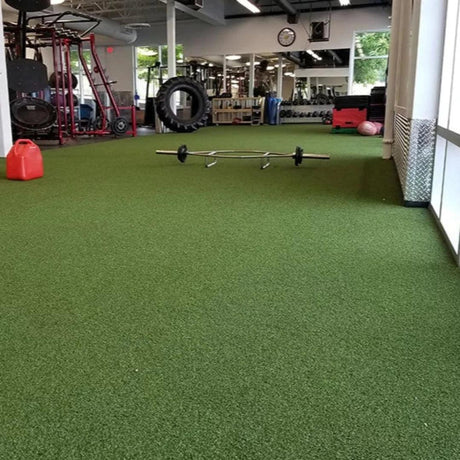
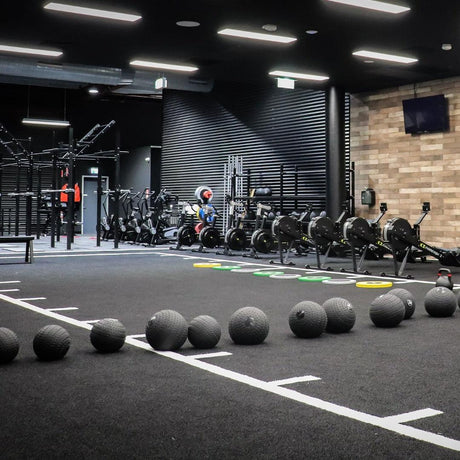
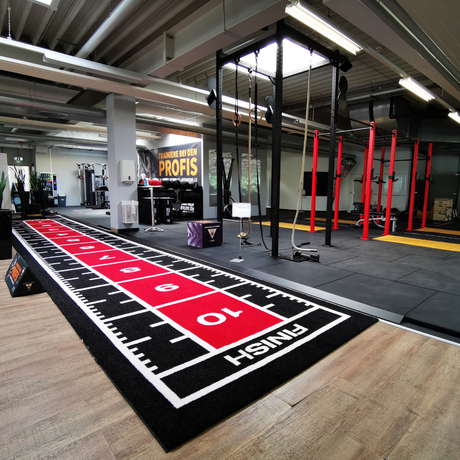
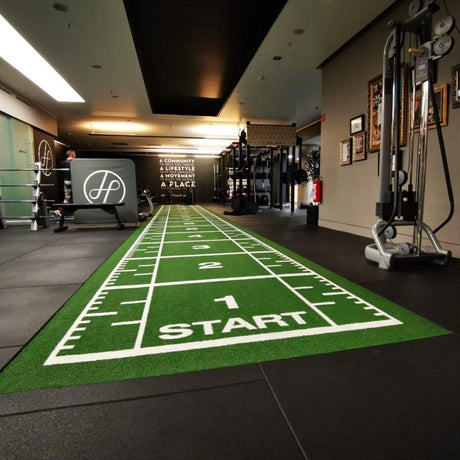




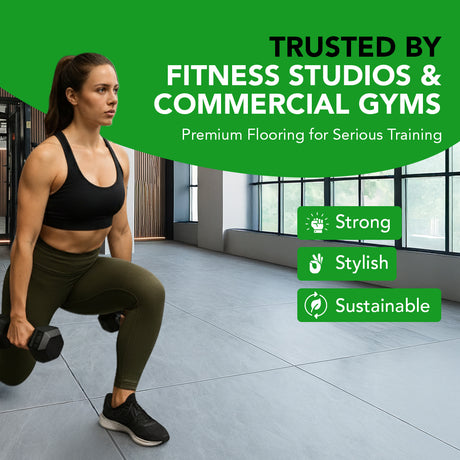
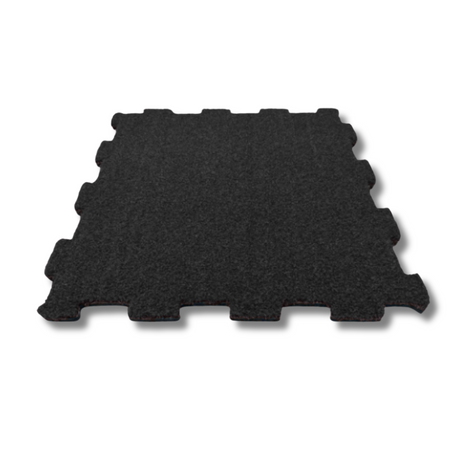
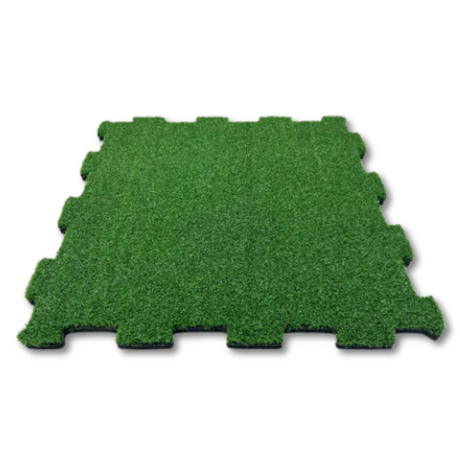


Commercial gym flooring must do far more than simply cover the subfloor. In a busy fitness facility, the surface beneath each training zone affects member safety, equipment stability, noise levels, maintenance and the overall appearance of the gym.
Our commercial gym flooring range includes durable rubber tiles, interlocking systems, rubber rolls and specialist acoustic surfaces for independent gyms, leisure centres, health clubs, personal training studios, hotel gyms and strength and conditioning facilities.
Whether you are fitting out a new facility or upgrading a well-used training area, the right specification should reflect the exercises performed, the equipment installed and the amount of daily footfall. A cardio zone does not require the same impact protection as an Olympic lifting area, while a studio floor may need greater comfort and a smoother finish than a free weights section.
Access Full Specification Library
Great product and serviceTook us two days to lay out as we had uneven flooring to deal with but was well worth it!”
|
Dartford Grammar School gym“This company is really nice to deal with. Prompt and great customer service. Competitive pricing. Highly recommend.”
|
Awesome gym mattingAwesome gym matting, amazing, thank you. Loved by all using the weight area
|
How to Choose Commercial Gym Flooring
Before choosing a product, divide the gym into practical training zones. Consider where weights will be dropped, where fixed machines will be positioned and which areas will be used for functional movement, stretching or group exercise.
The main factors to assess are:
- The maximum weight likely to be dropped
- The frequency and intensity of use
- The amount of noise and structural vibration produced
- The type and condition of the existing subfloor
- Cleaning and hygiene requirements
- Equipment stability and movement
- The visual finish required throughout the facility
A multi-purpose commercial gym will often perform better with more than one surface. Thicker impact-resistant tiles can be installed around racks and lifting stations, while thinner flooring can be used beneath cardio equipment, resistance machines and general circulation areas.
Commercial Rubber Gym Tiles
Durable rubber gym tiles are a practical option for commercial facilities because they combine grip, resilience and impact protection with straightforward maintenance.
Tiles are particularly suitable for free weights areas, functional training zones, squat racks, cable machines and busy mixed-use spaces. Their modular format also makes it easier to replace an individual section if it becomes damaged, rather than lifting an entire floor.
Our 1m x 1m PRO tiles create a substantial, professional surface with fewer joins than smaller-format matting. The bevelled edges sit neatly together, while the dense rubber construction helps protect concrete, screed and other stable subfloors from equipment marks and repeated impact.
For facilities that need a removable installation, interlocking rubber gym tiles use concealed connection inserts to hold adjoining tiles securely together. This can be especially useful in leased premises, temporary fitness spaces or gyms that may need to reconfigure their equipment layout later.
What Thickness Does a Commercial Gym Need?
The correct flooring thickness depends on the heaviest activity taking place in each area.
Thinner rubber surfaces may be suitable for cardio machines, selectorised resistance equipment, walkways and lighter studio use. General strength areas commonly require a denser tile, while dedicated free weights and Olympic lifting zones need substantially greater impact absorption.
As a practical guide:
- 11mm to 15mm: cardio equipment, machine zones and light dumbbell use
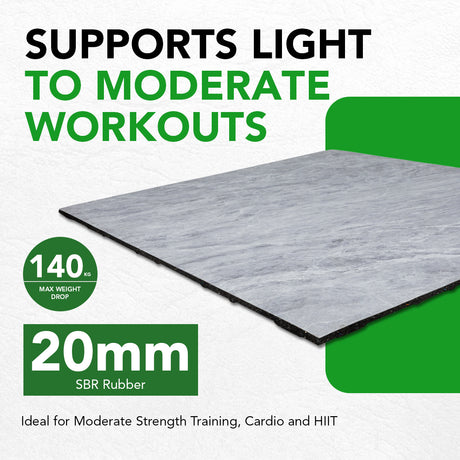
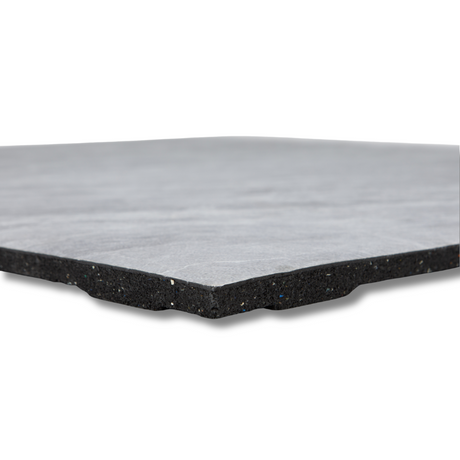
- 20mm: mixed training, functional exercise and weight drops up to approximately 140kg
- 30mm: busier strength areas and increased impact protection
- 43mm: heavy lifting and weight drops up to approximately 250kg
- 53mm: intensive free weights areas and drops up to approximately 300kg
- 63mm: extreme commercial lifting zones and drops up to approximately 350kg
These figures should be considered alongside the frequency of impact and the structure beneath the gym. A first-floor facility or gym positioned above offices may require a stronger acoustic specification than a ground-floor unit on a solid concrete slab.

Flooring for Free Weights and Strength Training
Free weights flooring must tolerate concentrated loads, rolling dumbbells and repeated impact from barbells, plates and kettlebells. It also needs enough grip to support stable foot placement without creating an excessively soft surface beneath racks or benches.
Heavy lifting areas are best protected with dense rubber tiles rather than a thin decorative covering. Our Anti-Shock high-impact rubber floor tiles feature a studded underside designed to absorb impact and reduce the energy transferred into the subfloor.
The thicker options are suited to powerlifting, bodybuilding, CrossFit-style training and Olympic weightlifting areas. They can also be used beneath heavy racks and plate-loaded equipment where long-term durability is more important than achieving the thinnest possible floor profile.
Rubber Flooring Rolls for Cardio and Machine Zones
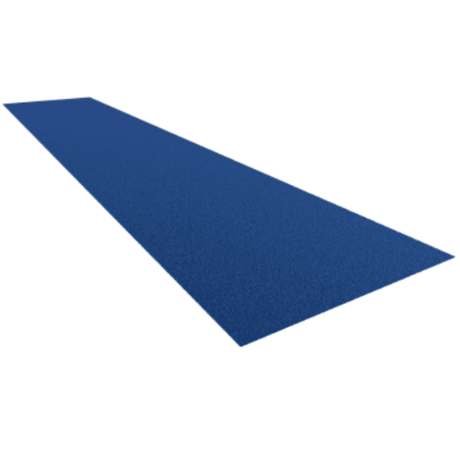
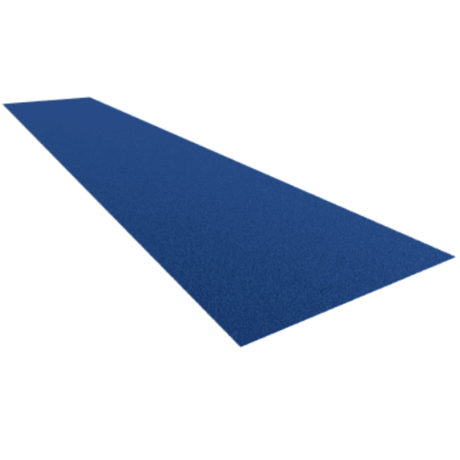
Commercial rubber gym flooring rolls provide broad coverage with fewer visible joins, making them particularly effective across large cardio zones, resistance machine areas, walkways and personal training studios.
A 6mm or 8mm roll may be appropriate for lighter equipment and general exercise, while 10mm rubber offers more durability for higher footfall and heavier commercial machines. Rolls are also useful when the aim is to create a smooth, consistent finish across an open-plan floor.
They are not normally the best standalone surface for repeated heavy barbell drops. Many commercial facilities therefore use rolls throughout the main gym and introduce thicker tiles around lifting racks, dumbbell stations and dedicated strength zones.
Safety and Sound Reduction
Member safety is central to every commercial gym specification. Rubber provides a stable, slip-resistant training surface while helping to cushion movement and reduce the harshness of working directly on concrete.
Its resilient construction also helps absorb the noise caused by footsteps, moving equipment, treadmill operation and weights returning to the floor. This can improve the atmosphere inside the gym and reduce disturbance to neighbouring rooms.
Where impact transfer is a major concern, our acoustic gym flooring provides additional density and isolation for free weights areas, upper-floor gyms and facilities located beside offices, treatment rooms or residential spaces.
Flooring alone cannot guarantee complete soundproofing, as noise performance also depends on the building structure, walls and ceilings. However, correctly specified acoustic tiles can significantly reduce impact vibration at its source.
Functional Training, Sprint Tracks and Zoned Layouts
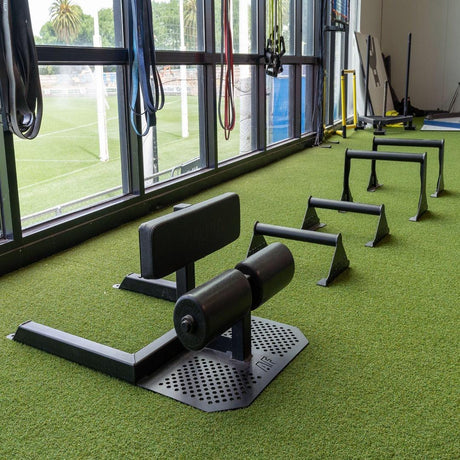
Modern commercial gyms often combine lifting, conditioning and functional exercise within one facility. Flooring can help define these areas clearly while giving each activity the support it needs.
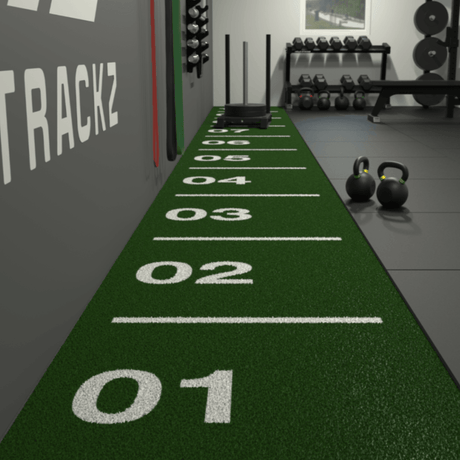
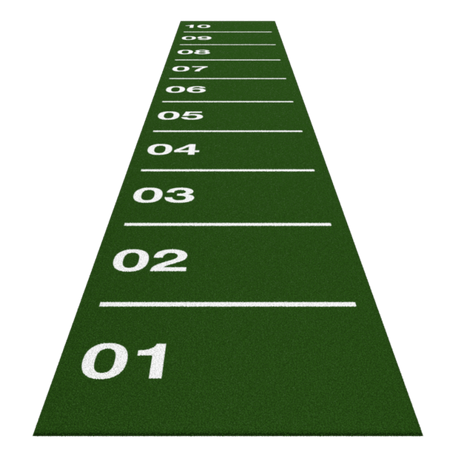
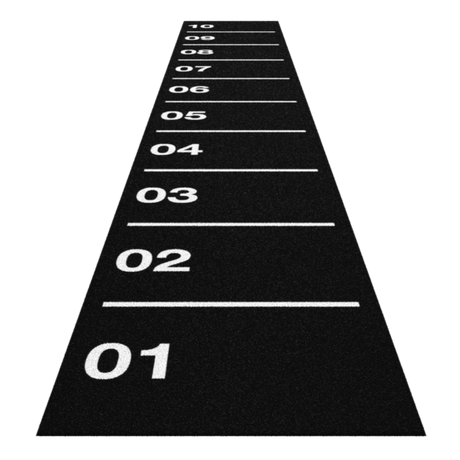
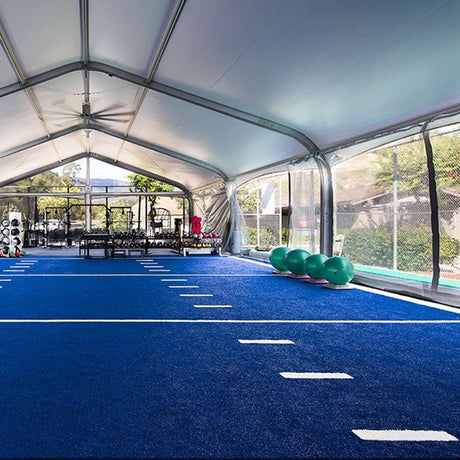
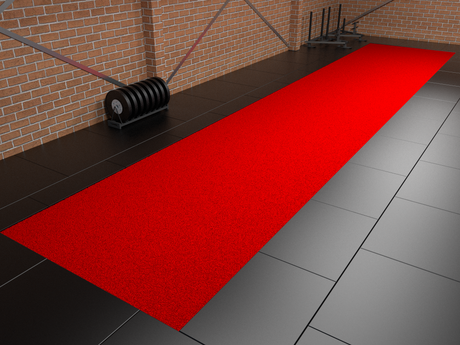
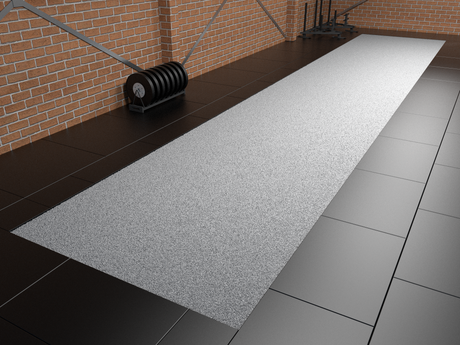
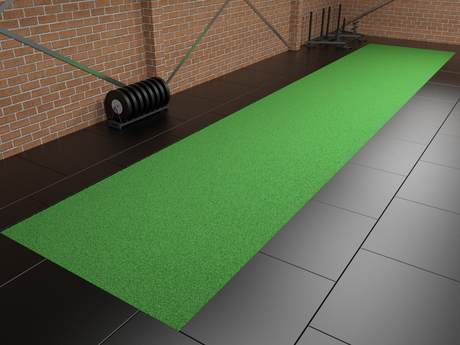
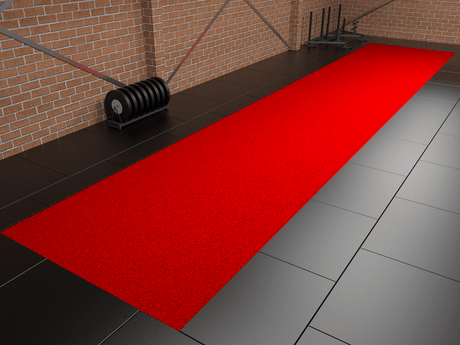
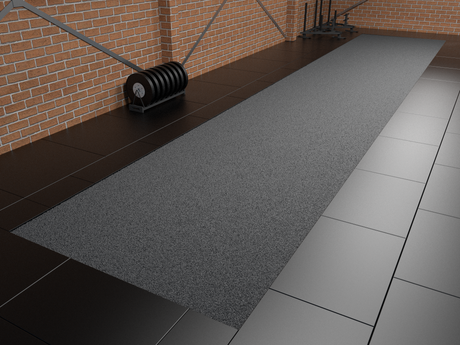
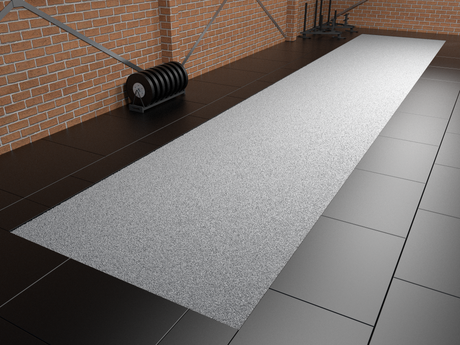
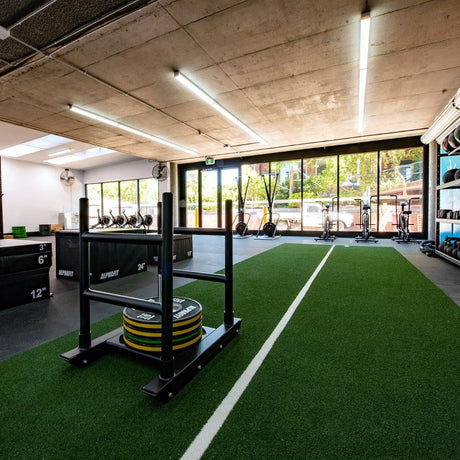
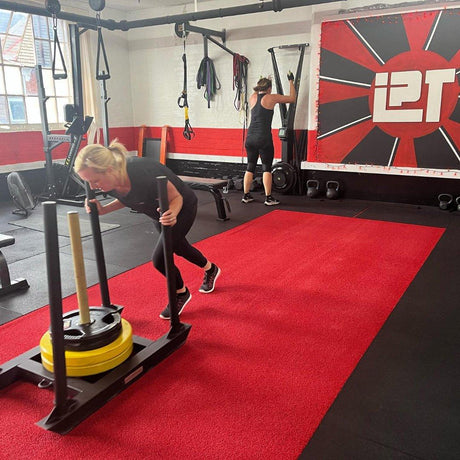
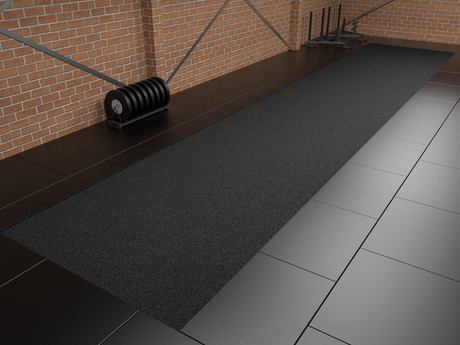
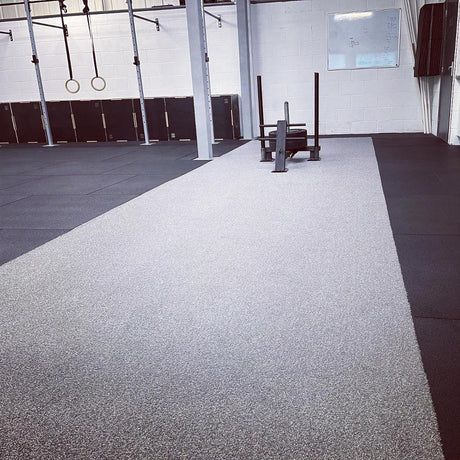
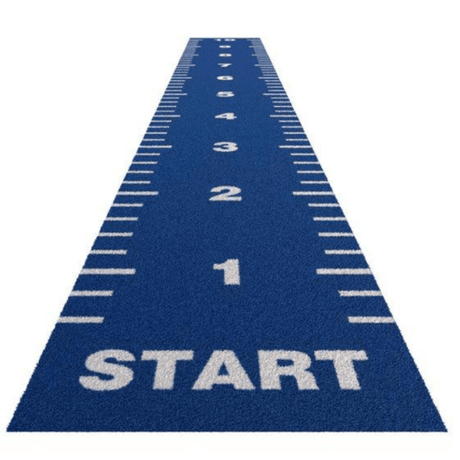
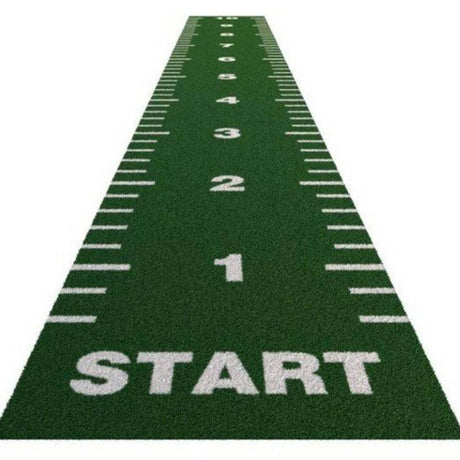
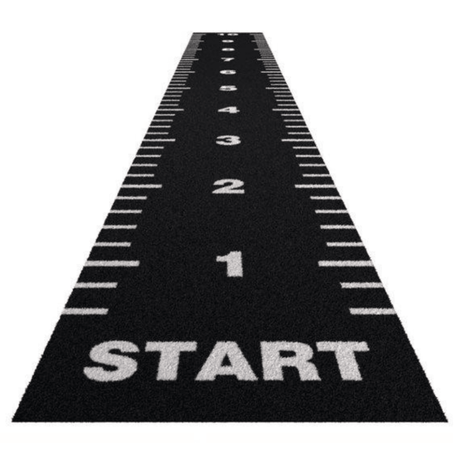
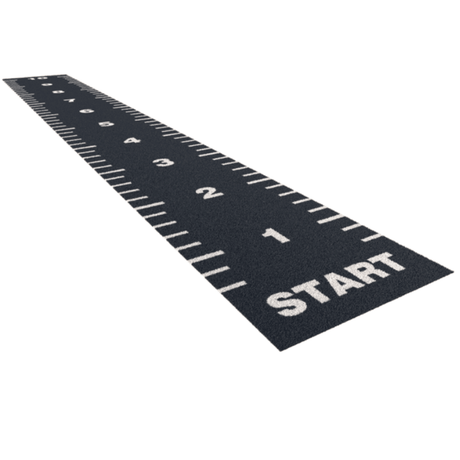
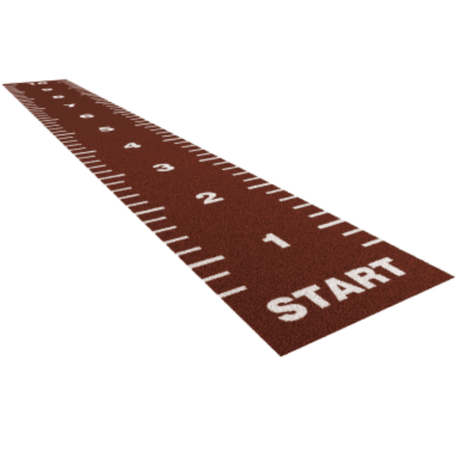
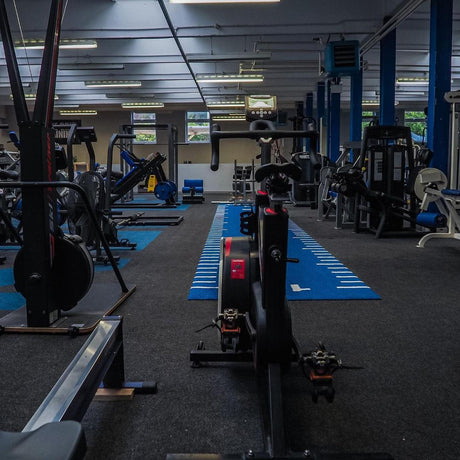
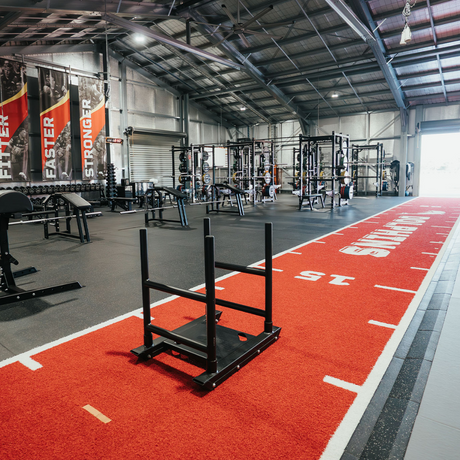
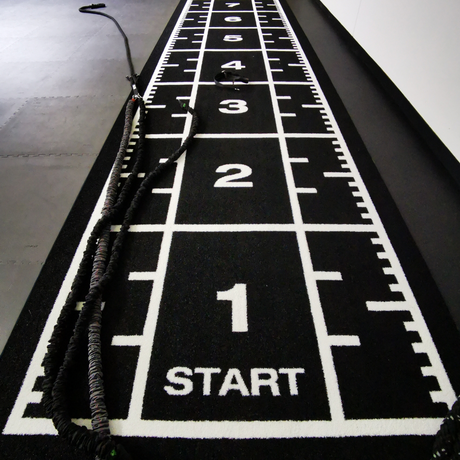
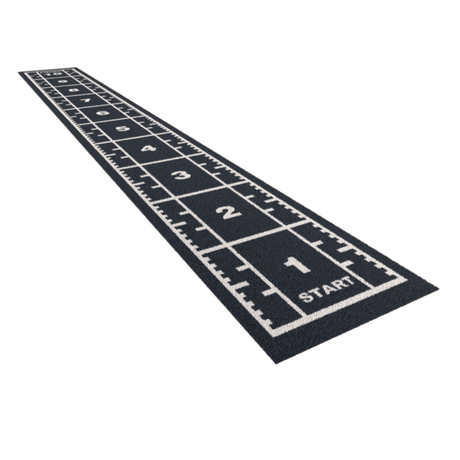
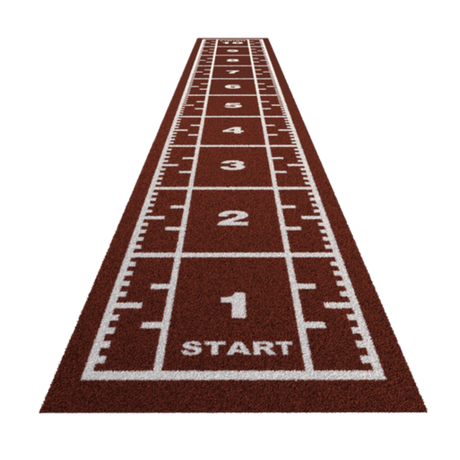
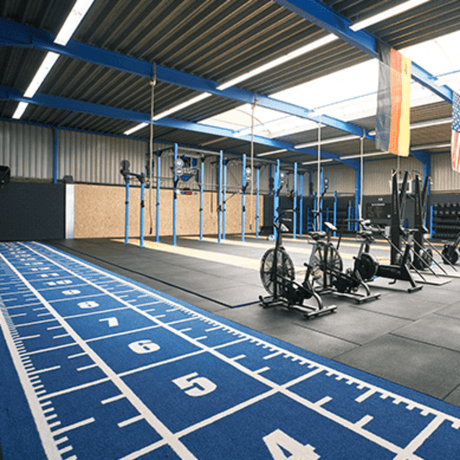
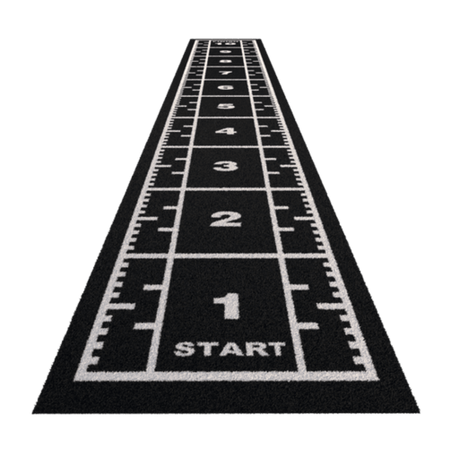
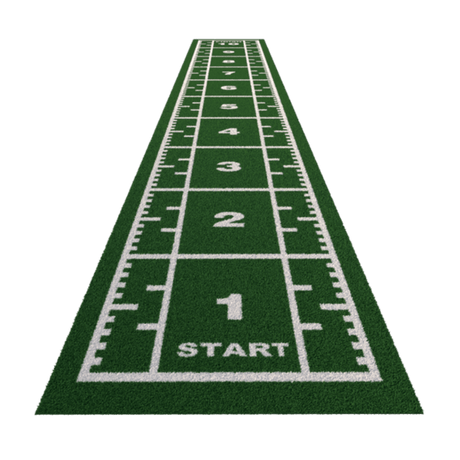
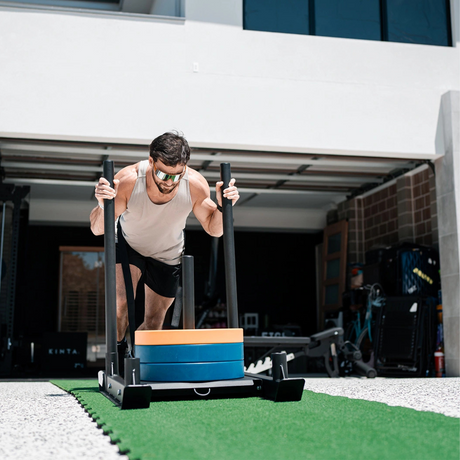
Rubber provides a dependable base for kettlebells, plyometric drills, battle ropes and bodyweight exercise. A dedicated sprint track or sled track can then introduce a clearly marked lane for acceleration drills, sled pushes, pulls and athletic conditioning.
Using contrasting finishes can make a large gym easier to navigate, separate higher-risk lifting areas and create a more considered interior without relying on permanent walls or barriers.

Installation and Commercial Maintenance
All commercial flooring should be installed over a flat, dry and structurally sound base. Uneven subfloors can cause tiles to rock or rolls to ripple, potentially affecting both safety and appearance.
Loose-laid tiles may be suitable for enclosed areas where the perimeter holds the floor securely in place. Adhesive may be recommended for larger open spaces, heavily trafficked routes or areas where equipment is regularly moved.
Routine maintenance is straightforward. Vacuum or sweep away loose dirt, then damp mop the surface using a diluted neutral cleaner. Sweat and spills should be removed promptly, and harsh solvents or strongly concentrated chemicals should be avoided.
A well-planned commercial floor protects the building and equipment while creating a safer, quieter and more professional environment for members. By matching the thickness and flooring format to each training zone, you can build a facility that continues to perform through intensive daily use.


