The fastest way to get stronger is not a secret programme or a fancy machine. It is mastering a handful of barbell exercises with proper form, then adding a little more weight over time.
Barbell training for beginners works because it is simple, measurable, and brutally effective. You train multiple muscle groups in one go, you build upper body and lower body strength together, and you can track progress session by session. The catch is this: beginners often rush to lift heavy weights before they have nailed the starting position, bracing, and bar path. That is where aches, stalled progress, and confidence dips creep in.
In this guide, I will walk you through the essential barbell exercises, the form cues that actually make a difference, and a starter plan you can run in the gym or at home with just a barbell.

Why barbells are a beginner-friendly tool
Efficiency through compound movements
Unlike many machines, barbell training hits the entire body using compound movements. A squat or deadlift recruits legs, glutes, core engaged stabilisers, and upper back all at once. That is why a short barbell workout can still deliver serious results.
Functional fitness that carries over to real life
Barbell training builds the movement patterns you use every day: lifting from the floor, pushing overhead, pulling, and standing up strong. That is functional fitness, and it is one reason beginners feel “capable” quickly.
Muscle mass, strength, and long-term resilience
Consistent strength training supports muscle growth and muscle tension control. It can also support bone health because weight-bearing barbell exercises load the skeleton in a useful way. The big win is confidence: you learn proper technique, then you earn the right to gradually increase weight.
To put real numbers behind that, the LIFTMOR randomised controlled trial (National Library of Medicine) in postmenopausal women with low bone mass found a 2.9% increase in lumbar spine bone mineral density over 8 months with supervised high-intensity resistance and impact training, while the control group saw a 1.2% decrease.
What weight barbell should a beginner use?
Start lighter than your ego wants.
- If you can, begin with an empty bar and practise form. In many gyms that is 20 kg for a standard bar. Some gyms also have a 15 kg women’s bar, which many beginners find easier to control.
- If the empty bar is too heavy for overhead press or bench press, use lighter weights or a fixed-weight bar, or load very small weight plates.
- Your first goal is correct form for every rep, not more weight.
A simple rule I like: choose a load where you could do 2 to 3 extra reps at the end of each set while keeping proper form. If reps turn into wiggles, the weight is too heavy for today.
If you are worried about getting hurt, here is a useful reality check. An updated systematic review (NIH) reported injury incidence of 2.4 to 3.3 injuries per 1,000 training hours in Olympic weightlifting, and 1.0 to 4.4 injuries per 1,000 training hours in powerlifting. That is not “risk-free”, but it supports the idea that sensible programming plus proper technique keeps risk manageable.
“It doesn’t matter how much weight is on the bar, I try to make every rep perfect. Technique is king!”
(Suzanne Sioux-Z Hartwig-Gary)
The Big 5 (and the Big Six) barbell exercises beginners should learn

People often talk about the “big 5 barbell exercises”. You will see small variations, but the backbone is consistent.
The Big 5 barbell exercises
- Barbell squat
- Deadlift
- Bench press
- Overhead press
- Barbell row
The “Big Six” upgrade (great for beginners)
If you want a sixth that adds glute power and athleticism, use:
- Hip thrust, or
- Clean pull / push press if you have coaching and want a power phase movement.
The point is not to collect exercises. It is to pick essential barbell exercises that cover squat, hinge, push, pull, and overhead strength.
Form tips that actually help (steal these cues)
Before we get into each lift, these cues will clean up 80 percent of beginner issues.
1) Nail your stance and foot pressure
- For most lifts, start with feet shoulder width apart or feet hip width depending on comfort and limb length.
- Keep feet planted firmly and feel balanced over mid-foot, not rocked onto toes.
- In the squat, many people do best with feet shoulder width and toes slightly out.
2) Keep a neutral spine and brace hard
A neutral spine is your default for squats, hinges, and rows. Think: ribcage stacked over pelvis.
Then brace your core. Breathe in, tighten your midsection like you are about to be poked, and keep that pressure as you move. This is the difference between “lifting” and “surviving”.
3) Use the “passionfruit” neck trick
For pressing movements, keep your neck neutral. Imagine holding a passionfruit gently under your chin. That stops you craning your head forward as the bar goes overhead.
4) Control the negative
A beginner superpower is patience. Slowly lower the bar on squats, presses, and rows. If you can control the down phase, you own the weight. If the bar drops, you are borrowing it!
5) Train on a stable surface
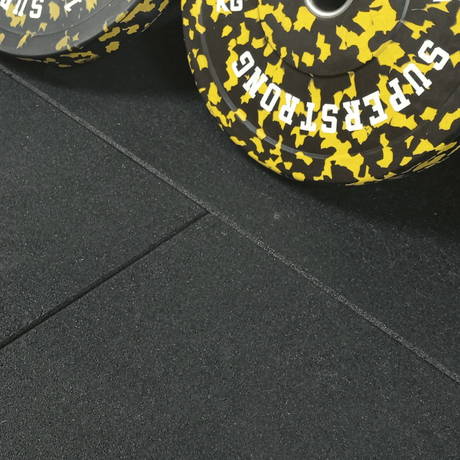
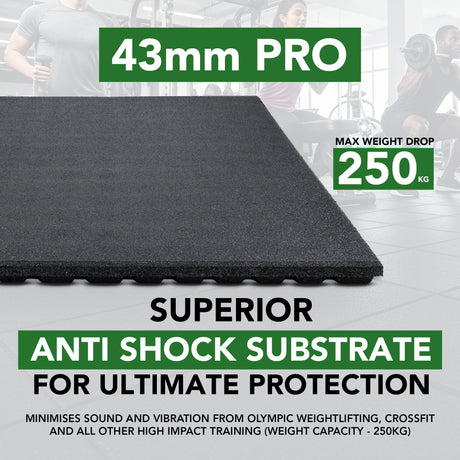
If you are lifting at home, set up on home gym flooring that does not slide and can handle the weight capacity of a loaded barbell. Stable footing makes proper technique easier and protects your kit and floors.
The 6 essential lifts, with beginner-proof form cues
1) Barbell squat (lower body and core)

Starting position
- Stand tall, feet shoulder width apart.
- Bar sits across upper back, not on your neck.
- Hands just outside shoulder width, elbows angled down.
Key form tips
- Keep chest proud, ribs down, core engaged.
- Sit down and back between your hips, knees track over toes.
- Maintain a straight line from mid-foot through the bar as best you can.
- Drive up by pushing the floor away.
Common fix
If you tip forward: reduce weight, practise with a pause at the bottom, and focus on bracing before you descend.
2) Deadlift (the hinge, entire body strength)
Starting position
- Bar over mid-foot, shins close.
- Hinge back, bend knees slightly, grip the bar.
- Use an overhand grip at first. Once weights get heavier, you can learn mixed grip or straps, but earn it later.
Key form tips
- Brace, pull slack out of the bar, then stand up.
- Keep the bar close to your legs.
- Finish tall, glutes squeezed, not leaning back.
Common fix
If your back rounds: practise the hip hinge with a dowel, and lower the weight until you can keep a neutral spine every rep.
3) Bench press (upper body pushing power)

Setup
- Lie down, eyes under the bar.
- Pull shoulder blades back and down into the bench.
- Feet set, feet planted firmly.
Grip and press
- Hands around shoulder width, often bar slightly wider than shoulders for most people.
- Lower the bar under control to mid-chest, then press up.
Common fix
If shoulders ache: tuck elbows slightly and keep shoulder blades pinned.
4) Overhead press (vertical press, full-body tension)
Setup
- Stand tall in a standing position, feet hip width.
- Bar starts at shoulder height.
Press
- Brace hard, squeeze glutes, press the bar overhead.
- Keep the bar travelling in as close to a vertical path as you can.
- Lock out with straight arms, then slowly lower to start.
Common fix
If you lean back: reduce weight and focus on ribs down and glutes tight.
5) Pendlay row or barbell row (pulling strength and posture)

Setup
- Hinge until torso is near parallel, back neutral.
- Grip slightly wider than shoulder width with an overhand grip.
Row
- Pull bar towards lower ribs, pause, then lower with control.
- Think “elbows back” and squeeze shoulder blades together.
Common fix
If you jerk the bar: use lighter weights and move the bar slowly.
6) Hip thrust or clean pull (power phase option)
If you want maximum glute focus and sprint-style power, use hip thrusts.
Hip thrust basics
- Upper back on a bench, bar across hips.
- Drive hips up, pause at top, then lower.
If you have coaching and want athletic power, a clean pull or push press can be useful, but beginners should prioritise consistent technique first.
A beginner barbell workout plan you can run for 4 weeks

This is a novice starter programme using linear progression. It is simple, it works, and it builds confidence fast.
Schedule (A/B alternating)
Train 3 days a week, alternating Workout A and Workout B. Leave 48 to 72 hours between sessions.
Example week:
- Mon: A
- Wed: B
- Fri: A
Next week starts with B.
Workout A
- Squat: 3 sets of 6
- Overhead press: 3 sets of 5
- Deadlift: 1 set of 5
Workout B
- Squat: 3 sets of 5
- Bench press: 3 sets of 5
- Row or hip thrust: 3 sets of 5
Progression (how to add more weight)
- Add a small amount each session as long as form stays solid. Think “progressively heavier weights”, not random jumps.
- If reps slow to a grind or your form breaks, hold the weight steady next time.
- When you stall twice on the same lift, reduce the load slightly and build back up.
This approach is progressive overload without drama. It is also a realistic path to building muscle and upper body strength while protecting your joints.
Barbell training for beginners at home: what you actually need
You can do beginner barbell workout at home if you keep it safe and simple:
- A barbell and weight plates with collars
- A squat rack or sturdy stands for squat and bench press (for safety)
- A flat bench (or a stable alternative if you are experienced)
- Flooring that does not slip and can handle drops, especially for deadlifts. We recommend using mats from approx 20mm thick and above. 20mm thick gym mats have the density and versatility for various gym activities and progressive weight load.
If you only have just a barbell and plates, you can still build a full body workout: deadlifts, rows, overhead press, front squat variations, and hip hinge work will cover a lot. Add goblet squats or split squats if you have a single dumbbell later.
Warm up that prepares you to lift (not just sweat)
A proper warm up should raise temperature, open joints, and rehearse the movement.
Try this 8 to 10 minute warm up:
- 2 minutes brisk walk or bike
- Arm circles (forward and back) 10 each
- Hip hinge practice with hands on hips, 8 reps
- Bodyweight squats, 8 reps
- Two lighter warm-up sets of your first lift using an empty bar or lighter weights
Optional: foam rolling for tight quads, glutes, or upper back, but do not turn it into a 30-minute ritual.
Beginner barbell workout female: practical tweaks that help
Women often thrive on barbell training because technique and consistency beat brute strength. A few tips I use a lot:
- If the standard bar feels too thick or heavy for pressing, a 15 kg bar can be a game changer.
- Prioritise rows and deadlifts for back strength. It supports posture and protects shoulders during bench press.
- Track progress by adding reps first, then weight. It keeps training sessions positive and steady.
If you want a “full body barbell workout female” approach, the A/B plan above is ideal. It hits legs, glutes, back, chest, and shoulders every week without frying your recovery.
FAQ
Can you build muscle with just a barbell?
Yes. With compound movements, you can train multiple muscle groups and create enough muscle tension for muscle growth. Progressively add load, reps, or sets while keeping proper form.
What are the big 5 barbell exercises?
Most beginner programmes centre on the squat, deadlift, bench press, overhead press, and barbell row. They cover lower body, upper body, pushing, pulling, and full-body strength.
What’s better, dumbbells or barbells?
Both work. Barbells make it easier to progress because loading is simple and consistent. Dumbbells are great for balance and range of motion. For training for beginners focused on strength, barbells are often the clearest path.
Can you build a full-body workout with barbells?
Absolutely. Squats and deadlifts train the entire body, presses build upper body strength, and rows balance your shoulders and upper back. Add hip thrusts or a push press if you want extra power work.
Are barbell curls worth it?
They can be, especially for upper arms strength and grip. But for beginners, prioritise big lifts first. Add curls later if you have time and recovery.
Get inspired. Explore our home gym equipment and weightlifting floor mats to create your own barbell training set-up.