Most people ordering commercial gym flooring for the first time order the wrong thing for two thirds of the space. They pick one product — usually whatever they saw in another gym — and run it wall to wall. The result is either overspending (heavy-duty tile under treadmills that will never see a dropped weight) or under-protecting (thin flooring in a free weights area that gets destroyed in months).
A commercial gym isn't one floor. It's three, and each zone has a different job.
What flooring is best for a strength area?
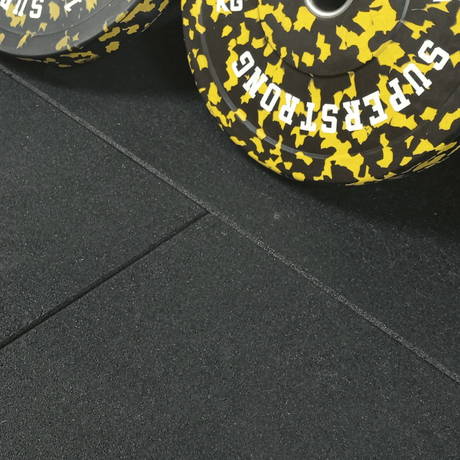
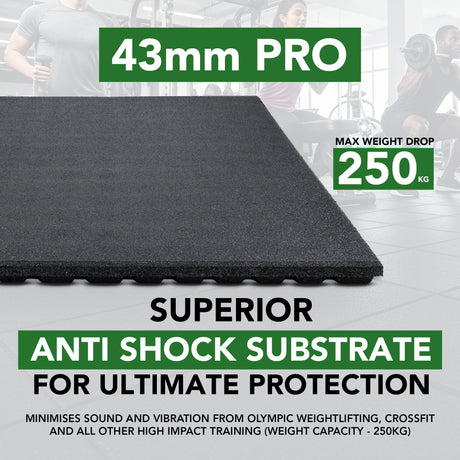
Rubber gym tiles, 20mm or thicker. Free weights areas take the hardest punishment in the gym — dropped dumbbells, loaded barbells, plates going down faster than they should. Tiles at 20mm+ absorb that impact, protect the subfloor and kill the noise. If your members are deadlifting heavy or dropping from height, go thicker still — 30mm and above under lifting platforms and drop zones.
Tiles also win on practicality here: if one section takes a beating, you replace a tile, not a whole floor.
What flooring is best for a cardio area?
Rubber roll. Treadmills, bikes, rowers and cross trainers don't drop anything — they just need a stable, seamless surface that machines won't wander on and that's easy to clean underneath. A rubber roll gives you that at a lower cost per square metre than tile, with no joints for trolley wheels or machine feet to catch on. You don't need strength-zone thickness under a treadmill; you're paying for durability the zone will never use.
What flooring is best for functional training?
Gym turf. Sled pushes, lunges, battle rope work and agility drills all run better on turf — it's the right friction for sleds, it's comfortable for floor work, and a marked sprint lane instantly defines the zone. If sleds are part of your programming, gym turf isn't a nice-to-have; rubber will drag where turf glides.
Quick reference
| Zone | Flooring | Why |
|---|---|---|
| Strength / free weights | Rubber tiles, 20mm+ (30mm+ under drop zones) | Impact protection, noise, replaceable sections |
| Cardio | Rubber roll | Seamless, stable, cost-efficient under machines |
| Functional training | Gym turf | Sled-friendly, comfortable, defines the space |
Order by zone, not by habit
The costliest mistake isn't picking a bad product — it's putting a good product in the wrong place. Measure each zone separately, spec each one for what actually happens on it, and you'll usually find the mixed order comes in cheaper than tiling the lot, and performs better everywhere.
Watch the 30-second version:
Planning a commercial gym fit-out? Sprung has supplied flooring for everything from independent boxes to Manchester City's training ground — talk to us about zoning your space before you order.

![20mm Java Black Rubber Gym Flooring Tiles with Recycled Coffee Grounds [Pre-Order] GYM FLOORING Sprung Gym Flooring](http://www.gym-flooring.com/cdn/shop/files/Title_2.png?v=1773994895&width=460)