At a Glance
- UK Reddit users most frequently recommend dense rubber flooring for gyms containing weights, racks and heavy equipment.
- Stable mats are regularly suggested as a budget option, but users also mention their weight, smell and difficult installation.
- Purpose-made rubber tiles provide more predictable sizing, thickness and performance than agricultural mats.
- Around 15mm to 20mm works for many home gyms, while heavy lifting areas may require 30mm or thicker impact-resistant flooring.
- Rubber rolls suit cardio areas and larger studios, while modular tiles are practical for garage gyms and free-weight zones.
- Before ordering, consider equipment weight, dropped weights, the condition of the subfloor and whether the installation must be removable.
Where Is the Best Place to Buy Gym Flooring in the UK?
Reddit recommendations suggest that UK buyers generally choose between specialist gym flooring suppliers, stable mat retailers and inexpensive interlocking foam mats.
For a permanent gym containing a squat rack, treadmill, dumbbells or barbells, specialist rubber flooring is normally the most dependable option. It is designed for exercise environments, supplied in known thicknesses and available in formats suited to different levels of impact.
A light spare-room setup may only need 11mm to 15mm flooring. A typical garage gym containing a rack, bench and free weights will usually benefit from 20mm rubber tiles. A dedicated deadlift or Olympic lifting area may require 30mm to 63mm impact-resistant flooring.
Sprung Gym Flooring supplies purpose-made home gym flooring, heavy-duty rubber tiles, interlocking systems and rubber rolls throughout the UK.
The most important lesson from Reddit is simple: buy flooring according to the training taking place, rather than choosing the cheapest mat that covers the floor.
What Are UK Reddit Users Saying About Gym Flooring?

One of the most prominent UK discussions is the r/AskUK thread, What’s the cheapest and sturdy home gym flooring used in England?.
The original poster highlighted a common problem for UK buyers:
“Building a home gym and want to start looking at flooring but youtube is full of American ideas. What have people used in the UK?”
This matters because many online home gym guides recommend American-style horse stall mats. Comparable UK products are available, but dimensions, prices, finishes and delivery costs may differ.
One contributor recommended an agricultural solution:
“I used rubber horse stall matting, which is basically the same as gym matting, but 1) is cheaper, 2) comes in larger sheets.”
Another Reddit user offered a different perspective:
“We got ours from www.gym-flooring.com but I know some people use horse stall mats.”
The same user added:
“If you’re going to the effort of building a gym, don’t mess about with the flooring. It will save your floor and equipment.”
When the original poster mentioned inexpensive foam tiles, the reply was direct:
“Yeah, those little foam mats will do nothing to protect from heavy equipment!”
Another contributor confirmed the product and thickness used in their own setup:
“Got my gym flooring from Sprung gym flooring. 20mm 1x1m.”
These comments reflect the main buying decision faced by many home gym owners. Foam may provide comfort for floor exercises, but dense rubber is more appropriate when the surface must support equipment and absorb impact.
Which Gym Flooring Options Does Reddit Recommend?

| Flooring option | Best suited to | Advantages | Points to consider |
|---|---|---|---|
| Rubber gym tiles | Garage gyms, free weights and PT studios | Durable, replaceable and available in heavier thicknesses | More joins than a rolled floor |
| Interlocking rubber tiles | DIY and removable installations | Easier to fit and reposition | Requires a reasonably level base |
| Rubber matting rolls | Cardio rooms and larger studios | Fewer joins and a clean finish | Thin rolls may not suit heavy weight drops |
| Stable mats | Budget garage gyms | Dense and generally affordable | Heavy, difficult to cut and may smell |
| EVA foam mats | Yoga, martial arts and floor exercise | Soft, warm and comfortable | Compresses beneath heavy equipment |
| Lifting platforms | Deadlifts and Olympic lifting | Concentrated protection in impact zones | Does not cover the full room |
Are Stable Mats a Good Choice?
Stable mats are one of the most frequent Reddit recommendations for budget garage gyms. They are dense, hard-wearing and designed to tolerate demanding environments.
In the r/HomeGymUK discussion Garage nearing completion, flooring options?, one user commented:
“Horse stall matts have served me well.”
Another r/DIYUK discussion, Home gym flooring, contains similar advice:
“Search for stable mat, I got a few sheets.”
The same contributor suggested combining stable mats and plywood:
“There’s a few examples of combining it with a sheet of plywood for a deadlift platform under the center portion of power rack, and stable matting around the outside.”
That can work, particularly for a budget powerlifting setup. However, it requires additional cutting, construction and planning.
The potential drawbacks of stable mats include:
- Considerable weight
- Awkward handling
- Strong initial rubber odour
- Textures intended for animal use
- Possible variation in dimensions
- More difficult trimming around walls and doorways
- Limited choice of colours and edge finishes
Purpose-made rubber gym mats offer a more predictable alternative. Buyers can select the thickness, finish and installation format according to the room and training style.
What Thickness of Gym Flooring Should You Buy?
There is no single thickness that works for every gym. The correct specification depends primarily on impact.
A heavy treadmill that remains stationary places a sustained load on the floor. A barbell dropped from height produces a much sharper impact. These situations require different levels of protection.
| Gym activity | Suggested starting thickness | Suitable flooring |
| Yoga, stretching and mobility | 7mm to 11mm | Light rubber or workout mats |
| Cardio machines and bodyweight exercise | 8mm to 15mm | Rubber rolls or standard rubber tiles |
| General home gym with dumbbells | 15mm to 20mm | Dense rubber tiles |
| Garage gym with rack and free weights | Around 20mm | Heavy-duty rubber tiles |
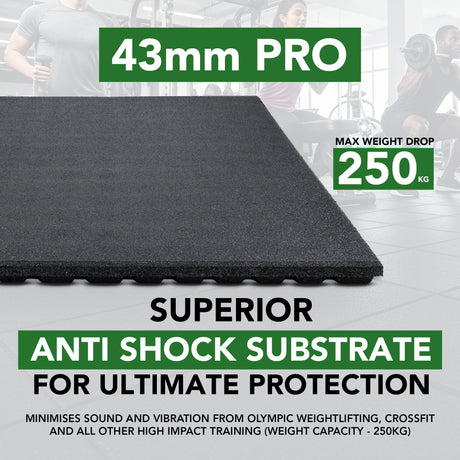
| Regular deadlifts | 30mm to 43mm | Anti-shock tiles or lifting platform |
| Olympic lifting and repeated heavy drops | 43mm to 63mm | High-impact rubber flooring |
| Commercial free-weight area | Project-specific | Commercial-grade rubber system |
For many mixed home gyms, 20mm rubber gym tiles provide a practical balance between protection, cost and installation height.
For repeated barbell drops, explore purpose-made weightlifting gym flooring instead of relying on a thin general-purpose mat.

What Do Reddit Users Say About 20mm Sprung Gym Flooring?

A useful real-world example appears in the r/homegym thread My new garage gym.
When asked where the floor came from, the gym owner replied:
“The mats are 1m x1m 20mm from Sprung Gym Flooring in the UK.”
They later confirmed:
“Sprung Gym Flooring, 20mm thickness, 1m x 1m.”
The large-tile format also attracted positive feedback from another contributor:
“I like the look of these large tiles more.”
This is a useful distinction. Smaller puzzle mats can create numerous visible joints, while 1m x 1m tiles cover the room with fewer joins and are still manageable during a DIY installation.
Sprung PRO tiles are available in several thicknesses, allowing the flooring to be matched more closely to equipment weight and expected impact.
Can Rubber Flooring Be Installed Over Rough Concrete?
Many UK garage gyms begin with dusty, slightly uneven concrete. The r/DIYUK discussion Home gym flooring in garage addresses this directly.
One contributor advised:
“Before you lay down any flooring, I’d definitely recommend sealing your concrete floor with garage floor paint.”
They explained the benefit:
“It makes a huge difference in reducing dust and gives you a much cleaner base to work with.”
The same user described their flooring choice:
“I recently put down 20mm Sprung PRO Gym Flooring, and it’s been great for dealing with my rough and uneven concrete floor.”
They did, however, offer an honest qualification:
“You can still feel some slight unevenness if you’re walking around barefoot.”
This is sensible advice. Dense rubber can accommodate minor surface imperfections, but it cannot correct serious dips, ridges or structural problems.
Before installing garage gym flooring, make sure the concrete is:
- Clean and thoroughly swept
- Dry and free from active moisture problems
- Structurally sound
- Free from sharp projections
- Reasonably level
- Fully cured if recently laid
Fill major cracks and address damp before covering the floor. Rubber protects concrete but does not repair it.
Will Rubber Tiles Support a Heavy Treadmill?
The r/DIYUK discussion Recommendations for home gym flooring which won’t be damaged by heavy treadmill provides a useful follow-up from the original poster:
“Just an update: I did end up ordering from gymflooring.”
They continued:
“Very positive experience and the tiles are perfect as gym flooring once laid.”
Dense rubber is generally more appropriate beneath treadmills and resistance machines than lightweight foam. Equipment feet can compress foam and leave permanent indentations, while dense rubber distributes the load more effectively.
A particularly heavy treadmill or cable machine should still be positioned carefully. Check that the base is stable and use appropriate equipment pads where the manufacturer recommends them.
For busy facilities or rooms containing numerous heavy machines, explore commercial gym flooring.
Rubber Tiles or Rubber Matting Roll?

Reddit discussions regularly compare tiles and rolls because both provide a durable rubber surface. The best choice depends on the room and training activity.
Choose rubber tiles when:
- You want a manageable DIY installation.
- The room contains free weights.
- Individual sections may need replacing.
- The layout includes awkward corners.
- You may move or expand the gym.
- You need a thicker impact-resistant surface.
Interlocking gym flooring is useful when the installation must remain secure without permanently bonding every section to the subfloor.
Choose rubber roll when:
- You want fewer visible joins.
- The space is relatively large and rectangular.
- The area is mainly used for cardio or machines.
- You want a clean studio-style finish.
- Heavy weights will not be dropped across the full floor.
Sprung rubber matting roll is suitable for cardio areas, fitness studios and larger home gyms. A mixed gym can use rolled flooring across the main area and thicker tiles in its lifting zone.
Is Foam Flooring Suitable for a Home Gym?
Foam is useful when warmth and comfort are the priorities. It can work well for stretching, yoga, Pilates, martial arts and floor-based workouts.
It is less suitable beneath:
- Squat racks
- Cable machines
- Heavy benches
- Treadmills
- Loaded dumbbell racks
- Dropped barbells
Foam can compress under equipment feet, and puzzle joints may separate under repeated movement. It can also tear when benches or racks are dragged across it.
For light exercise, individual workout mats may be sufficient. For strength training, install a supportive rubber floor and add a separate exercise mat when extra cushioning is required.
Read Rubber vs Foam vs Vinyl Gym Flooring for a more detailed material comparison.
Sprung Gym Flooring Recommendations by Use Case
| Your gym setup | Recommended collection | Why it fits |
| Spare-room fitness area | Home gym flooring | Options for general exercise, cardio and weights |
| Concrete garage gym | Garage gym flooring | Durable flooring for racks, benches and garage conditions |
| Dumbbell or free-weight area | Free weights flooring | Greater impact resistance for strength training |
| DIY modular installation | Interlocking rubber flooring | Straightforward installation and easier replacement |
| Cardio room or studio | Rubber flooring rolls | Smooth coverage with fewer joins |
| High-traffic facility | Commercial gym flooring | Designed for regular equipment use and foot traffic |
| Heavy lifting zone | Heavy-duty gym flooring | Thicker protection for repeated impact |
| Powerlifting setup | Heavy-duty lifting platforms | Concentrated protection and a stable lifting surface |
Gym Flooring Installation Tips

Reddit experiences show that installation difficulty is often underestimated. Large stable mats may be inexpensive, but their weight can make them difficult for one person to move and trim.
Before ordering:
- Measure the room at its widest and longest points.
- Add a sensible cutting allowance.
- Check door clearance after raising the floor level.
- Identify where weights will be dropped.
- Inspect the concrete for moisture and major damage.
- Decide whether the floor will be loose-laid, connected or bonded.
- Let the rubber acclimatise before final trimming.
- Avoid placing unstable equipment across uneven tile joints.
The r/DIYUK discussion Just screeded garage floor: wanting to turn it into a gym also highlights the value of planning the complete garage conversion.
One user explained:
“They save the floors from most of the weight dropping and deadlifts.”
Floor protection is only one part of the project. Ventilation, insulation and moisture control also matter in a UK garage.
Read the guide to installing rubber gym tiles on concrete before beginning the installation.
The garage gym conversion guide can also help with flooring, equipment placement and room preparation.
Frequently Asked Questions
Where is the best place to buy gym flooring in the UK?
A specialist UK gym flooring supplier is generally the most reliable option for a permanent gym. Sprung Gym Flooring offers rubber tiles, rolls, interlocking products and heavy-duty systems for home and commercial use.
What gym flooring does Reddit recommend?
Dense rubber is the most consistent recommendation. Stable mats are often suggested for budget installations, while purpose-made rubber tiles are recommended for more predictable sizing, appearance and performance.
Is 20mm flooring thick enough for a home gym?
Twenty-millimetre rubber flooring is suitable for many home gyms containing racks, benches, dumbbells and cardio machines. Repeated heavy weight drops may require 30mm or thicker flooring.
Can I install rubber gym flooring directly over concrete?
Yes, provided the concrete is dry, stable, clean and reasonably level. Seal dusty concrete and repair significant damage before installation.
Do rubber gym tiles need to be glued?
Not always. Heavy tiles can often be compression-fitted in enclosed rooms. Interlocking tiles may use puzzle joints or hidden connectors. Adhesive is more common in large or permanent commercial installations.
Are stable mats the same as gym flooring?
They are both made from dense rubber, but stable mats are designed for agricultural settings. Their dimensions, smell, texture and finish may differ from purpose-made gym tiles.
Is rubber roll better than rubber tiles?
Rubber roll provides fewer joins and works well in cardio or studio areas. Tiles are easier to handle, replace and specify in thicker formats for weight training.
How can I reduce noise from a garage gym?
Use thick impact-absorbing rubber, isolate the lifting area and avoid dropping barbells directly onto thin flooring. A platform can provide additional protection for deadlifts.
Read the DIY deadlift platform guide for step-by-step advice.
Key Takeaways
- UK Reddit users generally recommend dense rubber rather than lightweight foam for gyms containing heavy equipment.
- Stable mats can be cost-effective, but they may be heavy, odorous and difficult to cut.
- Several Reddit contributors specifically report using 20mm, 1m x 1m Sprung Gym Flooring tiles.
- Around 20mm is a practical starting point for many garage and home gyms.
- Deadlifts and Olympic lifting usually require thicker impact protection or a dedicated platform.
- Rubber tiles are practical for weight training, while rubber rolls suit cardio rooms and larger studio spaces.