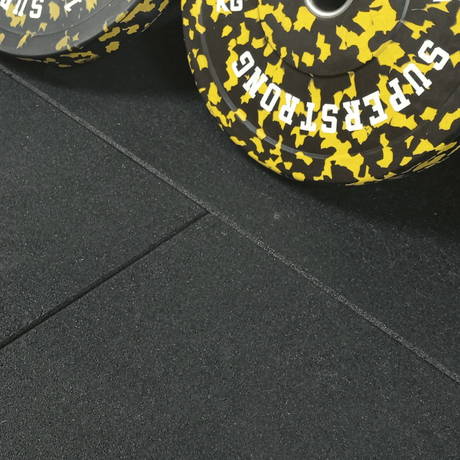
The best gym flooring is not necessarily the thickest. It is the flooring that provides the right level of protection for your equipment, training style and subfloor.
At a Glance
- 11mm to 15mm gym flooring suits cardio equipment, bodyweight exercise and controlled light weights.
- 20mm thick gym flooring is the best all-round option for many home gyms, garage gyms and PT studios.
- 30mm gym flooring provides greater protection for regular strength training, deadlifts and heavier free weights.
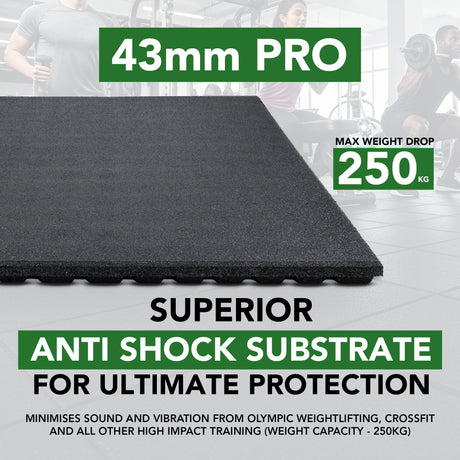
- 43mm to 63mm rubber tiles are designed for Olympic lifting, heavy drops and high-impact commercial areas.
- Rubber is the best general-purpose material for durability, stability, shock absorption and noise reduction.
- Always consider the subfloor, maximum weight drop, equipment load and installation height before choosing.
For most home gyms, 15mm to 20mm rubber gym flooring provides an appropriate balance of comfort, durability and floor protection. Choose 20mm if you use a squat rack, dumbbells, kettlebells or free weights. Consider 30mm for heavier barbell training, and move up to 43mm or more for Olympic lifting or repeated weight drops.
Gym flooring thickness matters because a thin surface may prevent scratches but provide limited shock absorption. On the other hand, very thick flooring can cost more, raise the finished floor level and be unnecessary in cardio or stretching areas.
This gym flooring thickness guide explains which option suits each training style, from a compact home gym to bustling commercial gyms.
Gym Flooring Thickness Guide
| Flooring thickness | Best for | Typical activities |
|---|---|---|
| 4mm to 10mm | Cardio and equipment areas | Exercise bikes, treadmills and rowing machines |
| 11mm to 15mm | Light to moderate gym use | Bodyweight exercises, machines and light dumbbells |
| 20mm | Mixed training spaces | Free weights, racks, kettlebells and functional fitness |
| 30mm | Heavy strength training | Deadlifts, heavier dumbbells and high-impact exercise |
| 43mm to 63mm | Specialist lifting areas | Olympic lifting, repeated drops and heavy commercial use |
These recommendations assume that the flooring is installed over a clean, level and structurally sound base. An uneven or damaged concrete subfloor should be repaired before installation.
Why Does Gym Flooring Thickness Matter?

Gym flooring has four main jobs: protecting the subfloor, supporting equipment, reducing impact and creating a safer training surface.
Floor protection
Dropped weights direct a large amount of force into a small area. Thin gym floor mats can protect against scuffs and equipment marks, but they may not prevent damage from loaded barbells or heavy dumbbells.
Thicker flooring places more impact-absorbing material between the weight and the structural floor. This is particularly important in a garage gym, where training often takes place directly over concrete.
Shock absorption
Rubber flooring compresses slightly when a weight lands, helping to manage the impact. Extra thickness generally provides better shock absorption, although density and tile construction are also important.
A thick but very soft mat is not necessarily suitable flooring for strength training. The surface must remain stable beneath squat racks, benches and heavy equipment.
Noise reduction
Rubber gym flooring helps soften contact noise from feet, equipment and weight plates. Thicker tiles can offer better impact and vibration control, especially when they have a structured anti-shock base.
Flooring alone cannot guarantee complete soundproofing. Upstairs gyms and shared buildings may also need an acoustic underlay or isolated floor system to control noise transmission.
Equipment stability
Exercise bikes, treadmills and strength machines require a level, stable base. High-density rubber provides cushioning without allowing equipment feet to sink excessively into the floor.
Is 15mm Gym Flooring Good?
Yes. 15mm rubber gym flooring is good for light to moderate training, including:
- Cardio machines
- Resistance equipment
- Bodyweight exercises
- Benches and racks
- Light dumbbells and kettlebells
- Weights that are lowered carefully
It is a cost-effective choice for a spare-room gym or general fitness space where heavy weights are not routinely dropped.
The main limitation is impact protection. A 15mm rubber gym floor offers less cushioning than a 20mm or 30mm tile, so it is not the best option for repeated deadlifts or Olympic lifting.
Compare 11mm, 15mm and heavier options in the Sprung PRO gym flooring collection.
Is 20mm Thick Gym Flooring the Best All-Round Option?

For many buyers, 20mm is the sweet spot.
It provides a practical balance of shock absorption, noise reduction, stability, cost and easy installation. It is suitable for:
- Home gyms with racks and benches
- Garage gym flooring
- PT studios
- Dumbbell and kettlebell training
- Functional fitness
- Moderate barbell work
- Commercial machine areas
- Mixed-use training spaces
A 20mm floor gives you more flexibility than a thin mat if your equipment collection grows or your training becomes heavier.
Explore home gym flooring for domestic training spaces, or compare large-format rubber gym floor tiles for a practical modular installation.
When Should You Choose 30mm Gym Flooring?

Choose 30mm gym flooring when strength work is a major part of your routine or weights may occasionally be dropped.
It is well suited to:
- Regular deadlifts
- Heavier dumbbells
- Loaded barbells
- Strength-focused garage gyms
- High-impact exercises
- Busy personal training studios
- Commercial free-weight zones
The extra thickness provides greater protection than 15mm or 20mm flooring without requiring the very thick construction used in specialist Olympic lifting areas.
For a garage containing a squat rack, bench, barbell and bumper plates, 30mm is a sensible option where superior shock absorption is more important than keeping the finished floor level as low as possible.
Compare surfaces designed specifically for concrete garages in the garage gym flooring collection.
When Is 43mm to 63mm Flooring Necessary?

Very thick flooring is designed for the highest-impact training areas, including:
- Olympic lifting
- Repeated heavy deadlifts
- Strongman training
- Heavy barbell drops
- Commercial free-weight areas
- Strength and conditioning facilities
- Areas requiring maximum shock absorption
These tiles often use a studded or structured underside to help isolate impact and vibration. They offer much more protection than standard rubber mats.
Installing 43mm to 63mm flooring throughout an entire gym is rarely necessary. A more cost-effective solution is to use 15mm or 20mm flooring in general areas and thicker tiles only within the lifting zone.
Browse Olympic weightlifting flooring, free-weights flooring or the full heavy-duty gym flooring collection.
What Thickness Rubber Tile Do You Need for a Home Gym?

The best home gym flooring thickness depends on the heaviest activity performed in the room.
Yoga, stretching and bodyweight exercises
An 11mm to 15mm rubber floor is generally sufficient. A separate EVA or exercise mat can be placed on top when a softer cushioned surface is preferred.
Cardio equipment
Rubber flooring between 6mm and 15mm may be suitable beneath exercise bikes, rowing machines and treadmills. Its main purpose is to improve grip, reduce vibration and protect the subfloor from equipment feet.
Dumbbells, kettlebells and racks
Choose at least 15mm. A 20mm tile provides a better long-term option for a gym space that may later include heavier weights or additional equipment.
Deadlifts and heavy barbell training
Use 30mm or thicker flooring where loaded barbells may be dropped. For Olympic lifting and repeated high-impact drops, use 43mm to 63mm tiles or a purpose-built lifting platform.
Shop the complete home gym flooring range or explore rubber gym mats for individual and full-floor options.
What Is the Best Flooring for a Home Gym in the UK?

High-density rubber gym flooring is the best all-round option for most UK home gyms. It is durable, slip-resistant, stable beneath equipment and easy to maintain.
Rubber tiles
Rubber tiles are simple to fit and individual sections can be replaced if damaged. Large 1m x 1m tiles also create fewer joins than smaller formats.
Interlocking rubber gym flooring can be useful for DIY projects because the tiles lock together without requiring a permanent bonded installation.
Rubber rolls
Rubber rolls create a streamlined surface with fewer visible joints. They are suitable for cardio, functional training and light to moderate weights.
Most rolls are thinner than heavy-duty lifting tiles, so additional protection may be required beneath heavy free weights. Compare available formats in the rubber gym flooring rolls collection.
EVA foam mats
EVA is a lightweight closed-cell foam commonly used for martial arts, yoga and floor-based exercise. It feels softer than rubber but can compress beneath heavy equipment.
Foam is not recommended for dropped weights, loaded racks or Olympic lifting platforms.
EPDM rubber flooring
EPDM is a synthetic rubber often used as the coloured surface layer of a gym tile. It can provide a refined finish, strong wear resistance and a wider choice of colours.
The performance of an EPDM rubber floor still depends on its total thickness, density and base construction.
How Do You Cut 20mm Rubber Gym Flooring?
A 20mm rubber tile can usually be cut with a sharp utility knife and a sturdy metal straight edge.
- Measure and clearly mark the cutting line.
- Place the tile on a stable surface that can safely be marked.
- Make a light initial score along the straight edge.
- Repeat the cut several times.
- Bend the rubber gently to open the groove.
- Continue cutting until the tile separates.
- Test the fit before making final adjustments.
Do not attempt to force the blade through the full 20mm in one pass. Multiple controlled cuts produce a cleaner result and reduce the risk of the knife slipping.
Watch this video for a step-by-step guide:
How Long Does Rubber Gym Flooring Last?
Quality rubber gym flooring can last for many years when its thickness is appropriate for the training area.
Its lifespan depends on:
- Frequency and intensity of use
- Rubber density
- Weight of equipment
- Frequency of dropped weights
- Quality of installation
- Subfloor condition
- Cleaning and maintenance
A home gym used several times per week will normally place less demand on its flooring than a commercial facility operating throughout the day.
Sweep or vacuum loose debris regularly. Damp mop with a diluted neutral cleaner and avoid harsh solvents, abrasive brushes or excessive standing water.
Should a Commercial Gym Use One Flooring Thickness?
Not always. Commercial gyms can improve performance and control costs by zoning the floor.
A typical specification might include:
- 8mm to 10mm rubber rolls in cardio areas
- 15mm to 20mm tiles beneath resistance machines
- 20mm to 30mm flooring in functional and free-weight areas
- 43mm to 63mm tiles around Olympic lifting platforms
This puts extra thickness where the floor receives the greatest impact without over-specifying stretching areas or cardio zones.
Explore flooring for high-traffic fitness facilities in the commercial gym flooring collection.
Frequently Asked Questions
Is 15mm gym flooring good?
Yes. It is suitable for cardio, machines, bodyweight training and light to moderate free weights. Choose a thicker tile for repeated heavy drops.
How do you cut 20mm rubber gym flooring?
Use a sharp utility knife and metal straight edge. Make several controlled passes, bending the tile slightly to open the cut as you work.
What thickness rubber tile is best for gym flooring?
Use 11mm to 15mm for light training, 20mm for mixed gym use, 30mm for heavier strength work and 43mm or more for Olympic lifting and repeated drops.
Is 20mm gym flooring suitable for deadlifts?
It may be suitable for moderate deadlifts where the bar is lowered under control. Choose 30mm or thicker flooring if loaded barbells will be dropped regularly.
What is the best flooring for a home gym in the UK?
High-density rubber tiles are the best all-round choice for most home gyms because they combine durability, grip, stability and impact protection.
Can rubber gym flooring be installed over concrete?
Yes, provided the concrete is clean, dry, level and structurally sound. Repair serious cracks, uneven sections and active moisture issues before fitting the flooring.
How long does rubber gym flooring last?
Correctly specified rubber flooring can last for many years. Its lifespan depends on the product quality, training intensity, equipment loads and maintenance.
Are thicker rubber mats better for noise reduction?
Generally, thicker rubber provides better impact control. Acoustic underlay or an isolated floor system may also be needed where noise transfer is a major concern.
Key Takeaways
- 11mm to 15mm is suitable for cardio, bodyweight training and light weights.
- 20mm is the best all-round thickness for many home gyms, garages and PT studios.
- 30mm provides better protection for deadlifts and heavier strength training.
- Use 43mm to 63mm flooring for Olympic lifting and repeated heavy drops.
- Rubber tiles provide a strong balance of stability, durability and shock absorption.
- Select flooring based on the heaviest activity performed in the space.
To compare your options, browse all rubber gym flooring, shop gym floor tiles or find specialist surfaces for heavy weights and high-impact training.

![20mm Java Black Rubber Gym Flooring Tiles with Recycled Coffee Grounds [Pre-Order] GYM FLOORING Sprung Gym Flooring](http://www.gym-flooring.com/cdn/shop/files/Title_2.png?v=1773994895&width=460)