Setting up a home gym in a flat or apartment is one of the best investments you can make for your fitness. No commute, no membership fees, no waiting for equipment. But there is one challenge that house-dwellers never have to think about: the people living below you.
Drop a dumbbell on a ground-floor garage and nobody cares. Drop the same dumbbell in a second-floor flat and your downstairs neighbour is knocking on the ceiling within minutes.
The good news is that the right gym flooring solves this problem almost entirely. In this guide, we cover exactly which flooring works best for flats and apartments, how to reduce noise and vibration, and what to avoid.
Why Gym Flooring Matters More in Flats

In a house, gym flooring mainly protects your subfloor from damage. In a flat, it has to do that and much more:
Reduce impact noise -- the thud that travels through the floor structure when you drop weights or jump
Dampen vibration -- the low-frequency rumble from treadmills, rowing machines and heavy footfall
Protect the building structure -- flats typically have thinner floor construction than houses, making them more vulnerable to repeated heavy impact
Keep the peace -- noise complaints from neighbours can escalate quickly, and some leases specifically restrict activities that cause excessive noise
Standard thin mats or cheap foam tiles simply cannot handle these demands. You need purpose-built rubber gym flooring with the right thickness and density.
Understanding Noise: Impact Sound vs Airborne Sound

Impact sound (structure-borne sound) travels through the building when something hits the floor -- a dropped weight, a heavy footstep, a burpee landing. This is the main concern in flats because it transmits directly through the floor slab to the rooms below. Rubber flooring is excellent at absorbing impact sound.
Airborne sound is noise that travels through the air -- music, grunting, clanking plates. This is less affected by flooring and more by walls, ceilings and general soundproofing.
Key takeaway: rubber gym flooring is highly effective at reducing impact noise, which is the primary source of neighbour complaints from flat-based home gyms.
How Thick Should Gym Flooring Be in a Flat?

Thickness is the single most important factor for noise and vibration reduction in an apartment setting.
15mm -- Light Exercise Only
Suitable for yoga, stretching, bodyweight exercises and light cardio machines. Provides basic floor protection but minimal noise reduction. Not recommended if you use any free weights.
20mm -- The Minimum for Weight Training
20mm Sprung PRO tiles (gym-flooring.com/products/
Good choice if you train with moderate weights (up to about 50kg dumbbells) and are careful about controlled lowering rather than dropping.
30mm -- The Sweet Spot for Flats
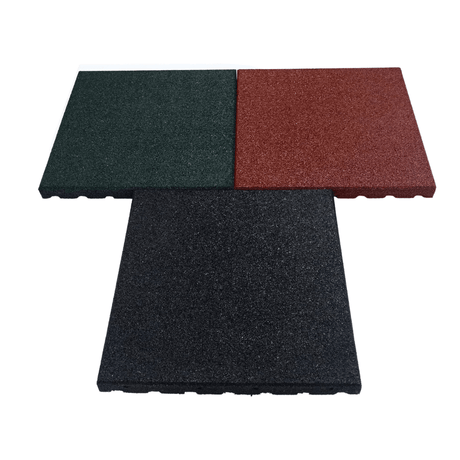
For most apartment gyms, 30mm is the ideal thickness. The 30mm Sprung PRO tiles deliver substantially better noise reduction than 20mm -- roughly 85-90% impact absorption versus 70-80% for 20mm. The difference is clearly audible to anyone in the flat below.
At 30mm, you can train with heavier barbells and dumbbells with much less concern about disturbance. If your budget allows it, this is what we recommend for flat dwellers.
30mm Anti-Shock -- For Heavy Lifting in Flats
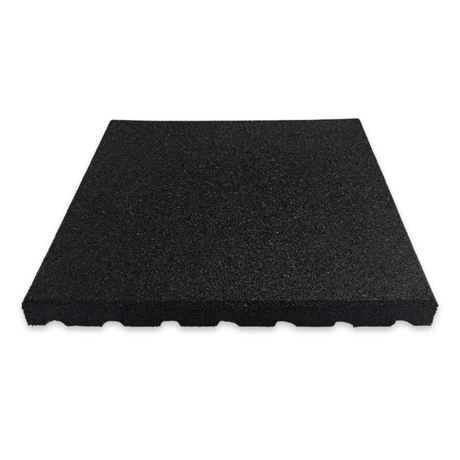
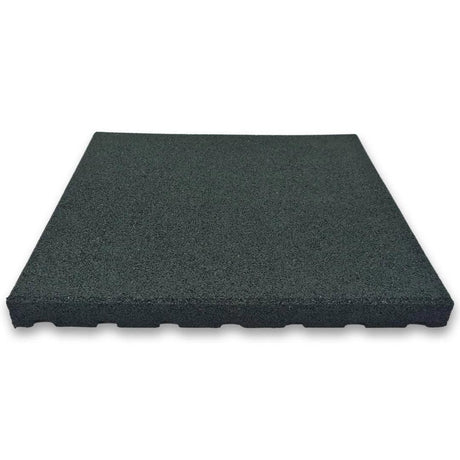
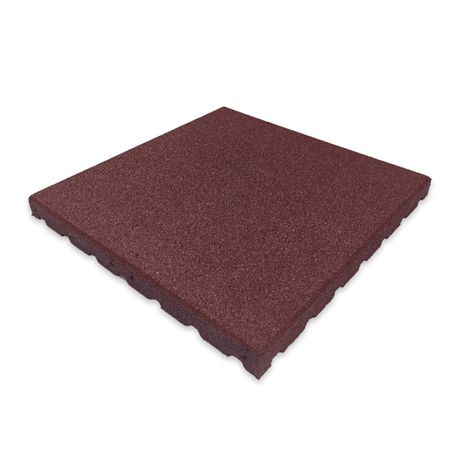
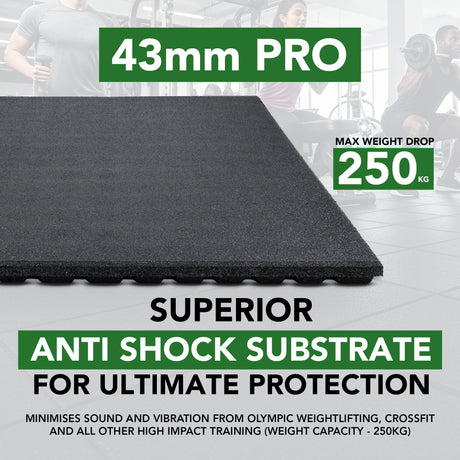
For serious barbell training with maximum protection, the 30mm Sprung PRO Anti-Shock tiles feature a dual-density construction with a softer lower layer that absorbs more energy before it reaches the subfloor. Premium option for deadlifts, cleans or overhead pressing in a flat.
Best Types of Gym Flooring for Apartments

Rubber Tiles (Recommended)
Dense rubber tiles are the gold standard for apartment gyms. They are heavy (helps vibration dampening), dense (absorbs more impact energy), durable (will last years), and easy to install (interlocking options require no adhesive).
For flats specifically, choose tiles with the highest density you can afford. Cheap, lightweight rubber tiles will not provide adequate noise reduction. Look for tiles weighing at least 17-25kg per square metre at 20mm thickness.
Sprung's Konnecta interlocking tiles (gym-flooring.com/collections/
Rubber Rolls
Rubber rolls can work in flats, but they are typically thinner (4-10mm) and better suited as a secondary layer under equipment rather than a primary floor.
Foam Tiles -- Avoid for Flat Gyms
Foam tiles are NOT recommended for flats. They compress quickly under heavy loads, losing noise-reducing properties. They are much less dense than rubber, meaning less vibration absorption. They need replacing every 2-3 years. They do not provide adequate protection for anything beyond bodyweight exercises.
Advanced Noise Reduction: Layering Your Floor

For the quietest possible setup in a flat, consider a layered approach:
Option 1: Double-Layer Rubber (Good)
- Bottom: 10mm rubber roll or underlay
- Top: 20mm or 30mm rubber tiles
Creates 30-40mm system with two separate absorption layers.
Option 2: Cork + Rubber (Better)
- Bottom: 6-10mm cork underlay (excellent for vibration decoupling)
- Top: 20-30mm rubber tiles
Cork creates a "floating floor" effect that dramatically reduces sound transfer.
Option 3: Dedicated Lifting Zone (Best for Heavy Lifters)
- General floor: 20mm rubber tiles throughout
- Lifting zone: DIY platform with plywood + 30mm rubber tiles in drop zone
What Exercises Work Well in Flats?

Low Risk (fine with 20mm flooring): Machine-based training, dumbbell work with controlled lowering, bodyweight exercises, kettlebell swings (controlled), cable machines.
Medium Risk (use 30mm flooring): Barbell squats and bench press, moderate deadlifts (controlled descent), dumbbell work above 30kg, functional training.
High Risk (consider extra protection): Deadlifts dropped from hip height, Olympic lifts, box jumps and plyometrics, sled pushes.
For high-risk exercises, a dedicated platform or anti-shock tiles are essential in a flat. Consider adapting exercises -- lowering deadlifts under control rather than dropping, or using bumper plates that spread impact over a larger area.
Practical Tips for Flat-Based Home Gyms
1. Talk to your neighbours early. Let them know and ask about their schedule.
2. Avoid peak quiet hours. Early mornings and late evenings are when complaints happen.
3. Use bumper plates, not iron plates. Quieter even without special flooring.
4. Check your lease. Some leasehold agreements restrict heavy gym equipment.
5. Place equipment away from the centre of the room. Floor spans are greatest in the middle.
6. Use anti-vibration pads under cardio machines. Thick rubber pads under machine feet help isolate vibration.
Quick Reference Table
| Training Style | Min. Thickness | Recommended Product |
|---|---|---|
| Yoga, stretching, bodyweight | 15mm | Sprung PRO 15mm |
| Cardio machines + light weights | 20mm | Sprung PRO 20mm |
| Dumbbell + moderate barbell | 30mm | Sprung PRO 30mm |
| Heavy lifting, Olympic lifts | 30mm anti-shock | Sprung PRO Anti-Shock 30mm |
| Mixed with drop zone | 20mm + 30mm platform | Combination approach |
How to Install Gym Flooring in a Flat
1. Measure your space -- add 7-10% for cutting waste
2. Check floor level -- use a spirit level
3. Consider access -- rubber tiles are heavy (plan for stairs/lift)
4. Do not glue tiles down -- use loose-lay or interlocking for easy removal
5. Leave a small gap at edges -- 5mm for thermal expansion
Use the Sprung flooring calculator (gym-flooring.com/pages/
Conclusion
Training in a flat does not mean you have to tiptoe around. With the right rubber gym flooring -- ideally 30mm thick for weight training -- you can build a serious home gym that keeps your neighbours happy and your subfloor protected.
The key is choosing dense, heavy rubber tiles at an appropriate thickness, avoiding cheap foam alternatives, and being smart about which exercises you do and when.
Explore the full home gym flooring range at gym-flooring.com/
| Training Style | Min. Thickness | Recommended Product |
|---|---|---|
| Yoga, stretching, bodyweight | 15mm | Sprung PRO 15mm |
| Cardio machines + light weights | 20mm | Sprung PRO 20mm |
| Dumbbell + moderate barbell | 30mm | Sprung PRO 30mm |
| Heavy lifting, Olympic lifts |