
 Sale
Sale20mm PRO Rubber Gym Flooring Tiles – Smooth Top Surface - UK's Top Rated
£34.95£42.44Unit price /Unavailable Sold outSale
15mm Sprung PRO Gym Flooring - Sprung Rubber Heavy Duty
£30.39£39.98Unit price /Unavailable
![Black rubber quarter-circle corner ramp piece]() Sale
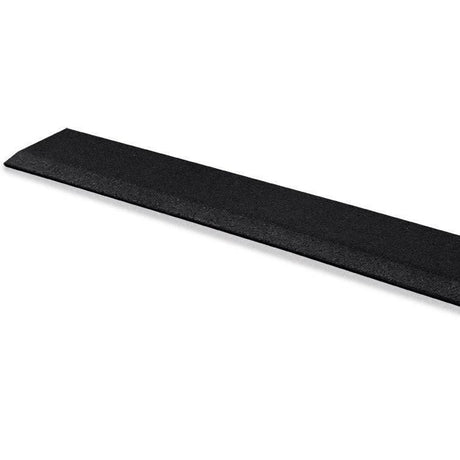
SaleRubber Flooring Edge Ramps - 15mm, 20mm, 30mm & 43mm
From £14.01£18.44Unit price /Unavailable-
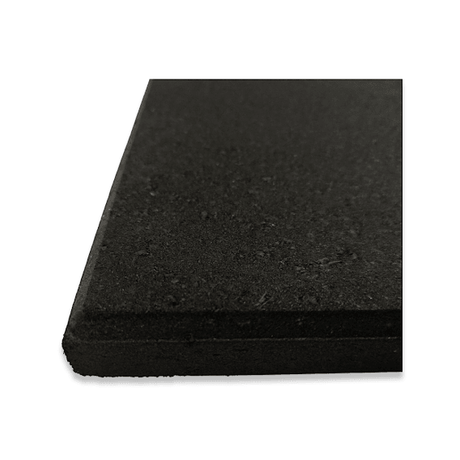
![Corner of a black 30mm Sprung PRO rubber gym floor tile]()
![Black 30mm Sprung PRO rubber edge ramp strip]() Sale
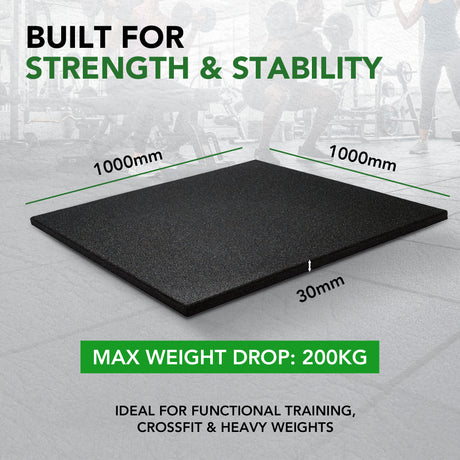
Sale30mm Sprung PRO Gym Floor Tile - Rubber Heavy Duty Gym Flooring
From £31.34£41.24Unit price /Unavailable -
Sale
-
![Black 20mm PRO interlocking edge ramp strip]()
![Black 20mm PRO interlocking quarter-circle corner ramp piece]() Sale
Sale20mm PRO Interlocking Gym Tiles – Connection Inserts Included
From £14.01£18.44Unit price /Unavailable -
Sale
-
Sale
-
![Black outdoor 30mm rubber tile, front view]()
![Black outdoor 20mm rubber tile, front top view]()
![Red outdoor 30mm rubber tile, side diagonal view]()
![Red outdoor 20mm rubber tile, front view]()
![Green outdoor 30mm rubber tile, front view]()
![Green outdoor 20mm rubber tile, front top view]() Sale
Sale -
Sale
-
![Black outdoor 30mm rubber tile, front view]()
![Black outdoor 20mm rubber tile, front top view]()
![Green outdoor 30mm rubber tile, front view]()
![Green outdoor 20mm rubber tile, front top view]()
![Red outdoor 30mm rubber tile, side diagonal view]()
![Red outdoor 20mm rubber tile, front view]() Sale
Sale -
Sale
20mm Konnecta Snowflake Self-Locking Gym Flooring Mat
£54.14£65.74Unit price /Unavailable 
![Black outdoor 30mm rubber tile, front view]()
![Black outdoor 20mm rubber tile, front top view]()
![Green outdoor 30mm rubber tile, front view]()
![Green outdoor 20mm rubber tile, front top view]()
![Red outdoor 30mm rubber tile, side diagonal view]()
![Red outdoor 20mm rubber tile, front view]() Sale
SaleEasiFit Heavy Duty 50cm x 50cm Gym Flooring Mats – Smaller Size for Easy Fitting -3 Colours
From £8.30£10.93Unit price /Unavailable-
Sale
-
![Edge of a 20mm Konnecta Velvet Black mat showing the rubber base]()
![20mm Konnecta Velvet Black edge ramp at an angle]()
![20mm Konnecta Velvet Black corner ramp with blue connector]() Sale
Sale -
![Close-up of pale oak grain on a 20mm Konnecta wood effect mat]()
![Close-up of light brown oak grain on a 20mm Konnecta wood effect mat]()
![Close-up of pale oak grain on a 20mm Konnecta wood effect mat]()
![Close-up of light brown oak grain on a 20mm Konnecta wood effect mat]()
![Close-up of pale oak grain on a 20mm Konnecta wood effect mat]()
![Close-up of light brown oak grain on a 20mm Konnecta wood effect mat]() Sale
Sale


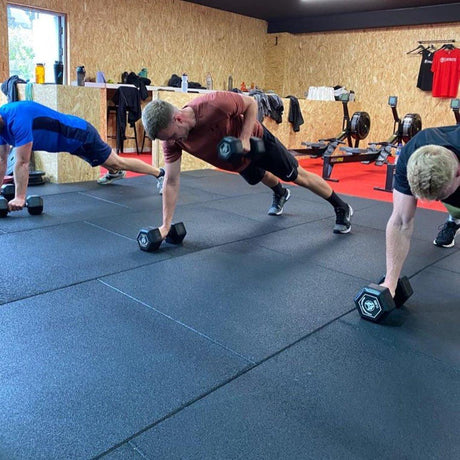

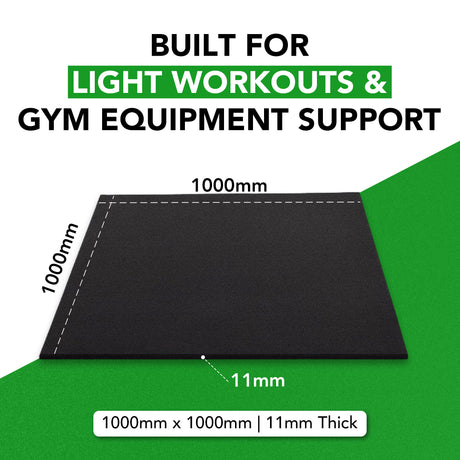


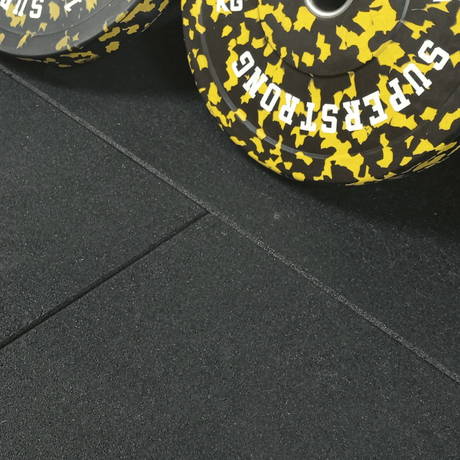
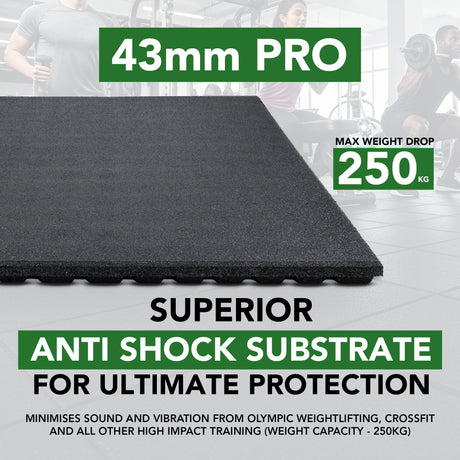


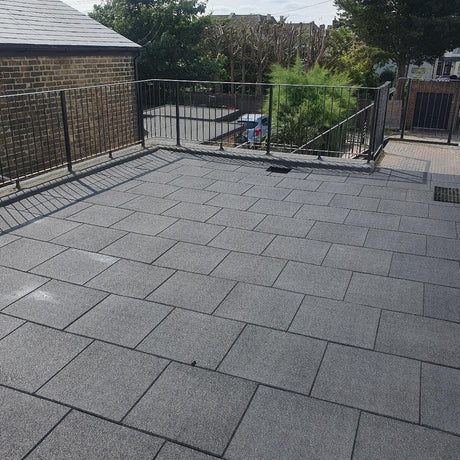


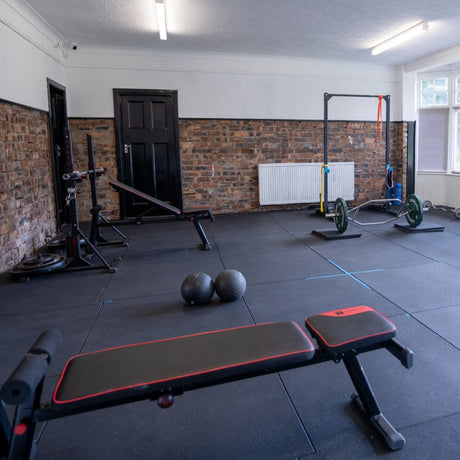


Sprung's Rubber Matting, Floor Mats & Rubber Flooring collection has 81 products. Best sellers include 20mm PRO Rubber Gym Flooring Tiles (from £34.95), 15mm Sprung PRO Gym Flooring (from £30.39) and Rubber Flooring Edge Ramps (from £14.01). Sprung rubber tiles, rolls and mats carry a 10-year warranty. Sprung supplies only, and UK delivery is free on orders over £300.
Rubber flooring is a practical, hard-wearing surface for spaces that need more protection, grip and resilience than standard domestic flooring can provide. It can be used beneath gym equipment, weights and exercise stations, as well as in garages, workshops, playgrounds, gardens, commercial buildings and equestrian facilities.
Our collection includes individual rubber mats, large-format tiles, interlocking systems, rolls and heavy-duty impact surfaces. Although these products share many qualities, the right option depends on where the flooring will be installed, how the space will be used and the level of impact it needs to withstand.
Understanding the differences between each format will help you create a floor that performs properly without paying for more thickness or protection than you need.
Quality Rubber Gym Flooring Collection
For fitness spaces, rubber flooring protects the subfloor from equipment, foot traffic and dropped weights while creating a stable, slip-resistant training surface. Its dense construction also helps soften impact and reduce some of the noise and vibration produced by workouts.
General exercise areas, cardio rooms and equipment zones do not normally require the same flooring thickness as Olympic lifting or heavy deadlift spaces. An 11mm or 15mm tile can be suitable for light weights, benches, resistance machines and cardio equipment. A versatile 20mm surface provides greater cushioning and is one of the most popular choices for home gyms, PT studios and mixed-use training areas.
Where barbells and heavier free weights will be dropped regularly, thicker protection is important. Our heavy-duty gym flooring includes high-impact tiles designed for more demanding strength and conditioning environments. Dedicated free weights flooring is particularly useful around lifting platforms, racks and deadlift stations where repeated impact would otherwise damage the floor beneath.
Rubber does not make a room completely soundproof, but greater density and thickness can reduce the transfer of impact energy. Upstairs gyms, shared buildings and facilities close to neighbouring rooms may benefit from a specialist acoustic gym flooring system designed to provide additional control over structure-borne noise and vibration.
Rubber Flooring Rolls
Rubber flooring rolls create a smooth, professional-looking finish with fewer joints than individual tiles. They work especially well across larger cardio zones, group exercise studios, corridors and commercial fitness areas where equipment is moved frequently and the floor receives continual foot traffic.
Rolls are available in several thicknesses, allowing the specification to be matched to the activity. Thinner surfaces are commonly used beneath treadmills, exercise bikes and selectorised equipment, while thicker rolls offer additional comfort and protection for functional exercise.
Because rolled flooring is less forgiving of uneven bases, the subfloor should be reasonably smooth, clean and dry before installation. Large sections can also be heavier and more difficult to position than tiles, so accurate measuring and preparation are important. Once laid correctly, the result is easy to clean and visually consistent.
Tiles may be the better choice where access is restricted, the room has an irregular shape or individual sections may need to be lifted and replaced later.
Rubber Mats for Workout Rooms
Large rubber gym tiles are a versatile option for home workout rooms, commercial gyms and strength areas. They can usually be loose-laid within a fully enclosed room, reducing the need for permanent adhesives. Individual tiles can be cut around walls, pillars and doorways, making them easier to adapt to unusual layouts.
Our interlocking rubber flooring uses concealed connection inserts rather than visible puzzle-shaped edges. These connectors hold adjoining tiles together while maintaining a clean, square-edged finish. Interlocking systems are particularly useful in open-plan areas, partially covered floors and installations where additional stability is needed.
For a home gym inside the house, appearance, comfort and odour are often as important as impact protection. Smooth-top and decorative fleck finishes can create a more refined look than traditional industrial matting. In garages, the priorities are usually different. The surface must cope with cold concrete, heavier equipment and possible moisture at the base.
Our purpose-selected garage gym flooring includes robust tiles that can be fitted directly over a suitable concrete floor. Any active damp, standing water or significant unevenness should be resolved before installation. Allowing the tiles to acclimatise and leaving the recommended expansion allowance around the perimeter also helps produce a more reliable finish.

Choosing the Right Rubber Flooring Thickness
The best thickness is determined primarily by impact rather than by the physical weight of equipment standing on the floor.
Cardio machines, cable stations and benches distribute their load through fixed contact points and normally create limited impact. Light dumbbell training and bodyweight exercise also place relatively modest demands on the surface. In these areas, an 11mm to 20mm rubber floor will suit many installations.
Barbells are different because a dropped weight concentrates energy through the plates into a small section of floor. Regular deadlifts, powerlifting and Olympic lifting therefore require a thicker, denser tile. Our PRO range extends through progressively heavier-duty options, allowing separate zones to be specified according to the maximum anticipated weight drop.
Using thicker tiles only in the lifting area can be more economical than installing the same specification throughout the entire gym. Transition ramps or bevelled edges can then create a safer change in level between adjoining zones.
The condition of the subfloor matters too. Rubber flooring can accommodate small surface imperfections, but it should not be expected to correct significant dips, cracks or unstable bases. Preparing the substrate properly improves stability, reduces movement and helps adjoining sections sit evenly.

Rubber Flooring for Commercial and Industrial Spaces
Rubber’s durability and ease of maintenance make it suitable for more than fitness facilities. It can provide a resilient covering in workshops, storage rooms, warehouses and other spaces exposed to wheeled equipment or frequent pedestrian traffic.
The correct product should always be matched to the environment. A workshop may need resistance to abrasion and tools, while a public entrance may prioritise slip resistance and ease of cleaning. Rubber gym flooring is not automatically suitable for every industrial process, particularly where oils, chemicals, extreme heat or specialist fire classifications are involved. These requirements should be checked before ordering.
In commercial gyms, a combination of formats often produces the best result. Rolls can cover cardio and circulation areas, 20mm tiles can support functional training, and thicker anti-shock tiles can protect free-weight zones. This zoning approach improves performance while keeping the overall flooring specification cost-effective.
Outdoor and Specialist Rubber Flooring
Indoor gym mats should not be assumed to be weatherproof. Outdoor installations need tiles designed to tolerate changing temperatures, rain and prolonged exposure to the elements. They should also allow water to drain rather than trapping it between the covering and the base.
Our outdoor rubber flooring tiles can be used in gardens, patios, outdoor exercise zones and recreational areas when installed over an appropriate firm, free-draining base. Thicker formats can provide additional cushioning around play equipment, although the required safety specification should always be selected according to the equipment and potential fall height.
EPDM-topped surfaces offer another option where colour, weather resistance and a more decorative finish are priorities. The EPDM rubber flooring collection includes finishes suitable for indoor feature areas as well as selected exterior applications.
Specialist rubber mats are also used in animal environments. Rubber horse stable mats provide a more comfortable, insulated and easier-to-maintain surface than bare concrete, while helping horses maintain secure footing. Stable products have different drainage, hygiene and durability requirements from standard fitness flooring, so choosing a purpose-made mat is important.
Easy-Care Rubber Flooring for Long-Term Use
Routine maintenance is straightforward. Loose dust and grit can be vacuumed or swept away before the surface is cleaned with a damp mop and a mild, neutral detergent. Excess water and harsh chemical cleaners should be avoided unless the product guidance states otherwise.
New rubber can have a mild initial odour after unpacking. Ventilating the room and allowing the flooring to acclimatise before or during installation will help this dissipate. Tiles should also be checked periodically for movement, particularly around entrances, equipment zones and exposed edges.
With the correct thickness, format and installation method, rubber flooring creates a durable surface that protects the underlying floor while improving grip, comfort and usability. Whether the project involves a compact home workout room, a commercial gym, an outdoor training area or a specialist facility, selecting the product around the actual demands of the space will deliver the best long-term result.