

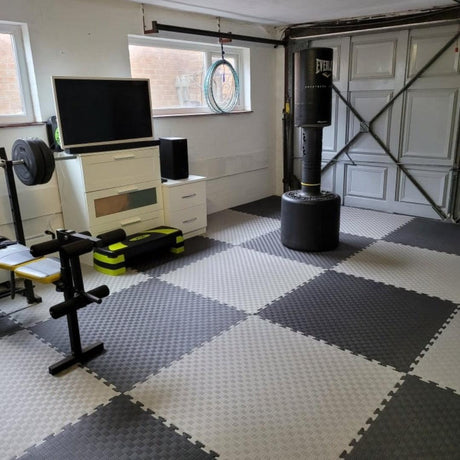
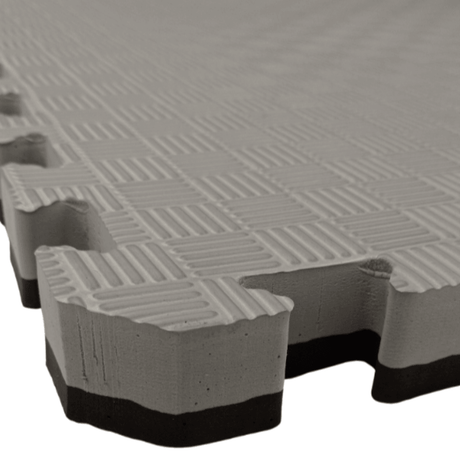
![20mm Premium Reversible Tatami Mat Foam EVA Flooring Tile Sprung Gym Flooring Black & Grey]()
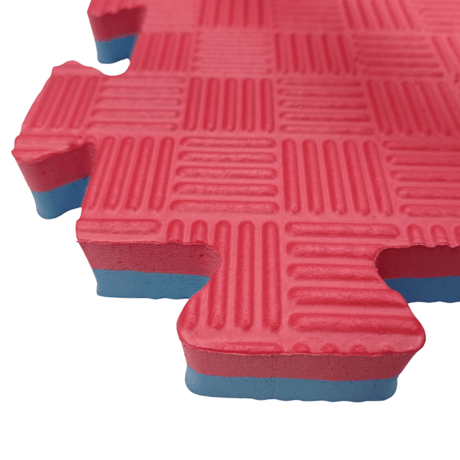
![20mm Premium Reversible Tatami Mat Foam EVA Flooring Tile Sprung Gym Flooring Red & Blue]() Sale
Sale-
![Muay Thai Mats - 2 Thickness Options - 2 Colours Foam Mats Sprung Gym Flooring]()
![40mm Premium Reversible EVA Tatami Foam Mats Sprung Gym Flooring Red & Blue]() Sale
Sale -
![Muay Thai Mats - 2 Thickness Options - 2 Colours Foam Mats Sprung Gym Flooring 20mm Red/Blue]()
![Muay Thai Mats - 2 Thickness Options - 2 Colours Foam Mats Sprung Gym Flooring 40mm Red/Blue]() Sale
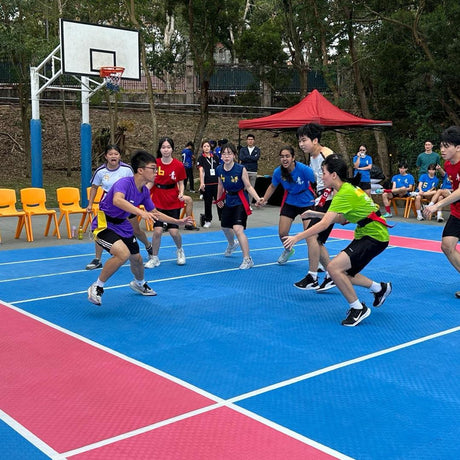
SaleKabaddi Court Mats - 2 Thickness Options | Reversible Colours
From £23.30£29.12Unit price /Unavailable




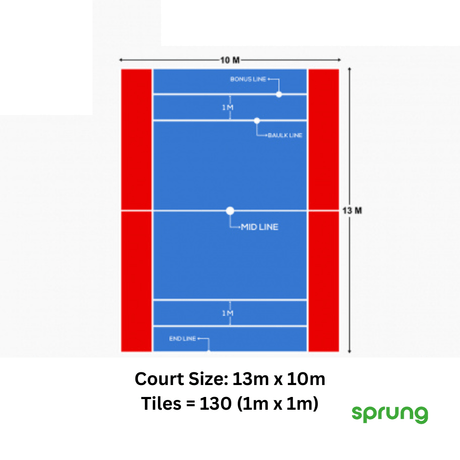
Create a safer, more comfortable training surface with EVA foam tatami matting designed for martial arts, floor-based fitness and multi-purpose activity spaces. These lightweight 1m x 1m tiles connect through a secure puzzle edge, allowing you to cover a full room or build a defined training zone without arranging a complicated flooring installation.
The high-density EVA foam cushions contact with the floor, while the textured tatami surface provides controlled grip for footwork, transitions and floor exercises. Reversible colour combinations also make it easy to divide a space into training areas, competition zones or club colours.
Our collection includes 20mm and 40mm options suitable for home training rooms, commercial martial arts clubs, dojos, boxing studios, gymnastics facilities and activity spaces.
What Is Tatami Matting?
Traditional tatami was used as a Japanese floor covering, but modern sports tatami is manufactured from resilient foam with a finely textured surface. This woven-style finish helps provide traction without creating the hard, abrasive feel associated with some general-purpose flooring.
Modern EVA tatami tiles are particularly useful in disciplines that combine standing movement with regular floor contact. The foam compresses under impact and then returns to shape, creating a more forgiving surface for rolls, controlled falls, kneeling, stretching and grappling.
Although closely associated with martial arts mats, tatami flooring is also used for yoga, mobility work, children’s activities, light gymnastics and other exercises where comfort and cushioning are more important than support for heavy weights.
EVA Foam Tatami Mats for Martial Arts
A martial arts floor must provide enough grip for confident movement without restricting pivots, kicks or changes of direction. It must also offer cushioning when users kneel, roll, grapple or make controlled contact with the floor.
EVA foam tatami tiles balance these requirements through a firm foam core and textured top surface. They can be used for home practice, club sessions, pad work, technique drills, sparring and floor-based conditioning.
For mixed combat sports facilities, the tiles can form a dedicated mat zone alongside firmer rubber flooring. Rubber is generally more appropriate beneath heavy bags, weights and strength equipment, while EVA foam gives athletes a more comfortable surface for technical and ground-based training.
The tiles are suitable for disciplines including:
- MMA and mixed martial arts training
- Brazilian Jiu-Jitsu and grappling
- Karate and taekwondo
- Judo drills and controlled throwing practice
- Boxing footwork, warm-ups and floor exercises
- Kickboxing, Muay Thai and pad work
- General dojo and combat fitness sessions
Anyone creating a specialist combat area can compare these tiles with other MMA flooring and boxing flooring options before deciding whether to cover the entire room or combine different surfaces.
What Thickness of Tatami Mat Do I Need?
Choosing between 20mm and 40mm EVA foam depends on the intensity of training and how frequently users will make contact with the floor.
20mm EVA Tatami Mats
Our 20mm reversible EVA tatami mats are a versatile choice for striking disciplines, technique work, light grappling, stretching, yoga, children’s activities and general fitness.
They provide noticeable cushioning without making the surface feel excessively soft underfoot. This makes 20mm tiles suitable for home dojos, spare rooms, boxing areas, karate clubs, taekwondo training and facilities where users need stability for fast footwork.
They are also easier to lift, move and store when the room must return to another use after training.
40mm EVA Tatami Mats
Our 40mm reversible EVA tatami foam mats provide deeper cushioning for activities involving more frequent falls, rolls and floor contact.
The additional thickness is generally better suited to grappling, MMA, BJJ practice, gymnastics-style movement and martial arts sessions where controlled takedowns form part of the training. It can also be useful in children’s activity spaces where a softer landing surface is required.
No foam floor can remove every risk associated with falls or throws. Training intensity, athlete experience, supervision and the condition of the subfloor should always be considered when selecting a thickness.
Benefits of EVA Foam Tatami Tiles
EVA foam tatami flooring is popular because it transforms a hard floor into a practical training area without requiring a permanent sprung-floor system.
Its main benefits include:
- Cushioned support for knees, elbows, hands and backs
- Textured traction for footwork and controlled movement
- Lightweight tiles that are easy to handle
- Interlocking installation without specialist tools
- Reversible colours for creating zones and patterns
- A warmer surface than concrete, timber or ceramic tiles
- Straight edging that can be removed where a puzzle connection is required
- Water-resistant, non-porous material that is straightforward to clean
- Suitability for permanent rooms and temporary training areas

Unlike individual exercise mats, interlocking tiles create one continuous surface. Athletes can move across the training area without encountering separate mat edges, while individual tiles can still be lifted when the floor needs to be inspected, cleaned or reconfigured.
Tatami Tiles for Home Dojos and Multi-Use Rooms
Interlocking tatami mats are well suited to home training because they do not normally require mechanical fixings. The room can be measured, the tiles placed over a clean and level base, and perimeter pieces trimmed where necessary.
A loose-laid installation is useful in garages, spare rooms and studios that serve more than one purpose. The mats can cover only the section used for training, leaving space for storage, gym equipment or other activities.
Within a home gym flooring layout, EVA foam is best reserved for bodyweight exercise, mobility, martial arts and light fitness. It is not the ideal surface for repeated barbell drops, loaded weight machines or equipment with small pressure points. Heavy equipment may compress or mark the foam, while dropped weights require denser rubber protection.
Where one room contains both strength and martial arts areas, combining EVA tiles with rubber gym flooring creates a more effective surface for each activity.
Fitness, Yoga and Gymnastics Applications
Tatami foam is not limited to combat sports. The cushioned surface can make stretching, yoga, Pilates, mobility work and bodyweight exercise more comfortable by reducing direct pressure on joints.
It can also be used for light gymnastics skills, warm-ups and movement practice where users need more protection than a hard studio floor can provide. For advanced gymnastics, high-level tumbling or activities involving elevated equipment, a specialist gymnastics system and appropriate landing mats may still be required.
Customers needing a broader selection of portable and interlocking options can compare the collection with our wider range of foam mats and individual gym tiles.
EVA Foam for Play and Activity Areas
The soft, warm surface of EVA foam also makes it useful for supervised play, sensory activity and children’s movement sessions. The tiles help cushion ordinary trips and tumbles while protecting the floor beneath from toys and everyday activity.
Reversible red and blue or black and grey surfaces can be arranged to create borders, pathways and defined zones. For rooms primarily designed around children rather than martial arts, our specialist play matting includes additional formats and colour choices.
Foam tatami tiles are best used indoors. Although they can be taken outside temporarily in dry conditions, they should not be treated as permanent outdoor flooring or left exposed to standing water and prolonged weather.
Installing Interlocking Tatami Mats
Begin with a dry, level and thoroughly cleaned subfloor. Lay the first interlocking foam tiles from a straight wall or from the centre of the proposed training zone, ensuring every puzzle joint is fully connected.
The removable border strips can create a neat straight edge around exposed sides. Tiles positioned against walls can be measured and trimmed with a sharp utility knife and straightedge.
For a temporary installation, the mats can usually be loose laid within a contained area. Larger commercial spaces, high-use facilities and rooms without supporting perimeter walls may require additional installation measures to prevent movement. All tiles should be allowed to settle in the room before final trimming.
Cleaning and Maintaining Tatami Flooring
Vacuum or sweep the surface regularly to remove dust, hair and grit. For routine cleaning, use a damp mop or cloth with diluted mild detergent.
Avoid abrasive brushes, aggressive solvents, excessive water and strongly concentrated chemicals, as these may affect the tatami texture or foam. Any moisture should be removed and the room allowed to dry fully before training resumes.
In busy martial arts facilities, the floor should be cleaned frequently and checked for damaged edges, separated joints or contamination after every session. Loose-laid tiles can occasionally be lifted so the subfloor and underside remain clean and dry.
Build a Practical Tatami Training Area
Whether you are fitting out a home dojo, martial arts club, boxing studio or multi-purpose activity room, EVA foam tatami tiles provide a practical combination of cushioning, traction and straightforward installation.
Choose 20mm tiles for striking, technique work, light fitness and general-purpose training, or move up to 40mm where deeper cushioning is needed for grappling, floor work and more regular impact. With reversible colours and secure interlocking edges, the finished area can be adapted to the size, appearance and training demands of your space.
You may be interested in:-
4 Interesting Workout Types - Fitness Flooring to Support Your Style