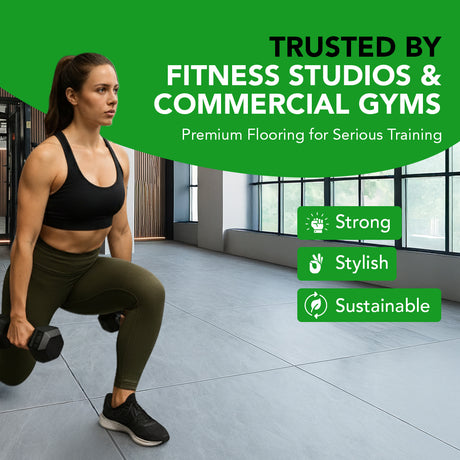
Turn your garage into a practical, comfortable and hard-wearing training space with our specialist garage gym flooring range.
Whether you are building a full home gym with a squat rack, barbell and cardio kit, or simply want a cleaner surface for weights, stretching and general fitness, the right rubber flooring makes a huge difference.
Garage floors are usually cold, hard and unforgiving. Bare concrete can feel dusty underfoot, mark easily and create more noise when weights, benches or machines are used directly on the surface. Our rubber garage gym flooring helps protect the subfloor, reduce impact, improve grip and give your space a more professional gym feel.
From all-round 20mm rubber tiles to heavy-duty AntiShock options for lifting zones, our range is designed for real garage gym use: heavy equipment, concrete floors, changing temperatures, moisture, dirt and regular training.
Garage Gym Flooring Transformation
A garage is one of the most popular places to build a home gym because it gives you a separate training space without taking over the house. The challenge is that most garages are not designed for exercise.
The floor is usually hard concrete, the room can feel cold, and the space often has to cope with dust, damp, bikes, tools, storage and heavy gym equipment.
Rubber garage gym flooring helps transform the space from a basic garage into a proper workout area. It creates a more comfortable surface for training, helps protect your equipment, reduces the harsh feel of concrete and makes the room easier to clean and maintain.
It is also a practical choice if your garage is used for more than one purpose. You can cover the full floor for a complete gym conversion or create a dedicated workout zone while keeping part of the garage for storage, bikes or everyday use.
For more general indoor training spaces, you can also compare options in our home gym flooring range.
Why Rubber Garage Gym Flooring Works Best on Concrete
Most garage gyms are installed directly over concrete. Concrete is strong, but it is not ideal as a finished training surface. It can be cold, dusty, noisy and unforgiving, especially when using dumbbells, kettlebells, benches, racks, bumper plates or cardio machines.
Rubber flooring is a better surface for garage gyms because it creates a protective layer between your training area and the concrete underneath. It helps absorb impact, improves comfort underfoot and reduces the chance of damage from dropped or moving equipment.
Rubber garage gym flooring is ideal for:
- Protecting concrete from chips, scuffs and impact marks
- Creating a safer and more comfortable training surface
- Reducing noise and vibration from weights and equipment
- Supporting racks, benches, dumbbells and cardio machines
- Improving grip during strength, HIIT and functional training
- Making the garage feel cleaner, warmer and more finished
Before installation, the concrete floor should be clean, dry, level and free from loose dust or debris. Rubber flooring can be laid over most sound concrete garage floors, but any active leaks, standing water or serious damp issues should be fixed first.
If you want a durable tile format, our rubber gym tiles are a strong choice for garage conversions because they are easy to install, replace and adapt as your layout changes.
What Thickness Is Best for Garage Gym Flooring?
The best thickness for garage gym flooring depends on how you train, what equipment you use and how much impact protection you need. A light fitness space will not need the same level of shock absorption as a garage used for deadlifts, Olympic lifting or heavy strength training.
For light exercise, stretching, bikes, benches and general floor protection, 11mm or 15mm rubber tiles may be suitable. These options are useful where the main priority is comfort, grip and protecting the garage floor from light equipment.
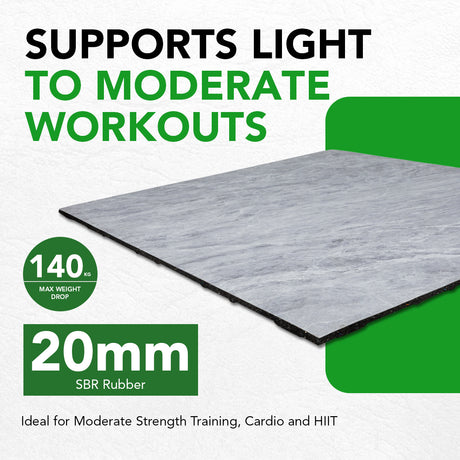
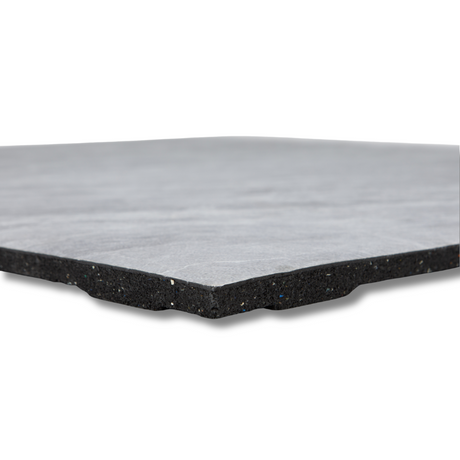
For most garage gyms, 20mm rubber flooring is the best all-round choice. It gives you a strong, durable surface for regular strength training, dumbbells, kettlebells, racks, benches, cardio equipment and general fitness. It is thick enough for typical home gym use while still being easy to install across a full garage floor.
For heavier training, 30mm and 43mm+ tiles offer greater protection. These are better suited to lifting zones, repeated drops, CrossFit-style training, Olympic lifting and spaces where the floor will take more regular impact.
As a simple guide:
- 11mm–15mm is best for light exercise, cardio, stretching and general protection.
- 20mm is best for most garage gyms, including weights, racks, benches and functional training.
- 30mm is best for heavier home strength setups and higher impact use.
- 43mm+ is best for Olympic lifting, heavy drops, CrossFit-style training and serious strength areas.
For many garage gym owners, 20mm PRO Rubber Gym Flooring Tiles are the most versatile option. They are suitable for regular strength and conditioning, support heavy equipment and give the garage a clean, professional finish.
If you are building a dedicated lifting zone or plan to train with heavier free weights, the 43mm PRO Anti-Shock Rubber Gym Flooring Tile gives extra impact protection where the floor needs it most.
Heavy Duty Garage Floor Mat Options
Garage gyms often need to deal with a mix of training styles. One area might hold a squat rack and bench, another may be used for dumbbells or kettlebells, and another might need space for a rower, bike, SkiErg or treadmill. Heavy duty garage floor mats and rubber tiles give you the flexibility to build a layout around the way you actually train.
Rubber tiles are usually the most practical option for garage gyms. They are easy to handle, simple to install and can be fitted around awkward garage shapes, thresholds, pillars, door tracks or storage areas. If one area gets more wear over time, individual tiles can also be replaced without lifting the entire floor.
Interlocking tiles are useful if you want a more connected floor with a stable, neat finish. Our 20mm PRO Interlocking Gym Tiles are ideal for garage gyms where you want a clean layout without needing adhesive.
Rubber rolls can also work well in some garages, especially where the space is used mainly for cardio, light fitness or general exercise. However, tiles are often better for heavy garage gym setups because they are easier to move, replace and combine with thicker lifting areas.
If you prefer a rolled finish, you can also browse our rubber gym flooring rolls.
Moisture Resistance and Garage Conditions
Garage gyms have to deal with conditions that normal indoor rooms often do not. Wet shoes, bikes, garden tools, open doors, condensation, dust and temperature changes can all affect the space. That is why the flooring needs to be durable, easy to clean and suitable for real garage use.
Rubber garage gym flooring is a practical choice because it is hard-wearing, moisture resistant for everyday use and much easier to maintain than bare concrete. It also helps make the floor feel warmer and more comfortable underfoot, which is especially useful in colder garages.
However, it is important to prepare the space properly before installation. Rubber flooring should not be used to cover up ongoing water problems. If your garage has active leaks, standing water or rising damp, these issues should be fixed before gym flooring is installed.
For garages that experience normal damp, dirt or condensation, rubber tiles are a sensible option. Regular ventilation, sweeping and cleaning will help keep the space fresher and easier to train in.
Noise and Vibration Reduction
Noise is one of the biggest issues in a garage gym, especially if the garage is attached to the house or close to neighbours. Training directly on concrete can be loud, particularly when using dumbbells, kettlebells, bumper plates or cardio machines.
Rubber flooring helps reduce the sharp impact noise and vibration that comes from training on a hard surface. It will not make a garage completely silent, but it can make a noticeable difference compared with bare concrete.
If noise and vibration are major concerns, choose a thicker rubber tile and consider creating a dedicated lifting zone. A 20mm tile is suitable for most garage gyms, while 30mm and 43mm+ options offer better shock absorption for heavier weights and more regular impact.
For additional acoustic support, especially in more sensitive spaces, you can also explore our soundproof flooring mats.
Easy Cleaning and Maintenance
Garage gym flooring should be easy to live with. Rubber tiles are low maintenance and simple to clean, which is important in a garage where dust, grit, wet shoes and outdoor debris are more common.
For everyday cleaning, sweep or vacuum the surface to remove dust and loose dirt. For a deeper clean, mop with warm water and a mild cleaner. Avoid harsh chemicals, solvents or soaking the floor with too much water.
If your garage is still used for bikes, tools or storage, wipe up mud, oil, grit or spillages quickly so they are not walked into the training area. Keeping the floor clean will also help protect your gym equipment and make the space feel more inviting to use.
Planning Your Garage Gym Layout
Before choosing your flooring, think about how the garage will be used. A single garage gym may need to work harder than a spare room because the space is narrower, equipment is closer together and storage may still be part of the room.
Start by planning your main training zones. You may need:
- A lifting area for a rack, bench, barbell and plates
- A free weights area for dumbbells and kettlebells
- A cardio area for a bike, rower, treadmill or SkiErg
- A clear space for stretching, mobility or warm-ups
- A storage area for accessories, tools, bikes or household items
If you are lifting heavy, it can be useful to place thicker tiles in the main impact zone and standard tiles across the rest of the garage. If you are covering the full floor, measure carefully and allow for cuts around walls, steps, thresholds and garage door tracks.
For help visualising your space, try our interactive garage gym conversion planner before ordering.
Get the Best Equipment for Your Garage Gym
Once your flooring is in place, you can build the rest of the gym around your training style. A good garage gym does not have to be complicated. For many people, a rack, bench, barbell, plates and a few dumbbells or kettlebells are enough to create a highly effective setup.
Others may want to add cardio machines, functional training kit, storage racks or a dedicated lifting platform. The key is to choose equipment that suits the size of your garage and leaves enough clear space to train safely.
Explore our gym equipment range to complete your garage gym setup.