At a Glance
- Reddit users most frequently recommend dense rubber flooring for garage gyms because it protects concrete, supports heavy equipment and reduces impact noise.
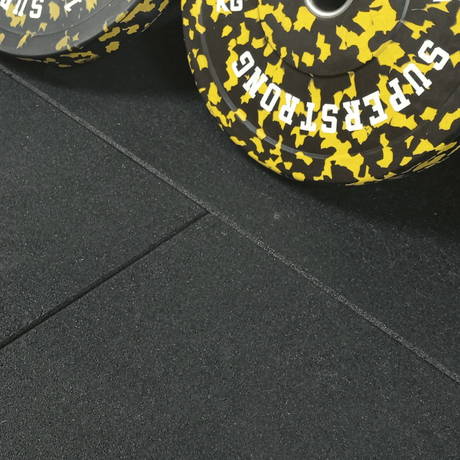
- Rubber tiles are generally the best all-round choice for UK home and garage gyms, particularly where easy DIY installation matters.
- Rubber flooring rolls create a smart surface with fewer joints, but they can be heavy and more difficult to position.
- Around 15mm to 20mm is suitable for many general home gyms, while heavier lifting and repeated weight drops usually require 30mm or thicker protection.
- Cheap foam mats may suit stretching and bodyweight exercise, but they are rarely the best choice beneath racks, benches or loaded barbells.
- Moisture, flooring odour, uneven concrete and the garage door clearance should all be checked before ordering.
The clearest conclusion from Reddit is simple: dense rubber is the best home gym flooring for most garage gyms. It is durable, grippy, relatively easy to clean and better equipped than foam or domestic flooring to handle racks, benches, dumbbells and cardio machines.
However, Reddit’s most repeated recommendation is often the American-style horse-stall mat. These thick rubber mats can be strong and inexpensive, but they may also be extremely heavy, difficult to cut, inconsistent in finish and noticeably odorous.
UK buyers can usually achieve a cleaner, more predictable result with purpose-made garage gym flooring, especially when the room will be used regularly or needs to look professionally finished.
The right product ultimately depends on how you train. A compact cardio space does not need the same floor as a garage used for deadlifts, Olympic lifts or strongman training.
What Does Reddit Recommend for Garage Gym Flooring?

Across popular discussions in r/homegym, r/GarageGym, r/HomeGymUK and related communities, four options appear repeatedly:
- Thick rubber mats
- Rubber gym tiles
- Rolled rubber flooring
- Interlocking foam tiles
The overwhelming preference is for rubber rather than foam.
In the highly upvoted Reddit discussion “If you’re ever considering getting rubber floor mats for a home gym, check for rubber horse stall mats instead”, the original poster argues:
“You can generally find high quality mats for a fraction of the price.”
That thread attracted considerable attention because horse-stall mats are often cheaper in the US than products marketed specifically as gym flooring. The discussion also highlights two drawbacks: rubber odour and the weight of each mat.
A separate r/homegym discussion titled “Best gym flooring” contains the straightforward recommendation:
“I will always recommend horse stall mats.”
This reflects a common Reddit view, but it does not mean stall mats are automatically the best option for every UK garage. Purpose-made rubber gym tiles generally offer more consistent thickness, cleaner edges, predictable performance and a finish designed for fitness spaces.
Reddit Recommendations Compared
| Flooring option | Best for | Main advantages | Important drawbacks |
|---|---|---|---|
| Rubber gym tiles | Most home and garage gyms | Durable, easy to handle, replaceable and available in several thicknesses | More joints than rolled flooring |
| Interlocking rubber tiles | DIY installations and rented spaces | Simple fitting, secure layout and no permanent adhesive | Usually cost more than basic straight-edge tiles |
| Rubber flooring rolls | Cardio rooms and larger open areas | Fewer seams and a clean, continuous appearance | Rolls can be extremely heavy and awkward to install |
| Thick rubber mats | Small lifting stations | Strong impact protection and simple local coverage | Visible joins, heavy sections and possible odour |
| EVA foam tiles | Yoga, stretching and light exercise | Soft, inexpensive and easy to move | Can compress, separate or dent beneath heavy equipment |
| Bare or painted concrete | Storage or very light activity | No additional material cost | Cold, hard, noisy and offers little equipment protection |
Are Horse-Stall Mats Really the Best Choice?
Horse-stall mats dominate American garage-gym discussions because they are widely available from agricultural suppliers. They are usually thick, dense and capable of handling substantial loads.
There are nevertheless several practical trade-offs.
Odour
Some stall mats have a strong rubber smell that can take time to dissipate. This may be manageable in a ventilated detached garage but less acceptable in an integral garage connected to the house.
Handling
A full-size stall mat can be extremely heavy. You may need two people to unload, position and cut it. This becomes particularly awkward in garages with equipment already installed.
Finish and consistency
Agricultural mats are designed for livestock rather than fitness spaces. Thickness, texture, edge quality and dimensions may be less refined than purpose-made home gym flooring.
Cleaning
Deep surface textures can trap chalk, dust and dirt. A smoother gym tile is normally easier to vacuum and mop.
Stall mats can still represent good value where appearance is unimportant and ventilation is excellent. For a permanent garage conversion, however, dedicated gym flooring normally produces a neater and more reliable installation.
What Thickness Should Garage Gym Flooring Be?
Thickness should be chosen according to weight, impact and the underlying floor rather than simply selecting the cheapest option.
| Training style | Suggested starting thickness | Suitable flooring |
| Yoga, mobility and light bodyweight training | 6mm to 11mm | Thin rubber or specialist exercise mat |
| Exercise bike, rowing machine or treadmill | 8mm to 15mm | Rubber roll or dense rubber tiles |
| General dumbbell workouts | 15mm to 20mm | Rubber gym tiles |
| Squat rack and moderate barbell training | 20mm to 30mm | Heavy-duty rubber tiles |
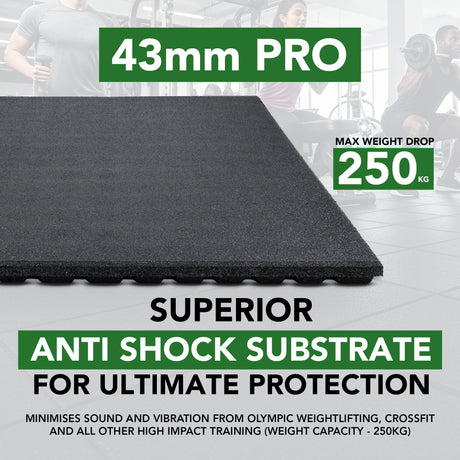
| Heavy deadlifts and functional training | 30mm to 43mm | Anti-shock rubber tiles |
| Repeated Olympic lifting or very heavy drops | 43mm to 63mm | Specialist impact tiles or lifting platform |
A Reddit user discussing their UK garage installation commented in “Garage nearing completion, flooring options?”:
“I assume 20mm is overkill but I did it anyway.”
For many garage gyms, 20mm is not excessive. It is a practical all-round specification for benches, racks, dumbbells, kettlebells and general strength training. Sprung’s 20mm rubber tiles are designed for loads of approximately 140kg, while thicker options provide greater protection for heavier and more frequent impacts.
For snatches, cleans, jerks or repeated barbell drops, explore dedicated Olympic weightlifting flooring rather than assuming a basic exercise mat will protect the concrete.
Rubber Tiles or Rubber Flooring Rolls?
Both formats can work well, but they solve different problems.
Choose rubber tiles when:
- You want to complete the installation yourself.
- The garage has awkward corners or an irregular shape.
- You expect to alter the layout later.
- You need thicker protection in a free-weight area.
- Individual damaged sections may need replacing.
Straight-edge 1m x 1m tiles cover a garage quickly while limiting the number of joints. For an installation that can be lifted or adjusted, interlocking gym flooring uses connecting profiles or concealed inserts to help keep each section aligned.
Choose rubber flooring rolls when:
- You want fewer visible seams.
- Most training involves cardio or fixed machines.
- You are covering a large, open room.
- Heavy barbell drops will take place on a separate lifting zone.
One Reddit user discussing premium garage flooring warned:
“The roll I think was over 300 lbs IIRC.”
That illustrates the biggest disadvantage of rubber matting roll: large rolls are difficult to move and align without assistance. They may also need adhesive or perimeter restraint to prevent curling or movement.
A mixed installation often works best. Rubber roll can cover cardio and circulation areas, while thicker tiles protect the rack or lifting station.
Why Foam Tiles Are Usually Not Recommended for Weights
Foam tiles are popular because they are inexpensive, lightweight and comfortable. They work well for stretching, mobility, Pilates and some bodyweight training.
They are less suitable beneath:
- Loaded squat racks
- Weight benches
- Treadmills
- Cable machines
- Dumbbells and kettlebells
- Barbells that may be dropped
Equipment feet can compress the foam and create permanent indentations while softer surfaces can make benches and racks feel less stable.
A removable foam workout mat can still be placed over a rubber floor when more cushioning is wanted for kneeling or floor exercises.
Best Flooring for Different Garage Gym Set-ups

Small garage gym with adjustable dumbbells
Choose 15mm to 20mm rubber tiles. They provide enough protection for a bench, lighter dumbbell drops and general workouts without unnecessarily raising the floor level.
Power rack and barbell garage gym
Start with 20mm to 30mm dense rubber. Use thicker protection around the rack when weights may be dropped.
Olympic weightlifting garage
Use 43mm or thicker anti-shock tiles, or combine substantial rubber flooring with a properly constructed lifting platform. Browse heavy-duty gym flooring designed for high-impact areas.
Cardio-focused garage
An 8mm to 15mm rubber roll or tile may be sufficient beneath a treadmill, rower or exercise bike. Prioritise grip, equipment stability and easy cleaning.
Multipurpose family garage gym
Interlocking rubber tiles are a sensible option because they are simple to install and can be lifted if the garage layout changes.
How to Install Rubber Flooring on a Garage Floor
Begin by emptying the area and checking the concrete for moisture, cracks and major unevenness. Existing damp should be addressed before it is covered.
Clean the floor thoroughly, allow it to dry and measure the room at several points. Garages are not always perfectly square.
Dry-lay the tiles from a visible corner or central reference line. Keep cut edges against walls where possible. Straight-edge tiles can often remain stable through their own weight and close compression, although larger permanent installations may require adhesive.
Before ordering, check:
- Garage door clearance
- Threshold height
- Doors opening into the room
- Skirting and wall irregularities
- Floor drains
- Expansion gaps
- Equipment anchor points
Cleaning and Maintaining Garage Gym Flooring
Vacuum or sweep regularly to remove grit that may abrade the surface. Wipe spills promptly and mop using warm water with a mild, neutral cleaning solution.
Avoid harsh solvents, strong bleach and oil-based products unless the manufacturer confirms compatibility. Lift movable equipment occasionally so concealed moisture or dirt can be checked.
Garage floors are more exposed to temperature changes and outdoor dirt than spare-room gyms, so occasional deeper cleaning is worthwhile.
FAQs
What is the best flooring for a garage home gym?
Dense rubber tiles are the best all-round option for most garage gyms. They offer durability, grip, impact absorption and better concrete protection than foam or domestic flooring.
Is 20mm gym flooring thick enough for a garage gym?
Yes, 20mm rubber is suitable for many home gyms using dumbbells, benches, racks and moderate barbell loads. Repeated heavy drops may require 30mm to 63mm flooring.
Can rubber gym flooring be laid directly over concrete?
Yes, provided the concrete is clean, dry, reasonably level and free from unresolved damp. Significant cracks or moisture problems should be repaired first.
Are horse-stall mats safe for home gyms?
They can provide strong floor protection, but buyers should consider odour, inconsistent finish, weight and cleaning. Purpose-made gym tiles often offer a more polished alternative.
Do I need a lifting platform as well as rubber flooring?
A platform is advisable when performing repeated heavy deadlifts, Olympic lifts or high-impact drops. It spreads impact and gives the barbell a consistent landing area.
Are interlocking tiles better than straight-edge tiles?
Interlocking tiles are easier to fit and reposition. Straight-edge tiles may provide a cleaner finish for permanent wall-to-wall installations.
Will rubber flooring reduce garage-gym noise?
Rubber can reduce impact and vibration, but it will not completely soundproof a garage. Thicker anti-shock flooring generally performs better than thin rolls.
Can I park a car on rubber gym flooring?
Not every gym flooring product is designed for vehicle tyres, oil or automotive fluids. Check the product specification before using the same area for both training and vehicle storage.
Key Takeaways
- Reddit users consistently favour dense rubber for garage gyms.
- Horse-stall mats can be economical, but purpose-made rubber tiles offer a cleaner and more predictable finish.
- A thickness of 15mm to 20mm suits many home gyms, while heavier lifting requires greater impact protection.
- Tiles are generally easier for DIY installation; rolls create fewer seams but are harder to handle.
- Foam is best reserved for light exercise rather than loaded racks or dropped weights.
- Choose flooring according to your heaviest training activity, not your lightest.
Explore Sprung Gym Flooring’s complete ranges of garage gym flooring, rubber gym tiles and home gym flooring to compare thicknesses and find the right protection for your training style.