Your Garage Floor Is About to Get Freezing: How to Fix It Before October — because once autumn properly arrives, an untreated concrete garage floor can make the whole space feel colder, harder and considerably less inviting to train in.
If you use your garage as a home gym, you will probably notice the change underfoot before almost anything else.
The bar might still be cold. The air might take a while to warm up. But it is the concrete beneath you that can make a garage workout feel particularly unpleasant.
The good news is that you do not necessarily need to turn your garage into a fully insulated room to make a significant difference.
Start with the floor.
Why Does a Concrete Garage Floor Feel So Cold?

Concrete does not just look cold.
Step onto a bare concrete floor in socks on a cold morning and it feels immediately different from standing on carpet, timber or rubber — even when the materials have been sitting in the same room.
That is because concrete transfers heat away from your body relatively efficiently.
When your feet, hands or knees come into contact with the slab, heat moves from your warmer body towards the colder concrete. The result is that familiar cold, hard sensation.
For a garage gym, you notice it in several ways.
Floor exercises become less appealing. Kneeling to adjust equipment feels uncomfortable. Stretching on the floor is colder. Your feet can feel chilled even when the air temperature itself is tolerable.
And because a garage slab is normally directly associated with the ground beneath the building rather than a heated room below, it can remain stubbornly cold throughout autumn and winter.
Putting a different surface between you and the slab changes that experience.
Rubber Creates a Much Better Barrier Underfoot
This is one of the reasons rubber works so well in garage gyms.
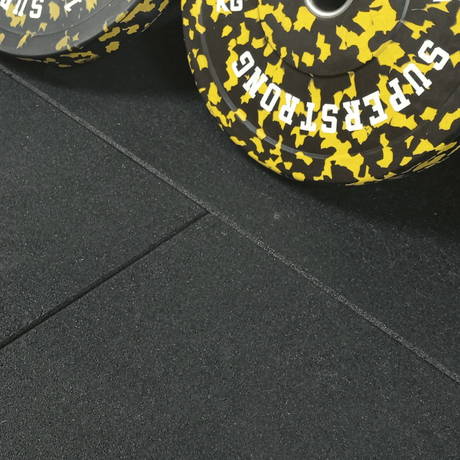
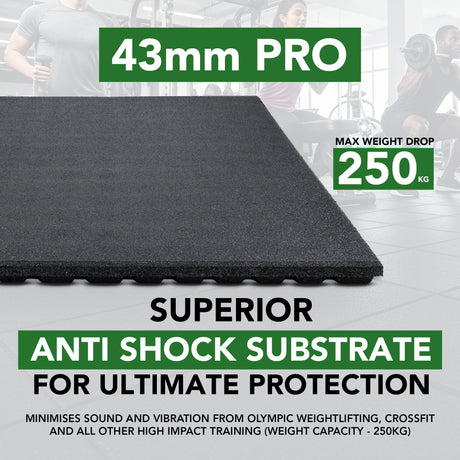
Good-quality rubber gym flooring creates a physical layer between you, your equipment and the concrete underneath.
Rubber does not transfer heat in the same way that bare concrete does, so it feels noticeably less harsh and cold when you stand, kneel or train on it.
It also deals with several other garage-gym problems at the same time.
Rubber provides a more forgiving surface for training, protects the concrete from equipment and helps protect equipment from direct contact with the slab.
For a garage that is primarily being used for strength training, a substantial loose-laid rubber tile is generally a much better starting point than simply placing small individual exercise mats around the room.
Large, heavy tiles also create a much more permanent-feeling training space without needing to be permanently bonded to the floor.
You can explore our garage gym flooring range for surfaces intended for this type of setup.
But Flooring Does Not Fix a Damp Garage
There is an important distinction to make here.
A cold concrete floor and a damp concrete floor are not the same problem.
Rubber can make a cold slab much more comfortable to train on. It should not, however, be treated as a cure for an existing moisture problem.
Winter can expose weaknesses in a garage that were much less obvious during summer.
You may start to notice moisture around walls, condensation on metal equipment, dark patches on the concrete or a generally damp feeling inside the room.
Some of that moisture may be condensation. Some may be coming through or around the slab. Water may also be entering beneath a garage door or through another part of the structure.
Before covering the floor, work out where the moisture is coming from.
If rainwater is visibly entering beneath the garage door, deal with that.
If water is penetrating through a wall, investigate that.
If you have persistent damp coming through the floor itself, covering it immediately with rubber is not the first job.
The underlying moisture issue needs attention first.
For a more detailed look at preparing concrete before fitting a gym floor, read our guide to How to Lay Rubber Gym Tiles on a Concrete Garage Floor (Damp, Cold and Uneven Slabs).
Why Condensation Gets Worse in Winter

Condensation is particularly common in garages because they often have cold surfaces combined with changing temperatures and limited ventilation.
Imagine opening the connecting door from a warm house into a cold garage.
Warmer, moisture-containing air enters the colder space. When that air meets cold surfaces such as concrete, metal racks, windows or garage doors, moisture can condense.
Wet cars, damp shoes and clothing can introduce even more moisture if the garage still serves several purposes.
Heating the garage occasionally can create another cycle.
The room warms while you train, the heater goes off when you leave and everything cools again.
That is why winter garage comfort is not simply a case of buying the biggest heater you can find.
Moisture, ventilation, flooring, draughts and heating all need to work together.
Do You Need a Membrane Under Your Garage Gym Flooring?
Not automatically.
This is one area where it is worth diagnosing the problem rather than assuming every concrete garage needs another layer underneath the rubber.
A correctly constructed garage floor may already include damp protection within its build-up.
If the floor is dry and there is no evidence of moisture moving through the slab, you should not automatically add a separate membrane simply because the room gets cold.
Cold is not proof of damp.
Where there is a genuine moisture problem, however, the situation needs to be investigated before you install the finished gym surface.
A membrane can form part of a suitable floor build-up, but simply placing an impermeable sheet over unexplained moisture can potentially move or trap the problem rather than solve its source.
The first question therefore should not be:
“Which membrane should I buy?”
It should be:
“Where is this moisture coming from?”
Once you know that, you can decide whether repairs, drainage, sealing, ventilation or a suitable damp-management system is required.
For significant or persistent damp problems, particularly in an older garage, getting professional advice on the building itself can save a great deal of trouble later.
What Heating Actually Works in a Garage Gym?

There is no single heater that magically turns every cold garage into a comfortable gym.
The better approach is to reduce unnecessary heat loss first.
If there are huge gaps around the garage door and cold air is continually entering the room, a heater is constantly fighting against the building.
Likewise, if the roof and walls offer very little thermal protection, warming the entire room can take more energy than expected.
Start with obvious draughts and gaps that can safely be addressed without compromising necessary ventilation.
Then think about how you actually use the garage.
For Short Workouts
If you train for relatively short periods, you may not need to heat the entire garage for hours.
A suitable electric heater that provides heat quickly can make the immediate training period more comfortable.
Infrared heating can also be useful because it is designed to warm people and surfaces directly rather than relying entirely on heating a large volume of cold air.
Any heater needs to be installed and used in accordance with its manufacturer's instructions, with suitable clearance from equipment and combustible materials.
For Garages Used Every Day
If your garage has effectively become another room in the house and you use it frequently, improving the building fabric becomes more worthwhile.
Draught reduction, appropriate insulation and sensible ventilation can help the space retain heat rather than requiring you to start from freezing every morning.
A thermostatically controlled heater can then maintain a more usable environment rather than repeatedly heating an extremely cold room from scratch.
What About Underfloor Heating?
Do not assume you can simply place thick rubber gym tiles over an underfloor heating system.
Gym flooring is specifically intended to create a substantial protective layer, and that same material can affect the way heat reaches the room.
Compatibility will depend on the complete floor system, heating system and flooring being used.
If underfloor heating is planned, check suitability at the design stage rather than fitting it first and hoping the gym surface will work with it afterwards.
For most existing UK garage gyms, tackling the slab surface, draughts and room heating separately is usually the more straightforward project.
The Right Order to Winter-Proof a Garage Gym

The biggest mistake is buying a heater first and trying to solve everything else afterwards.
Do the jobs in a logical order.
1. Check for Water and Damp
Look at the slab after rain and during colder weather.
Check along the garage door, walls and corners as well as the centre of the floor.
Establish whether you have an actual water-ingress problem, moisture through the slab or mainly condensation.
2. Deal With the Cause
Repair obvious leaks or water-entry points before covering the floor.
If the slab itself has a persistent damp problem, decide whether further investigation or professional damp treatment is needed.
3. Check the Concrete
The floor does not have to look beautiful before rubber tiles go down, but major cracks, loose material, large changes in level or badly damaged areas should be addressed.
Sweep and clean thoroughly too. You do not want dirt, rubble or sharp debris permanently sitting underneath your new gym floor.
4. Decide Whether a Membrane Is Necessary
Base this decision on the condition and construction of your particular garage, not on the assumption that every garage needs one.
If the slab is sound and dry, your requirements may be very different from those of an old garage with an unresolved moisture problem.
5. Complete Major Insulation or Building Work
If you plan to insulate walls, improve the ceiling or undertake other messy building work, do that before installing your finished gym flooring.
There is little point laying a new floor and then covering it with dust, plaster or construction debris.
6. Install the Rubber Flooring
Once the concrete is clean, sound and suitable, install your gym surface.
Loose-laid rubber tiles make particular sense in a garage because they can create a substantial training surface without permanently bonding the floor to the concrete underneath.
For help deciding which type and thickness suits your training, see our garage gym flooring buyer's guide.
7. Sort the Heating
With the basic room prepared, choose heating that reflects how you actually use the space.
A garage used for an hour of strength training does not necessarily need the same heating strategy as a converted garage used all day as a gym, office and living space.
8. Bring the Equipment Back In
Floor first, rack second.
It is much easier to create a clean, properly fitted training surface when you are not trying to cut and position flooring around a room full of benches, plates, dumbbells and racks.
Don't Wait Until the First Freezing Morning
A garage gym can be brilliant through autumn and winter.
No dark commute to the gym. No waiting for equipment. No excuse when the weather is miserable.
But a bare concrete box feels very different in January than it does in July.
Deal with moisture first. Improve the floor. Reduce obvious draughts. Then add suitable heating.
That order gives you a garage gym that feels much more like somewhere you actually want to train when the colder weather arrives.
If the floor is the next job, browse our garage gym flooring options.
Use SPRUNG30 for 30% off.
Free UK mainland delivery over £300.
FAQs
Does rubber gym flooring make a garage warmer?
Rubber does not heat the garage, but it creates a barrier between you and the cold concrete slab. That makes the floor feel noticeably less cold and more comfortable for standing, stretching and training.
Do I need a damp-proof membrane under rubber gym flooring?
Not necessarily. If your concrete floor is sound and dry, an additional membrane should not automatically be required simply because the slab feels cold. If you have persistent damp or water ingress, identify and address the cause before covering the floor.
Can I put rubber gym tiles straight onto concrete?
Rubber gym tiles can be laid over a suitable concrete surface, but the slab should be clean, stable and reasonably level, without an unresolved damp or water-ingress problem. Deal with significant defects before fitting the flooring.
What is the best way to heat a garage gym?
It depends on how frequently and how long you use it. Reducing draughts and unnecessary heat loss first will make any heating system more effective. For shorter training sessions, fast-response or targeted electric heating may be more practical than trying to keep the whole garage heated continuously.
Should I install the flooring or heater first?
Resolve damp, repairs, insulation and other significant building work first. Install the gym flooring before bringing heavy equipment back into the room, then choose and position the heating system safely around the finished training layout.