![8 Essentials for Building an Outdoor Garden Gym: Top Ideas for Your Backyard Workout Space [UPDATED]](http://www.gym-flooring.com/cdn/shop/articles/dcde2313a44118c7587b83562748e34c_4e1bd43d-7a8d-4642-85e2-dbe9cb69a8f7.jpg?v=1788518922&width=1600)
How to Build a Garden Gym in 2026: The 8 Things You Actually Need starts with the building itself, but the best garden gyms are planned as a complete space — from the base beneath your feet to ventilation, lighting, security and the equipment you actually have room to use.
A garden gym can be anything from a converted shed with a rack and a set of dumbbells to a purpose-built garden room with enough space for serious strength and conditioning. The mistake is to start by buying equipment and work backwards.
Instead, get the space right first.
Here are the eight things you actually need to think about before turning your garden into a year-round workout space.
1. The shed or garden room: get the structure right first

Your garden gym is only as good as the building around it.
For a smaller gym, a well-built shed can work perfectly well. A larger garden room gives you more flexibility, particularly if you want a rack, bench, cardio equipment and enough clear floor space to train comfortably.
Whatever you choose, start with three questions:
Is the base suitable?
A gym is considerably different from a garden shed used for storage. Racks, weights and people create concentrated loads, so don't assume an existing shed floor is suitable simply because it supports a lawnmower and garden furniture. Check the base and floor structure before bringing heavy equipment inside.
Is it protected from damp?
Damp is one of the biggest differences between a garden building and a room inside your house. Your building needs to keep water out while allowing the space to breathe. Look at the roof, walls, floor and ventilation before installing your gym.
Is there enough room?
Don't measure the room and then fill every available centimetre with equipment. You need space to move, exercise and access your kit.
A compact 10m² gym can be surprisingly effective when the equipment is chosen carefully. It can become surprisingly cramped when every piece of equipment gets its own footprint.
2. Power and lighting

If you want your garden gym to be more than a fair-weather workout space, electricity and lighting are worth planning from the beginning.
Power gives you options for lighting, ventilation and cardio equipment, while good lighting makes the room much more practical during darker mornings and evenings.
Think about where sockets will be useful rather than simply putting them wherever is easiest during construction. You don't want cables running across your training area or equipment blocking access to sockets.
Lighting should also be considered as part of the layout. You need enough illumination to see what you're doing without creating awkward shadows around racks, benches or other equipment.
If you're adding a new electrical supply to the garden building, use a suitably qualified electrician and plan the electrical installation before the room is finished.
3. Insulation: make it usable beyond summer

A garden gym that is freezing in winter and unbearably warm in summer won't get used as often as you intended.
Insulation helps make the space more comfortable throughout the year. Consider the walls, roof and floor rather than treating insulation as something that only goes between the wall studs.
Windows and doors also matter. A well-insulated building is much easier to heat and cool than a basic garden shed with gaps and thin construction.
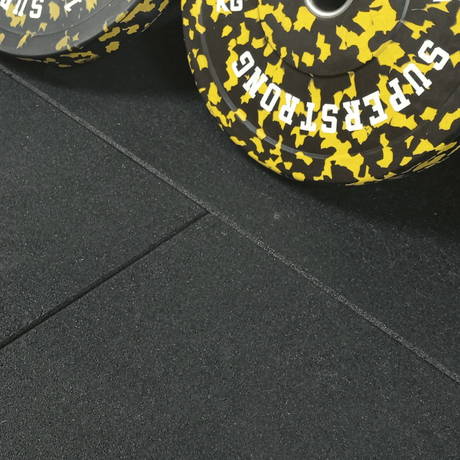
The flooring can contribute to the feel of the room too. Rubber provides a more substantial surface underfoot than a bare timber floor and can make a shed or garden room feel more like a dedicated training space.
But insulation isn't the same thing as ventilation — and you need both.
4. Choose the right floor: outdoor rubber tiles or indoor rubber?

This is one of the most important decisions because not all rubber flooring is designed for outdoor conditions.
If your gym is genuinely exposed to the weather — for example, an open-sided shelter, covered patio or outdoor training area — choose flooring specifically designed for outdoor use.
Outdoor rubber flooring needs to cope with rain and moisture. The outdoor range includes rubber tiles designed with integrated drainage and weather resistance in mind.
Customer Feedback:
"My bootcamp buddies absolutely love our new fitness yard. We used to make do in a small section of the gym carpark but this is next level! The new gym tiles make all the difference with outdoor training especially in bad weather. Would highly recommend to anyone thinking of extending their gym space to outdoors"
For a dry, enclosed garden room or shed, you have a different situation. You don't necessarily need an outdoor tile simply because the building is in the garden.
For a typical shed gym, 20mm rubber tiles are a strong starting point, provided the base is suitable. The shed flooring range specifically recommends 20mm rubber tiles for gym and workshop applications, while also highlighting the importance of checking the floor structure first.
For most general strength training in a dry garden room, 20mm rubber is the sensible starting point. If you're regularly dropping loaded bars, thicker flooring becomes more appropriate. We recommend 30mm for heavy deadlifts and dropped bars, with 40mm and above reserved for Olympic lifting, dedicated platforms and similar higher-impact applications.
For more detail on choosing the right thickness, see the Best Gym Flooring for a Garage Gym UK guide which covers everything for external spaces.
5. Equipment that actually fits 10m²

A typical 10m² garden gym doesn't need ten machines.
In fact, trying to recreate a commercial gym in a small garden room is one of the quickest ways to make the space unusable.
Think multi-purpose.
A compact strength-focused gym could centre around:
- A squat or power rack
- An adjustable bench
- A barbell and weight plates
- Dumbbells or kettlebells
- Resistance bands
- Wall-mounted or vertical storage
- A small amount of open floor space for bodyweight and functional training
If cardio is important, choose equipment according to the space available. A single compact cardio machine may be more useful than trying to squeeze in several large machines.
Storage is particularly important. The equipment isn't just taking up space when you're using it; plates, dumbbells, bands and accessories all need somewhere to live when you're training.
The goal is to maximise usable training space, not the number of products inside the building.
6. Ventilation

This is easy to overlook when you're planning the exciting parts of a garden gym.
You will generate heat and moisture when you train. A small, well-insulated room can become warm and stuffy surprisingly quickly, particularly with the doors and windows closed.
Plan ventilation from the start.
Natural ventilation through suitable windows, vents or doors may be enough for some spaces, while others may benefit from mechanical ventilation or a fan.
The important thing is not to seal the building so tightly that there's nowhere for warm, humid air to escape.
Good ventilation also matters for the flooring and the building itself. A garden gym needs to stay dry, particularly if the underlying structure is timber.
7. Security

A garden gym contains equipment that you probably don't want to leave unsecured.
Security should therefore be part of the building design rather than an afterthought.
Start with the basics:
- A secure door
- Suitable locks
- Secure windows
- Exterior lighting where appropriate
- Keeping valuable equipment out of sight from the garden
- Sensible storage for smaller, portable equipment
If your garden gym contains expensive equipment, consider how visible it is from outside the property. A beautifully designed gym with large uncovered windows may look fantastic but can also advertise exactly what's inside.
Security also applies to the equipment itself. Racks and other larger items should be positioned and secured appropriately for the way they are going to be used.
8. Set a realistic budget before you start
This is where garden-gym projects can quickly get out of hand.
The building, base, electrical work, insulation, ventilation, lighting and equipment can all vary considerably depending on what you're creating, so there isn't one honest price that applies to every garden gym.
What you can do is price the flooring element accurately.
For example, current list pricing includes:
- 20mm PRO rubber tiles: £34.95 per m²
- 15mm PRO rubber tiles: £32.99 per m²
- 30mm PRO rubber tiles: from £32.99 per m²
- 30mm PRO rubber gym tiles (suitable for outdoors): £95 per m²
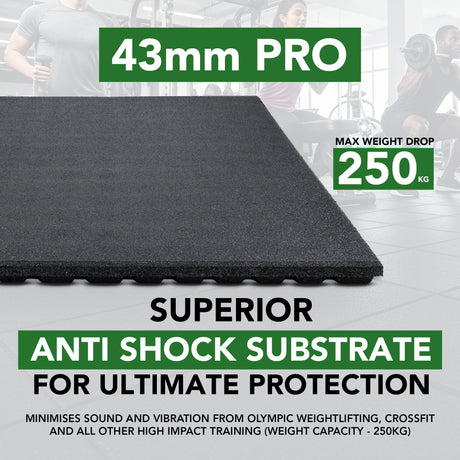
- 43mm PRO gym tiles (suitable for outdoors): £109 per m²
- 50mm PRO gym tiles (suitable for outdoors): £110 per m²
- 60mm PRO gym tiles (suitable for outdoors): £121 per m²
- 30mm thick 50cm x 50cm Outdoor Tiles: from £14.49 per tile
These are useful reference points when building your flooring budget, rather than guessing from the total cost of somebody else's garden gym.
For a 10m² room, for example, 20mm rubber flooring at £34.95 per m² would be £349.50 before the SPRUNG30 discount. The same area using 43mm Anti-Shock flooring would be £744.70 before the discount.
The current discount code is SPRUNG30, giving 30% off.
For orders over £300, free UK mainland delivery applies.
The important thing is to budget the whole project in stages rather than spending most of your money on the building and discovering you have nothing left for the equipment or floor.
So, what does a good garden gym actually need?

Strip away the Instagram inspiration and the expensive equipment lists and the essentials are straightforward:
- A suitable shed or garden room with a sound base and protection from damp.
- Power and lighting so the space works when you actually want to train.
- Insulation to make the building more comfortable throughout the year.
- The correct flooring for whether the space is genuinely outdoors or a dry enclosed room.
- Equipment that fits the space rather than equipment that fills it.
- Ventilation to deal with heat and moisture.
- Security to protect the building and equipment.
- A realistic budget that covers the whole project, not just the exciting bits.
The biggest lesson is to design the garden gym around how you train.
If you lift weights, prioritise the floor and the lifting zone. If you train HIIT and functional fitness, leave plenty of open space. If cardio is your priority, choose one or two machines that genuinely earn their floor space.
And if you're converting a shed, don't skip the boring checks on the base and damp. They matter far more than the colour of the walls.
FAQ
Do I need planning permission for a garden gym?
Not necessarily. In England, a garden gym can fall within permitted development rules when it is an outbuilding used for a purpose incidental to the house, such as a personal gym. However, there are limits and restrictions covering factors including height, location, the amount of the garden covered and whether the property is listed or subject to other planning restrictions. Always check the rules that apply to your property before building.
Can rubber gym tiles go outside?
Yes, but you need rubber flooring specifically designed for outdoor use. Outdoor tiles are designed with features such as drainage and weather resistance. Standard indoor gym tiles should not automatically be assumed to be suitable for permanent exposure to the elements.
How much does a garden gym cost?
There is no single reliable figure because the cost depends on the building, base, electrical work, insulation, ventilation, equipment and flooring. For flooring alone, current prices range from £32.99 per m² for 15mm PRO tiles to £121 per m2 for the thickest tiles at 60mm suitable for outdoor use.
What is the best floor for a wooden shed gym?
For a dry wooden shed, 20mm rubber tiles are a good starting point for general gym use, provided the base can support the equipment. Suspended timber floors may need strengthening beneath heavier equipment, while damp sheds should be dealt with before the flooring is installed.
Do I need outdoor flooring if my gym is inside a shed?
No. If the shed or garden room is properly enclosed and kept dry, indoor rubber gym flooring can be appropriate. Outdoor flooring is intended for areas exposed to outdoor conditions and where drainage and weather resistance are required.