Ten minutes can be enough to change your whole training week if the workout is built well and you attack it with intent! That’s the appeal of a CrossFit workout: it blends strength, fitness, and skill into a session that makes you feel like you actually trained, not just visited the gym.
CrossFit is also massive in reach, which matters for beginners because it means proven coaching systems and a clear pathway to progress. CrossFit itself describes a global community of 10,000+ gyms across 150+ countries.
In this guide, I’ll break down what’s in a CrossFit workout, how to choose the right CrossFit workout plan as a beginner, and exactly how to scale a WOD safely using the 4 knobs to turn: load, reps, movement, and pace. I’ll also give you a practical CrossFit workout program you can use at home or at the gym, plus a clear example of scaling a typical workout.
What a CrossFit workout actually is

A CrossFit workout is usually a short, high-focus session built around functional movements. You might lift a barbell (or dumbbells), do bodyweight gymnastics like pull ups and push ups, and then finish with a conditioning piece where you keep moving with purpose. CrossFit gym equipment is versatile and can be used for a variety of training styles which makes it appealing for those who prefer hybrid training (a little bit of everything).
Most workouts follow a simple flow:
1) Warm-up (5 to 10 minutes)
This is where you prepare joints and tissues, and groove patterns. Think air squats, lunges, light dumbbell thrusters, hip flexors mobility, and shoulder work. The goal is movement quality, not fatigue.
2) Skill or strength (10 to 20 minutes)
You practise technique or build strength. This can include front squats, back squats, strict press, push jerk, split jerk, or basic Olympic lifting progressions. Newer athletes should focus on good form and consistent reps, rather than heavier weights.
3) The WOD (Workout of the Day) (6 to 20 minutes)
This is the conditioning piece. You’ll see formats like:
- AMRAP: as many rounds as possible, or as many reps as possible, in a set time.
- Rounds for time: complete the work as fast as you can, usually under a time cap.
- Intervals: hard efforts with rest built in.
4) Cool-down and recovery (5 minutes)
Breathing, light stretching, and a quick check-in on tight areas. Recovery is not optional if you want to stay consistent.
Is CrossFit good for beginners?
Yes, as long as you scale intelligently and keep your ego out of the way. Most people worry CrossFit is only for elite athletes doing rope climbs, wall walks, and unbroken sets of double unders. In reality, a smart coach (or a smart plan) meets you at your current fitness level and builds from there.
As a beginner, you should expect:
- Your first workout to feel challenging, but doable.
- Technique to matter more than speed.
- Progress to come from repeating movements well, not surviving chaos.
If your movement starts to fall apart, that’s your cue to adjust. You are here to build strength and endurance for the long game.
Is CrossFit better than the gym?
It depends on what you want. A traditional gym routine can be brilliant for targeted muscle building and controlled lifting. CrossFit tends to win on structure, variety, and accountability, especially if you like being told what to do and measuring progress over time.
If you enjoy learning skills, training your legs, pushing your engine, and keeping it fun, CrossFit is a strong option. If you prefer slower, isolated exercises with longer rest, classic gym training may suit you better. The best plan is the one you can perform consistently.
The 4 knobs to turn: how to scale a WOD safely

Here’s the scaling framework I use, and it matches the infographic theme you shared: turn one knob at a time to preserve the intended stimulus. Scaling is not about making it “easy”. It is about choosing the right challenge so you can move well and keep going.
An idea to lean on as a beginner is this reminder from two-time CrossFit Games champion Annie Thorisdottir - CrossFit Games
“It’s absolutely impossible to be motivated all the time. I believe that motivation is overrated.”
Knob 1: Load (weight)
Load is the simplest dial. If your technique is breaking down, reduce weight first.
Use load to protect good form:
- Drop from barbell to dumbbells.
- Choose a lighter medicine ball for wall ball shots.
- For lifting, pick a weight you can lift with crisp reps, even when tired.
A good rule: you should be able to do small sets without turning every rep into a grind.
Knob 2: Reps and volume
If the total reps are too high, your pace collapses and your rest balloons. Reduce total reps, reduce rounds, or shorten the workout so you can keep intensity appropriate.
Use reps to maintain quality:
- Cut 21-15-9 to 15-12-9.
- Change 5 rounds to 3 rounds.
- Reduce a big set so you can keep moving without endless breaks.
Knob 3: Movement complexity
Some movements are high-skill, like double unders, rope climbs, and kipping pull ups. When fatigue hits, these can turn messy fast.
Substitute advanced movements with safer options:
- Double unders to single unders.
- Rope climbs to rope pulls or strict ring rows.
- Wall walks to bear crawls or incline walkouts.
- Handstand work to dumbbell push press or strict shoulder press.
The goal is to keep training the pattern without risking sloppy positions.
Knob 4: Pace and time domain
A 5-minute sprint should feel very different to a 15-minute grind. If you turn the wrong knob, you accidentally change the whole workout.
Use pace to hit the right stimulus:
- If it’s meant to be short and punchy, choose loads and movements you can cycle fast.
- If it’s longer, settle into a steady strategy and avoid red-lining in the first round.
Your pace should match the workout’s purpose, not your adrenaline.
Example scaling for a typical CrossFit workout (using the 4 knobs)

Let’s take a “typical” full body CrossFit workout you might see at the gym.
Workout (RX version)
12-minute AMRAP (as many rounds as possible):
- 10 dumbbell thrusters
- 12 box jump overs
- 14 sit ups
This hits legs, pushing strength, and conditioning. Most people should be moving almost continuously.
Now let’s scale it safely.
Step 1: Check the intended stimulus
This is a moderate time domain workout where you should keep a steady pace with short rest, not long stoppages. You should be able to complete rounds smoothly.
Step 2: Turn the knobs
Scaling option A: Beginner (turn movement and reps first)
12-minute AMRAP:
- 8 dumbbell thrusters (lighter)
- 10 box step overs (instead of box jump overs)
- 12 sit ups (or ab mat crunches)
Why it works: you maintain the structure and keep moving, but reduce complexity and total reps so your movement quality stays high.
Scaling option B: Limited equipment, CrossFit workouts at home
12-minute AMRAP:
- 10 goblet squats (one dumbbell)
- 12 burpees (step down and up if needed)
- 14 sit ups
No box, no problem. This still builds endurance and keeps the workout simple.
Scaling option C: Protect shoulders or lower back (turn load and movement)
12-minute AMRAP:
- 10 front squats (light barbell or two dumbbells)
- 12 box jumps (lower height, step down)
- 14 sit ups
This removes the overhead component if thrusters irritate you, while keeping legs and breathing high.
Quick self-check before you start
Ask yourself these three questions:
- Can I do this weight for clean reps?
- Do I have the skill to perform the movement safely?
- Can I finish within the intended time domain without my pace collapsing?
If any answer is “no”, turn a knob!
A simple CrossFit workout plan for beginners (home or gym)

This is a practical CrossFit workout plan you can run for 4 weeks. Train 3 days per week, rest a day between sessions if possible. The goal is to build strength, balance, and confidence, not to get wrecked.
Day 1: Strength + short WOD
Strength: Front squats, 5 sets of 5 (moderate load, focus on technique)
WOD (8-minute AMRAP):
- 5 pull ups (or ring rows)
- 10 push ups (hands elevated if needed)
- 15 air squats
This bodyweight triplet is simple, effective, and easy to track.
Day 2: Skill + longer engine
Skill: Double unders practice (or single unders), 10 minutes
WOD (15-minute AMRAP):
- 10 dumbbell push press
- 12 wall ball shots (or light medicine ball to a target)
- 200 m run or 12 calories on the assault bike
Aim to maintain a steady pace. Break early, not late.
Day 3: Lift + rounds for time
Skill: Deadlift technique, then build to 5 heavy but clean reps
WOD (3 rounds for time):
- 12 dumbbell thrusters
- 12 box jump overs
- 12 sit ups
Time cap: 12 minutes
Choose loads that let you keep moving. If you hit a wall, reduce reps or load for the final round.
Flooring and set-up: the unsexy safety upgrade that matters
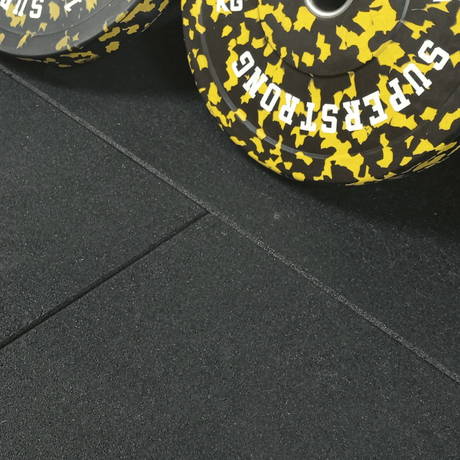
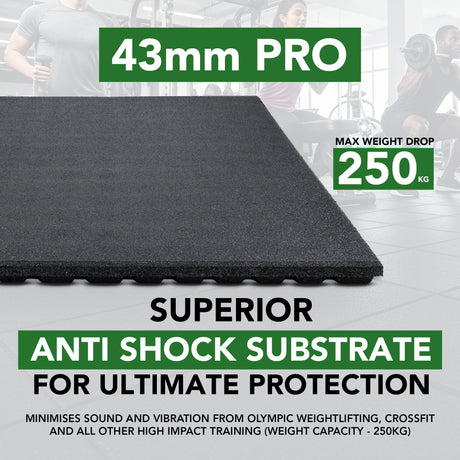
If you’re training at the gym, a stable surface helps you perform safely, especially for box jump landings, barbell lifting, and repeated burpees. At home, protect your floor and your body with a non-slip, shock-absorbing gym mats set-up, and give yourself enough space for swings, jump rope, and wall ball throws.
Good training is repeatable training. Your environment is part of that.
FAQ
What is in a CrossFit workout?
Most sessions include a warm-up, a strength or skill section (like squats, Olympic lifting, or gymnastics), and a WOD that targets conditioning through functional movements.
What is CrossFit in exercise?
CrossFit is a training approach that mixes varied functional exercises, performed at a relative intensity that matches your ability. It often combines lifting, bodyweight movements, and cardio elements.
What is CrossFit workout for beginners?
A beginner CrossFit workout should use simple movements you can control, like air squats, ring rows, push ups, light dumbbell work, and short intervals with manageable rest.
Is CrossFit better than gym?
It can be, if you want structure, measurable progress, and a mix of strength and endurance. A regular gym is great too, especially if you prefer slower lifting and more control. The best choice is what you will stay consistent with.
What are the 10 things of CrossFit?
A practical list is: warm-up, technique, strength, conditioning, functional movements, intensity scaled to you, good form, smart pacing, recovery, and tracking results over time.
Set up your CrossFit training area at home - browse our home gym mats for CrossFit, Strength Training and other versatile workout styles.