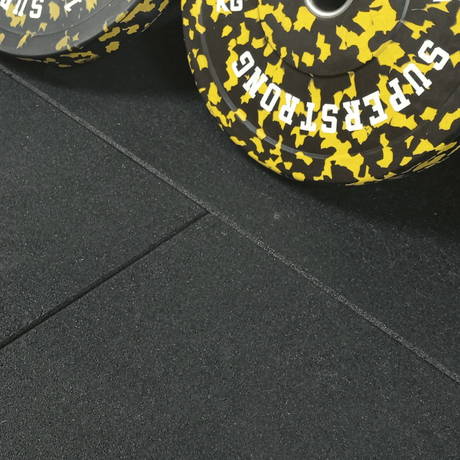
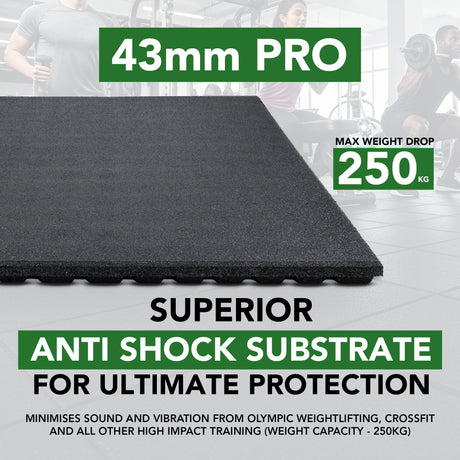
When you start shopping for rubber gym flooring, you will quickly come across two abbreviations: SBR and EPDM. They look similar at first glance -- both are black (or flecked) rubber tiles used in gyms across the UK -- but they differ in material, feel, price and long-term performance.
In this guide we break down exactly what each type is, compare them side by side, and help you decide which is the right choice for your home gym or commercial facility.
What Is SBR Gym Flooring?

SBR stands for Styrene-Butadiene Rubber. It is the most common type of gym flooring in the UK and the material you will find in the vast majority of CrossFit boxes, commercial gyms and home gyms.
SBR tiles are made from recycled rubber granules -- primarily reclaimed from truck and car tyres -- bonded together with polyurethane. This manufacturing process makes SBR one of the more sustainable flooring options on the market, as it gives new life to waste rubber that would otherwise go to landfill.
The surface of an SBR tile has a slightly textured, granular feel. It is robust, heavy and delivers excellent shock absorption and sound reduction. SBR tiles from Sprung are available in thicknesses from 11mm all the way up to 63mm, making them suitable for everything from light cardio areas to extreme Olympic lifting zones.
Key characteristics of SBR:
Made from recycled rubber (truck tyres)
- Textured, granular surface
- Classic gym look (black, sometimes with coloured flecks)
- Strong rubber odour when new (fades over time)
- Very durable under heavy use
- More affordable than EPDM
What Is EPDM Gym Flooring?

EPDM stands for Ethylene Propylene Diene Monomer. Unlike SBR, EPDM is a synthetic rubber manufactured from raw materials rather than recycled sources. This gives manufacturers much more control over the finished product's colour, texture and surface properties.
EPDM gym tiles have a noticeably smoother, more refined surface compared to SBR. They often feel slightly softer to the touch and have a velvety finish that many gym owners describe as more premium. This smoother surface also makes EPDM tiles easier to clean and more hygienic in high-traffic environments.
Because EPDM rubber is produced from virgin materials, it is available in a much wider range of colours and design options -- from subtle grey flecks to vibrant blues, greens and reds. This makes EPDM the go-to choice for gym owners who want their flooring to match a specific colour scheme or branding.
Sprung's Konnecta range (gym-flooring.com/collections/
Key characteristics of EPDM:
- Made from synthetic (virgin) rubber
- Smoother, softer surface finish
- Wider range of colour and design options
- Less odour than SBR
- Easier to clean
- Higher price point
SBR vs EPDM: Head-to-Head Comparison
Feature | SBR | EPDM
Material | Recycled rubber (tyres) | Synthetic virgin rubber
Surface feel | Textured, granular | Smooth, velvety
Durability | Excellent | Excellent
Shock absorb. | Excellent | Excellent
Colour options | Limited (black + flecks) | Wide range
Odour (new) | Noticeable, fades over weeks | Minimal
Cleaning | Good | Very good
Price | Lower | Higher
Eco-friendly | High (recycled) | Moderate
Durability and Wear
Both SBR and EPDM are extremely durable materials that will last for years in demanding gym environments. There is no meaningful difference in lifespan -- a well-made SBR tile will perform just as long as an EPDM tile under the same conditions.
Where they differ slightly is in how they wear. SBR tiles can sometimes shed small rubber granules in the first few weeks of use, particularly in high-traffic areas. This settles down quickly. EPDM tiles, with their smoother bonded surface, tend not to shed and maintain a cleaner appearance from day one.
Surface Finish and Feel
This is one of the biggest differences and often the deciding factor for buyers.
SBR has a classic gym floor texture -- slightly rough and granular. It provides excellent grip and traction, which is important for exercises where your feet are in direct contact with the floor.
EPDM has a smoother, almost velvety surface that feels more refined underfoot. If you are doing floor-based exercises (stretching, yoga, bodyweight work) alongside weight training, the EPDM surface tends to be more comfortable against bare skin.
Cleaning and Maintenance
EPDM is the clear winner for ease of cleaning. The smoother, less porous surface means dirt, chalk, sweat and bacteria sit on top of the tile rather than settling into the texture. A simple mop or wipe-down is usually all that is needed.
SBR tiles require a little more effort. The textured surface can trap dust and debris, so regular vacuuming or sweeping is recommended before mopping. Both materials are water-resistant and inherently antibacterial.
For commercial gyms with high foot traffic and strict hygiene requirements, EPDM's easier cleaning is a significant advantage. For a home gym, the difference is marginal.
Odour
Some new SBR tiles have a noticeable rubber smell. This is completely normal and non-toxic but can be strong in enclosed spaces like garages or spare bedrooms. The smell typically fades within two to four weeks.
EPDM tiles have significantly less odour out of the box. If you are sensitive to smells or setting up a gym in a living space, EPDM is the better choice.
Colour and Design Options
SBR tiles are predominantly black, sometimes with coloured rubber flecks. The options are functional but limited.
EPDM opens up a much broader design palette including solid colours, multi-coloured fleck patterns, and premium finishes that mimic marble or wood grain. Sprung's Konnecta Marble Effect and Wood Effect tiles are examples of what EPDM makes possible.
Price
SBR is more affordable. For a standard 20mm SBR tile, expect around GBP14.75 to GBP34.50 per square metre depending on thickness and profile.
EPDM typically costs 30-50% more, reflecting higher raw material costs and additional design options. For larger spaces, this cost difference can be substantial.
Which Is Better for Home Gyms?
For most home gyms, SBR is the smart choice. It delivers durability, shock absorption, sound reduction and subfloor protection at a lower price point. If your gym is in a garage or dedicated room, SBR tiles like the 20mm Sprung PRO are hard to beat.
If your home gym shares space with a living area or you want a more premium look, EPDM is worth the upgrade. The smoother surface, lower odour and design options make it easier to integrate into a multi-use space.
Which Is Better for Commercial Gyms?

Four out of five CrossFit boxes and Hyrox gyms in the UK use SBR. It is battle-tested, affordable at scale, and performs brilliantly.
Many larger commercial gyms use a zoned approach: SBR in the functional training and free weights areas, EPDM in the reception, stretching zones, PT studio areas and machine floors.
Our Recommendation
Choose SBR if:
- Budget is a primary concern
- You want proven, no-nonsense gym flooring
- Your gym is in a garage, shed or dedicated space
- You are covering a large area
- You value sustainability (recycled rubber)
Choose EPDM if:
- You want a smoother, more premium surface
- Design and colour options matter
- Your gym is in a living space or needs to look polished
- Easy cleaning and low odour are priorities
- You are outfitting a commercial reception or PT studio
Whatever you choose, the most important thing is getting the right thickness for your activities. Check the gym flooring thickness guide at gym-flooring.com/blogs/
Need help choosing? Get in touch with the Sprung team at gym-flooring.com/pages/