If you want strength you can measure, powerlifting is refreshingly direct: practise the competition lifts, build the right muscles with accessory work, and get comfortable lifting heavy weights with proper form. That is it! No chaos, no endless exercise hopping, just repeatable progress you can feel week to week.
Powerlifting is also bigger than many people realise. The International Powerlifting Federation (ITF) announced it had 133 member federations across all continents (a useful marker of how established the sport is globally).
In this guide, I’ll walk you through the key powerlifting exercises for beginners, a simple three-day routine, and a Big 3 setup checklist (five steps each). Expect practical cues for bracing, bar path, foot position, and safety so you can train with confidence on day one.
What are the main exercises for powerlifting?
The main exercises in any powerlifting competition are the big 3:
- Squat
- Bench press
- Deadlift
These are the competition lifts, and your goal in training is to get strong and consistent at them. Everything else is there to support them through smart accessory exercises, better positioning, and stronger weak links (think triceps, upper back, posterior chain, and core stability).
If you’ve been Googling a powerlifting exercises list, here’s the beginner-friendly version: big 3 first, then a handful of assistance exercises that target what the big 3 demand.
The Big 3 setup checklist: squat, bench, deadlift (5 steps each)

Treat these checklists like a pre-lift ritual. When your starting position is consistent, technique is easier, and it becomes much clearer how much weight you should be using.
A quick note on bracing: many lifters naturally use a brief Valsalva-style brace when the load is heavy. In plain English, it means you take a big breath, brace your torso, complete the hard part, then reset at the top. If you have any medical concerns around blood pressure, be sensible and speak to a professional before pushing maximal loads.
The low-bar squat checklist (5 steps)

-
Create the shelf (rack position)
Pull your shoulder blades back and down to build a solid “shelf” across your upper back. For a low-bar squat, the bar often sits a little lower than high-bar, but the goal is the same: stable, tight, and repeatable. -
Establish the tripod foot (foot position)
Set feet roughly shoulder width (some lifters prefer feet hip width) with toes pointed out about 10–20 degrees. Distribute weight across heel, big toe, and little toe so the whole foot stays planted. -
The Valsalva brace (bracing)
Before unracking, take a deep breath into your belly and sides, then brace like you are about to be bumped. Keep that stiffness through the unrack and walkout to maintain core stability. -
Hip hinge and sit between your heels
Start by sending hips slightly back to load your posterior chain, then bend the knees so you sit down and between your legs. Keep your upper back tight and your chest proud without overextending. -
Vertical bar path and safety cues (bar path)
Think “bar over mid-foot”. Descend under control and drive up without letting the body forward collapse. Set safety arms or pins just below your lowest squat depth, then test your bail with an empty bar so you know what to do if a rep stalls.
Useful squat assistance exercises: pause squat, front squats (front rack position), Bulgarian split squat or split squat (one leg control), leg press, belt squat, leg extension, glute ham raises.
To master technique, a high quality squat rack or power rack will keep things safe and help with form.
The bench press checklist (5 steps)

-
Scapular retraction and stable base
Lie on the bench or retractable weight bench in the flat position with your eyes under the bar. Pinch shoulder blades back and down to “lock” your upper back into the bench. Set your feet and keep them planted so your lower body helps you stay tight. -
Grip and torque (barbell bench press)
Grip the bar firmly and create tension by trying to “bend” the bar. Many beginners do well with hands around 1.5–2 times shoulder width, but comfort matters. Keep wrists stacked and consider wrist wraps later, once you can repeat good positions. -
Secure the brace (bracing)
Take a big breath, brace your torso, and keep your ribcage controlled. You want upper body strength and stability, not a wobble-fest. -
Diagonal descent to a consistent touch point (bar path)
Lower the bar slowly in a controlled diagonal line to the high point of your chest (often around the lower end of the sternum). Touch gently, stay tight, and avoid sinking or bouncing. -
The inverted “J” ascent and safety cues
Press off the chest slightly back towards your face (horizontal movement), then drive vertically to lockout with straight arms. Use spotters or safety arms. If you plan to compete one day, practise a brief pause to build control and confidence.
Useful bench assistance exercises: close grip bench press (close grip bench) for triceps development, incline bench, floor press, dumbbell chest work (including dumbbell chest fly), overhead press, plus upper back builders like barbell row.
The deadlift checklist (5 steps)

-
Stance and mid-foot (foot position)
Set the bar over the middle of your foot. For conventional, start around feet hip width. For sumo stance, go wider. Either way, the goal is balance and a bar path that stays close. -
Grip without moving the bar
Reach down and take your grip first, without rolling the bar. Use an overhand grip for warm-ups, then mixed grip if grip strength is the limiting factor for heavy sets. -
Shins to the bar
Bring your shins forward until they lightly touch the bar, then stop. If knees shoot too far forward and push the bar away, your hips often end up too low and the pull gets messy. -
Chest up, back set, pull the slack
Brace hard, squeeze your chest up, and set your upper back. Take the slack out of the bar before you initiate the pull. You should feel tension through your lats and trunk. -
Pull up the legs and keep the bar close (bar path + safety cues)
Push the floor away and drag the bar up your shins and thighs. Think “vertical drag”. Finish tall without hyperextending at lockout. If the bar drifts forward, reduce the load and rebuild your starting position.
Useful deadlift assistance exercises: Romanian deadlifts, deficit deadlift, rack pull, glute ham raises, belt squat or leg press for extra lower body volume without frying your back.
A quick, evidence-based safety reality check
Powerlifting gets labelled “dangerous” by people who have never trained it properly. The more useful view is this: you control risk by controlling technique, load, and setup.
A systematic review in the British Journal of Sports Medicine reported powerlifting injury incidence around 1.0 to 4.4 injuries per 1,000 hours of training (definitions vary study to study, but it gives a sensible order of magnitude).
This is exactly why the checklist and safety cues matter. A stable rack, sensible jumps, and consistent bar path are not “extras”. They are the whole game.
A simple beginner powerlifting plan (3 days per week)
This is a straightforward powerlifting training template. It builds skill on the main lifts and adds enough accessory work to support muscle growth and joint resilience.
How to pick weights (without guessing wildly)
- On your main lifts, aim to finish sets with 1–3 reps in reserve.
- Add 2.5 kg (upper body) or 5 kg (lower body) when all reps are clean and your bar path stays consistent.
- If form breaks, do not force it. Reduce how much weight and earn the next jump.
- If you are unsure whether a set was truly solid, listen to this principle from powerlifting coach and programme creator Jim Wendler:
“When there is a doubt, there is no doubt.”
Day 1: Squat focus (lower body)
Back squat: 4 x 5
Pause squat: 3 x 3 (lighter, perfect positions)
Accessory work (choose 2–3):
- Bulgarian split squat or split squat: 3 x 8 each side
- Leg press: 3 x 10
- Leg extension: 2–3 x 12–15
- Core stability: 3 rounds of planks or carries
Day 2: Bench press focus (upper body)
Bench press: 5 x 5
Close grip bench press: 3 x 6–8
Accessory work (choose 2–3):
- Barbell row: 4 x 8
- Overhead press: 3 x 5–8
- Incline bench: 3 x 8–10
- Dumbbell chest fly: 2–3 x 10–12
Day 3: Deadlift focus (entire body)
Deadlift: 5 x 3
Romanian deadlifts: 3–4 x 6–8
Accessory work (choose 2–3):
- Rack pull: 3 x 5
- Deficit deadlift: 3 x 3 (light, crisp)
- Glute ham raises: 3 x 6–10
- Grip strength work: 3 rounds of heavy holds
This blend of main lifts plus accessory exercises is the sweet spot for beginners: you build strength, add muscle mass, and you get better at the movement patterns that matter.
Is 3x10 or 5x5 better?
It depends on the goal, but here’s the beginner answer I actually use:
- 5x5 is brilliant for strength training because it encourages progressive overload on compound exercises while keeping technique sharp. It is also easy to track and it builds confidence fast.
- 3x10 is excellent for building muscle and improving control, but fatigue can make beginners sloppy.
My approach: use lower reps on the main lifts, and moderate to higher reps on accessory work. That way, you get strength and building muscle benefits together.
Key powerlifting exercises with dumbbells and key powerlifting exercises at home

No rack? No problem. You can still train like a powerlifter by keeping the same patterns and progressing steadily.
Dumbbell swaps (key powerlifting exercises with dumbbells)
- Bench press: dumbbell chest press, incline dumbbell press, floor press
- Squat: goblet squat, split squat, Bulgarian split squat
- Deadlift: Romanian deadlifts with dumbbells, suitcase deadlifts, slow tempo hinges
A simple at-home structure
- Day 1: squat pattern + one leg work + core stability
- Day 2: pressing + rows + overhead press
- Day 3: hinge pattern + posterior chain + grip strength
Keep the movements honest, use full range where possible, and track how much weight and reps you are actually doing.
Tip: Opt for hex dumbbell sets for best grip and fluidity.
FAQ
What is the big 3 powerlifting routine?
The big 3 routine prioritises squat, bench press, and deadlift. Most beginner plans train each lift weekly, then add assistance exercises to build weak points.
What are the big 6 lifts?
A common “big 6” group is squat, bench press, deadlift, overhead press, barbell row, and pull-up or chin-up. They cover the major push, pull, and lower body patterns.
Why is 5x5 so popular?
Because it is simple, focuses on heavy lifting with compound exercises, and makes progress easy to measure. It is a strong base for beginners.
How to train like a powerlifter?
Practise the competition lifts, build a repeatable starting position, use accessory work to support weak areas, and increase loads gradually while keeping proper form.
Does powerlifting build muscle?
Yes. Powerlifting focuses on getting stronger at the main lifts, and strength progress plus sufficient volume drives muscle growth and muscle mass over time.
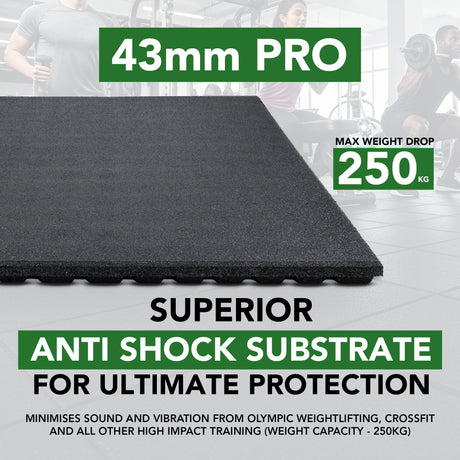
Ready to set up a powerlifting training space at home? Check out our selection of premium racks and noise reducing gym mats for heavy weights.